 Guide On Map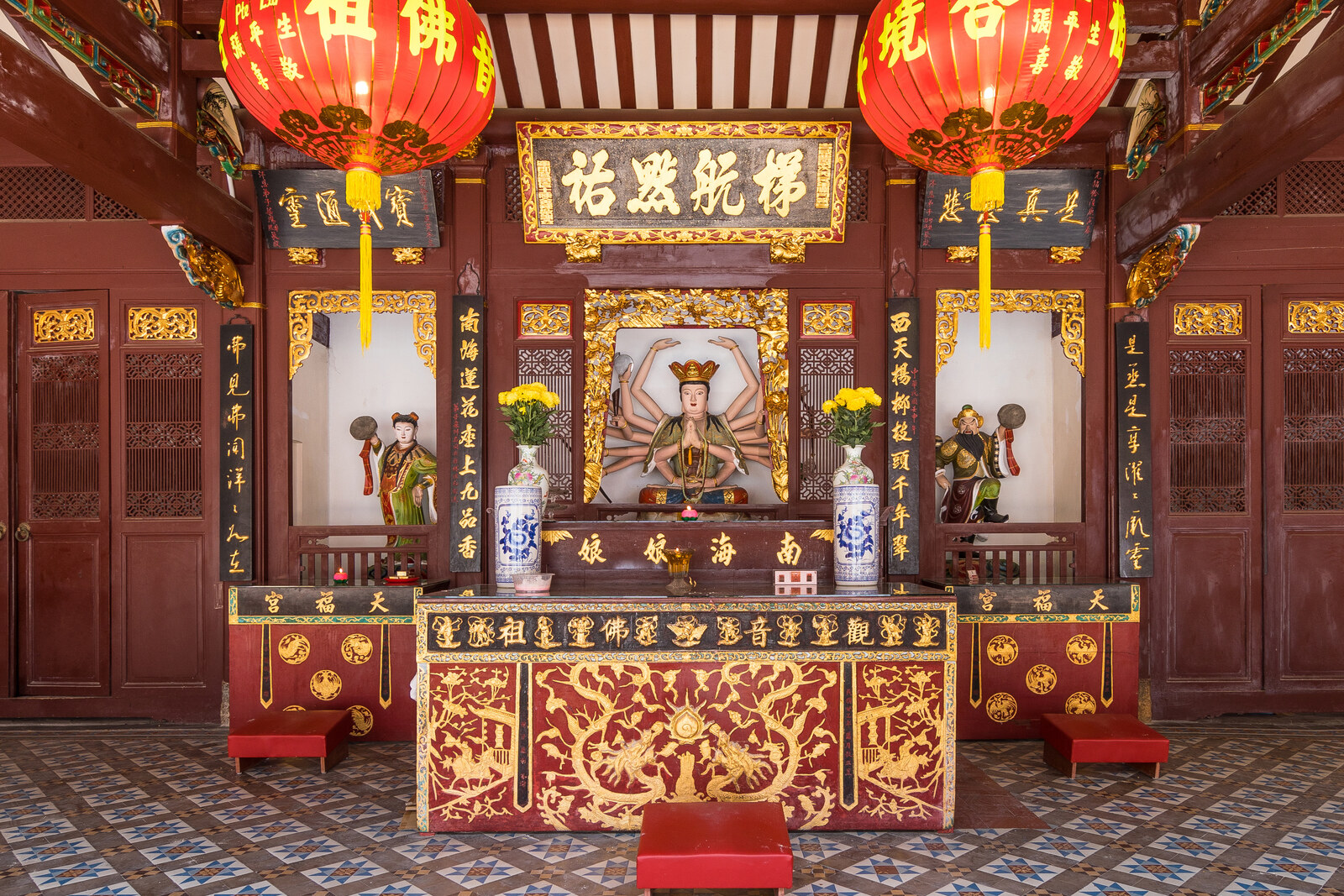
Look around first
What to notice
- Mazu’s main altar
- Granite stele listing donors
The story of the place
Thian Hock Keng bears the name Palace of Heavenly Happiness. Mazu, the patroness of sailors, is still revered at the main altar, and across the road is the office of Singapore Hokkien Huay Kuan, which manages the temple. A granite stele with the names of donors remains in the wall of the entrance hall: beside the largest contribution, the most modest one is engraved as well.
In eighteen thirty-eight, Tan Tock Seng, a merchant who had grown wealthy and the recognized leader of Singapore’s Hokkien community, began buying plots by Telok Ayer Basin. The Hokkien were people from the Chinese province of Fujian who spoke one of the southern Chinese dialects. Tan wanted to replace a small coastal shrine with a larger temple for people arriving from Fujian by sea.
Nineteen years earlier, he himself had stepped ashore from a ship with almost no possessions. Tan sold vegetables, fruit, and poultry by the road, opened a shop eight years later, and then made a fortune through trade and land deals. Now he was spending that money where a new migrant’s life began. At the time, the shore ran along present-day Telok Ayer Street. After their voyage, Chinese people came to the local shrine to thank Mazu, a goddess revered as the patroness of sailors.
Tan bought eight neighboring plots for construction and contributed three thousand seventy-four Spanish dollars—more than any other donor. More than four hundred trading firms, shipowners, and private individuals gave money. Construction began in eighteen thirty-nine, and in the early eighteen forties the present temple appeared beside the former shrine.
People who reached Singapore also needed housing, work, intermediaries, and burials for those who died far from their families. The leaders of the association were based at the temple. They found rooms and work for newcomers, distributed aid, organized education, arranged marriages and burials. An inscription left by the founders stated separately that Chinese people from all regional associations could come here, although the money and leadership came primarily from the Hokkien.
The name Thian Hock Keng means “Palace of Heavenly Happiness.” The main altar is still dedicated to Mazu, and the temple is still managed by the leaders of Singapore Hokkien Huay Kuan; their modern office stands across the road.
A granite stele listing those who paid for the construction is embedded in the wall of the entrance hall. It preserves the largest contribution of Tan Tock Seng, a former street vendor of vegetables. The smallest contribution is recorded beside it as well: twenty-four Spanish dollars.
Useful on site
Daily 07:30–17:00, last entry 16:45. On public holidays, access to individual halls may change.
Checked: June 28, 2026. Check the official source before visiting.Speak quietly inside and do not disturb prayer; if entry is restricted, the main architectural details are visible from the gates.