 Guide On Map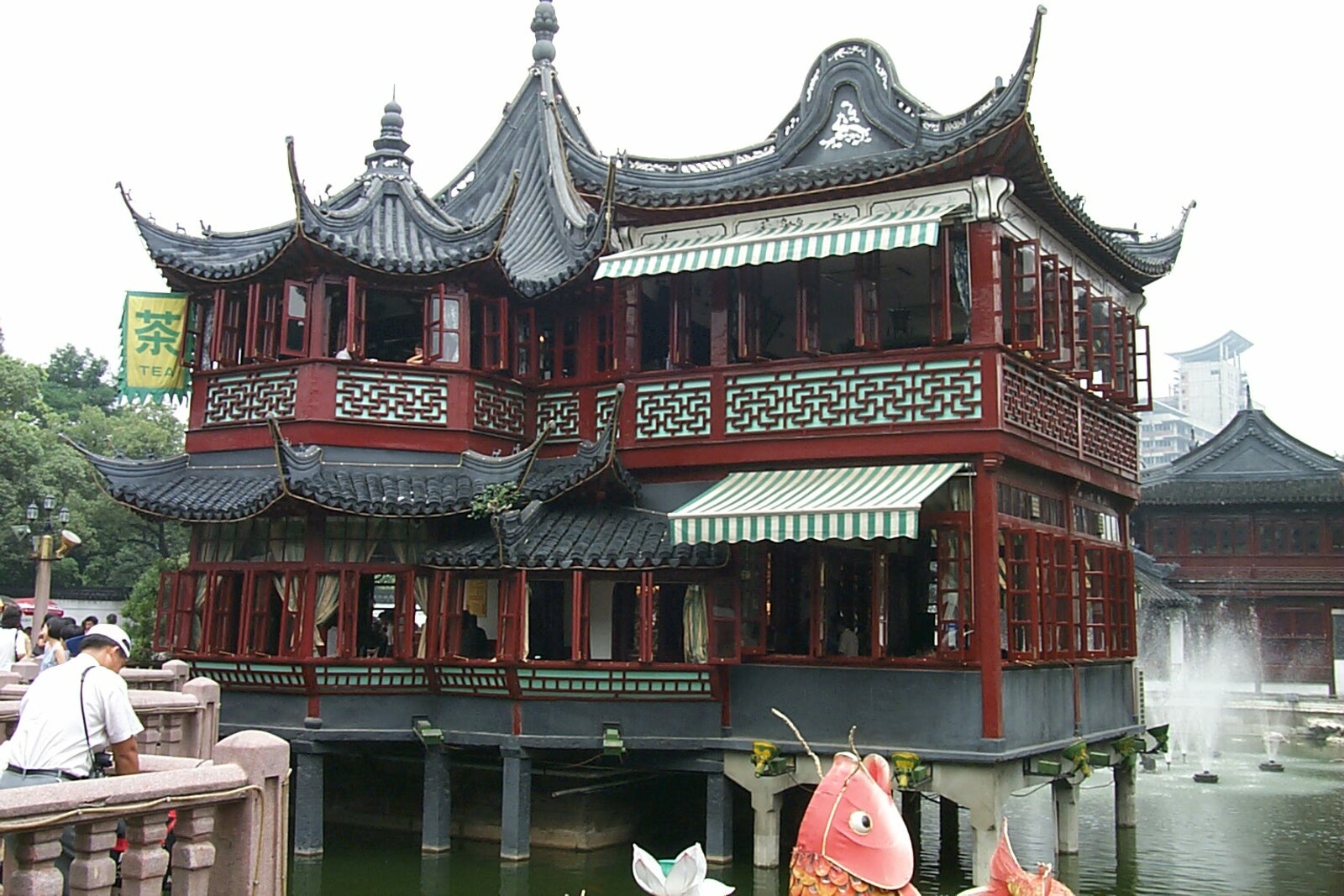
Look around first
What to notice
- The six-sided Huxinting pavilion
- The angular bridge
- Stone supports
- The pond around the pavilion
The story of the place
The six-sided Huxinting stands in the middle of the pond, and an angular bridge on stone supports approaches its doors from both banks. Its bends do not require you to count the angles: in Chinese gardens, this was the name for bridges with several bends, and nine was considered a lucky odd number. The bridge is arranged as the only passage across the water, so the route from the bank inevitably leads into the pavilion. The wooden railings have not survived, but they were later replaced with reinforced concrete that repeated the former angular route.
In seventeen eighty-four, the blue cotton cloth traders Zhu Yunhui and Zhang Fuchen gathered a further twenty partners and bought this plot of the dilapidated Yu Garden. They made their living from locally handmade cloth: they bought it in the vicinity of Shanghai and sent it to other provinces. In autumn and winter, boats carried whole consignments of bales away from here. The traders needed a permanent place where representatives of the industry could meet and settle common affairs.
An old garden pavilion already stood on an islet in the middle of the pond. The merchants dismantled both the islet and the structure, and in their place built a two-story, six-sided pavilion directly above the water. This is how Huxinting got its name: “the pavilion at the heart of the lake.” They laid a bridge to it on stone supports, with wooden railings and many turns. It linked the two banks and also led to the office of the trading association. At first, selling tea and wine there was forbidden.
The whole undertaking depended on the prosperity of local weavers and traders. After Shanghai opened to foreign trade, cheap factory-made cloth from abroad entered the market. Handwoven fabric could not withstand such competition, and trade in blue cloth began to decline. In eighteen fifty-five, the association parted with the pavilion. The new owner put tables there and opened a public tea house—one of Shanghai’s first commercial tea houses. Zhu Yunhui, Zhang Fuchen, and their companions lost their office; the place they had built now received not representatives of a single industry, but merchants, city residents, and visitors to the temple market.
“Nine turns” does not mean that the angles must necessarily be counted out to nine. In Chinese gardens, this was the name for winding bridges with differing numbers of bends; nine was considered a lucky and the highest odd number. The story that the turns hold back spirits belongs to folk explanations. The construction record gives the bridge’s purpose in entirely earthly terms: to take people from one bank to the other through the pavilion.
The original wooden railings have not survived. After a fire in the temple quarter in the nineteen twenties, the trustees replaced the old bridge with one of reinforced concrete, repeating its angular route. Huxinting still stands in the middle of the pond and once again serves as a tea house, while the bridge remains an open passage amid the bazaar. The plan devised by the blue-cloth merchants has survived intact: two banks, a separate structure above the water, and a route that inevitably leads to its doors.
Useful on site
The bridge belongs to the open commercial area; after restoration, the tea house is receiving guests again, but its hours and menu should be checked on site. The city tourist guide lists 08:30–21:00 for Huxinting; after the 2025 restoration, the exact conditions may change.
Checked: July 1, 2026. Check the official source before visiting.The bridge can be crowded, so do not stop in the middle for lengthy filming. Treat a visit to the tea house as a separate decision, with its own conditions and a possible line.