 Guide On Map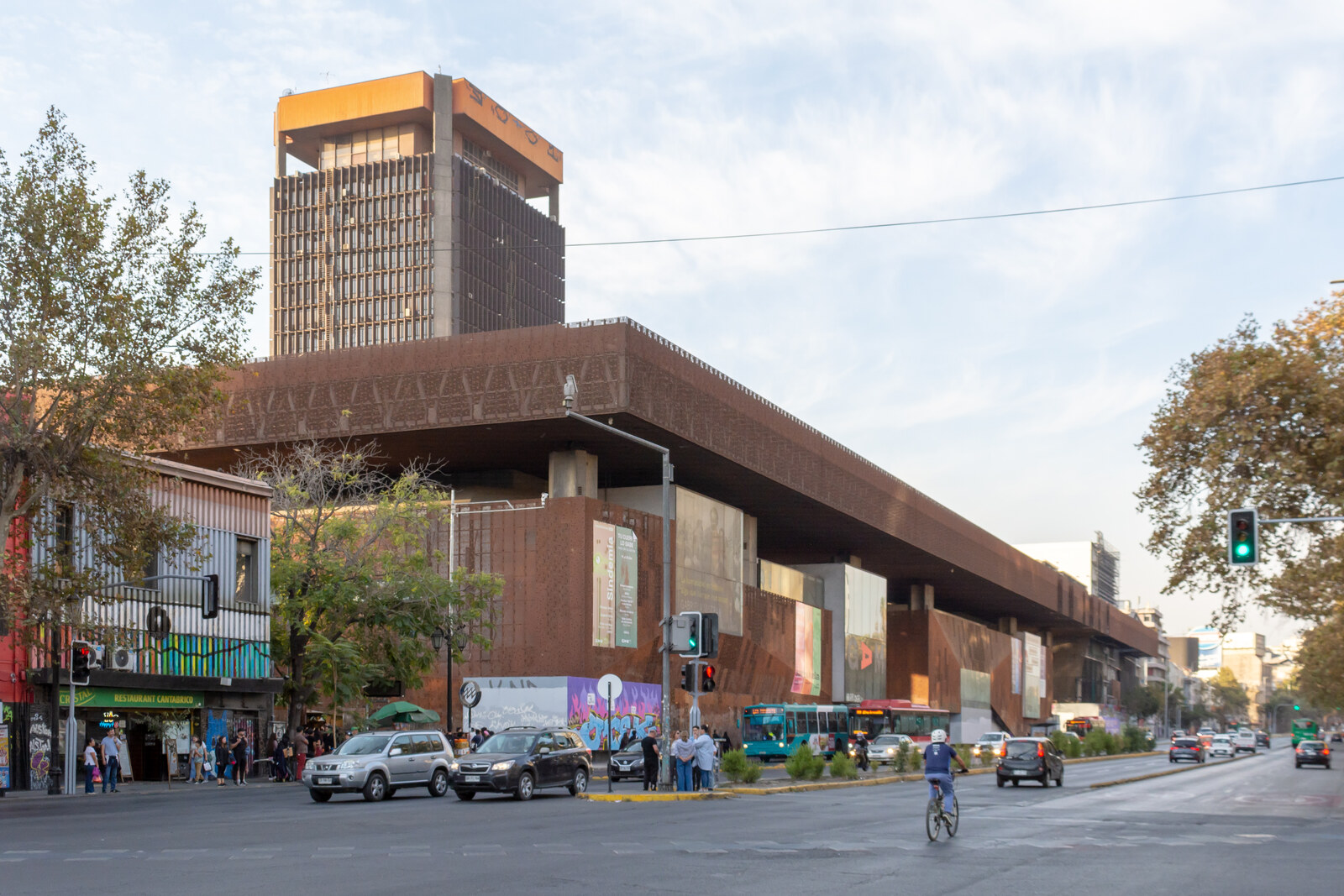
Look around first
What to notice
- Publicly accessible plazas
- Library
- Artistic doors
- Wall panels
The story of the place
The artistic doors and wall panels in this large building were made as part of everyday life, alongside light fixtures, drinking fountains, and benches. Ten halls, a library, and five open plazas still host theater, dance, circus, concerts, and exhibitions. The donated collection was refused so the rooms would not turn into museum storage and would remain places for meetings and classes. Not all the furnishings survived the changes: eighteen original works are now in the center, six are kept elsewhere, and fourteen are still missing.
In August nineteen seventy-two, Irma Cáceres de Almeyda was handed a building that had already fulfilled its purpose. The Third United Nations Conference on Trade and Development (UNCTAD III) had just ended here: three thousand delegates from one hundred forty countries had discussed poverty and unequal conditions in global trade. Now this enormous complex was to be filled with city residents, and it had to support itself.
The site for the conference was chosen by Chilean president Salvador Allende. He was offered a plot in O’Higgins Park and this one on the city's main thoroughfare, Alameda de las Delicias. Allende chose Alameda de las Delicias, where everyone would see the building. Less than a year remained before the opening. In two hundred seventy-five days, architects completed the construction with workers and volunteers laboring shifts of up to twelve hours. For three months, artists were paid the same as a skilled carpenter. They made doors, light fixtures, drinking fountains, benches, and wall panels for the building: works of art were meant to serve people alongside the rest of the furnishings.
After the conference, Allende transferred the complex to the Ministry of Education of Chile. Irma Cáceres was appointed its first director. At the time, women were rarely placed in charge of institutions of that size; Cáceres herself had previously more often been introduced as the wife of Foreign Minister Clodomiro Almeyda. Here, for the first time, she was responsible for a major undertaking of her own.
Cáceres rejected an offer to place a donated art collection in the building. An ordinary museum would have occupied rooms she wanted to keep for meetings, classes, and performances. A cafeteria for six hundred people and hall rentals brought in money. The director used it to pay for theater and dance productions, concerts, talks, and exhibitions of Latin American art. The former venue for an international conference opened to city residents under the name Gabriela Mistral Cultural Center (GAM).
This address has no biographical connection to Gabriela Mistral herself. That was the name of the poet and teacher Lucila Godoy Alcayaga, who adopted a literary pseudonym and, in nineteen forty-five, became Chile's first female Nobel laureate. The institution, created for publicly accessible culture and education, was named after her.
Cáceres managed it for only a little more than a year. After the nineteen seventy-three coup, the military closed the complex to the public. Because La Moneda Palace had been damaged by bombing, the Chilean military junta moved here. The name of nineteenth-century statesman Diego Portales appeared on the facade, fences were put up around it, and many works created for the building were removed, destroyed, or taken away. Cáceres lost her position; from nineteen seventy-five she lived in exile in Mexico and East Germany, where she worked in the public-relations department of an enterprise.
After the fire of nineteen oh six, the damaged part of the complex was rebuilt. In nineteen ten, Gabriela Mistral Cultural Center (GAM) reopened here. Today, performances, dance and circus shows, concerts, and exhibitions take place in its ten halls; a library and five publicly accessible plazas are open. Of the original collection, eighteen works are in the current center, six are kept elsewhere, and fourteen are still listed as missing.
Useful on site
Plazas daily 09:00–21:00; Buildings A and B daily 09:00–22:00. Hours for halls, ticket offices, and events depend on the program and may change.
Checked: June 29, 2026. Check the official source before visiting.For this story, it is enough to walk through the open passageways and around the facades. Treat exhibitions, performances, and closed halls as a separate visit.