 Guide On Map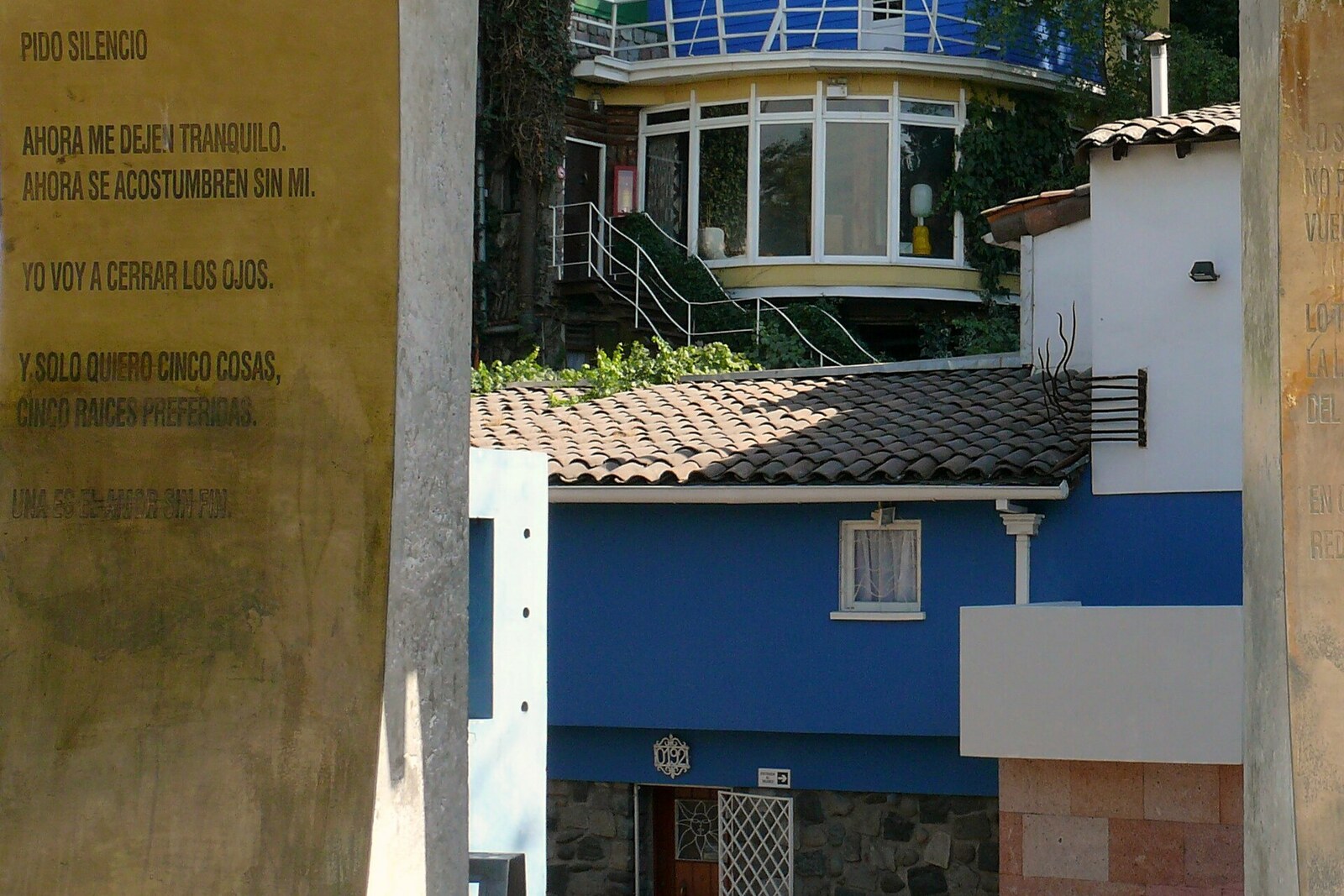
Look around first
What to notice
- House sections at different heights
- Staircases between the sections
- Garden on the slope
The story of the place
On a steep plot at the foot of San Cristóbal Hill, the house is assembled from sections at different heights, with staircases running between them and a garden climbing the slope. An irrigation canal once ran through this land. At first, there were only a living room and a bedroom here; later, a kitchen, dining room, bars, and a library were added. The rooms are now open as a museum preserving furniture, dishes, and artworks collected by the owners.
In the early nineteen fifties, Pablo Neruda was looking in Santiago for a house for a relationship he could not declare openly. The poet was married to the painter Delia del Carril. His secret lover, the singer Matilde Urrutia, wanted a place they could share, but she would have to live there alone: Neruda was still living with his wife.
They found a steep plot at the foot of San Cristóbal Hill. An irrigation canal ran through it; because of the water and the overgrown slope, Neruda and Matilde decided to buy this very land. Construction began in nineteen fifty-three. Neruda named the house La Chascona—“the disheveled one.” That was what he called Matilde because of her thick red hair.
The Catalan architect Germán Rodríguez Arias wanted to turn the rooms toward the sun and the city. Neruda wanted a view of the Andes and ordered the design reversed. He changed the placement of the windows, looked for timber, and argued over every detail. At first, only a living room and a bedroom were built: that was enough for Matilde, the only permanent resident. She planted the garden herself, while Neruda came here, inventing explanations for his absences from his official home.
In February nineteen fifty-five, Delia del Carril learned of the affair and decided to end their almost twenty-year union. Neruda packed his belongings and moved in with Matilde. After that, a kitchen, dining room, bars, and a library were added to the original rooms. The sections, divided by staircases, arose because a refuge for meetings was gradually transformed into the couple’s permanent home.
The irrigation canal that had made Neruda and Matilde choose the plot was used against them twenty years later. After the military coup of nineteen seventy-three, the house was ransacked, its windows were smashed, and the canal was blocked so that water would flood the rooms. On September twenty-third, Neruda died at a clinic. Matilde insisted that the farewell take place here, in the house they had built. Planks were laid through the mud, and the coffin was carried in along them; she and several friends spent the night in the living room with its panes smashed out.
After the funeral, Matilde restored the rooms and lived in La Chascona again. She lived here until her death in nineteen eighty-five, and at her instruction the foundation created a year later took charge of Neruda’s legacy. It has now opened the house as a museum: inside, the personal rooms, dishes, furniture, and artworks collected by the owners have been preserved.
In the salon hangs a portrait of Matilde painted by Diego Rivera during the secret romance. Matilde has two faces in it, and among her red hair the artist hid Neruda’s profile. At the time, the image concealed the house’s owner; now visitors are shown this profile together with the name of the woman for whom this house came into being.
Useful on site
Neruda Foundation house museums: Tuesday–Sunday 10:00–18:00; in January and February 10:00–19:00. Admission without reservations, first come, first served; closing means the end of visitor entry.
Checked: July 1, 2026. Check the official source before visiting.Only part of the house’s design is visible from the street. To see the rooms, a separate museum visit is required; inside, follow the established rules for photography and movement.