 Guide On Map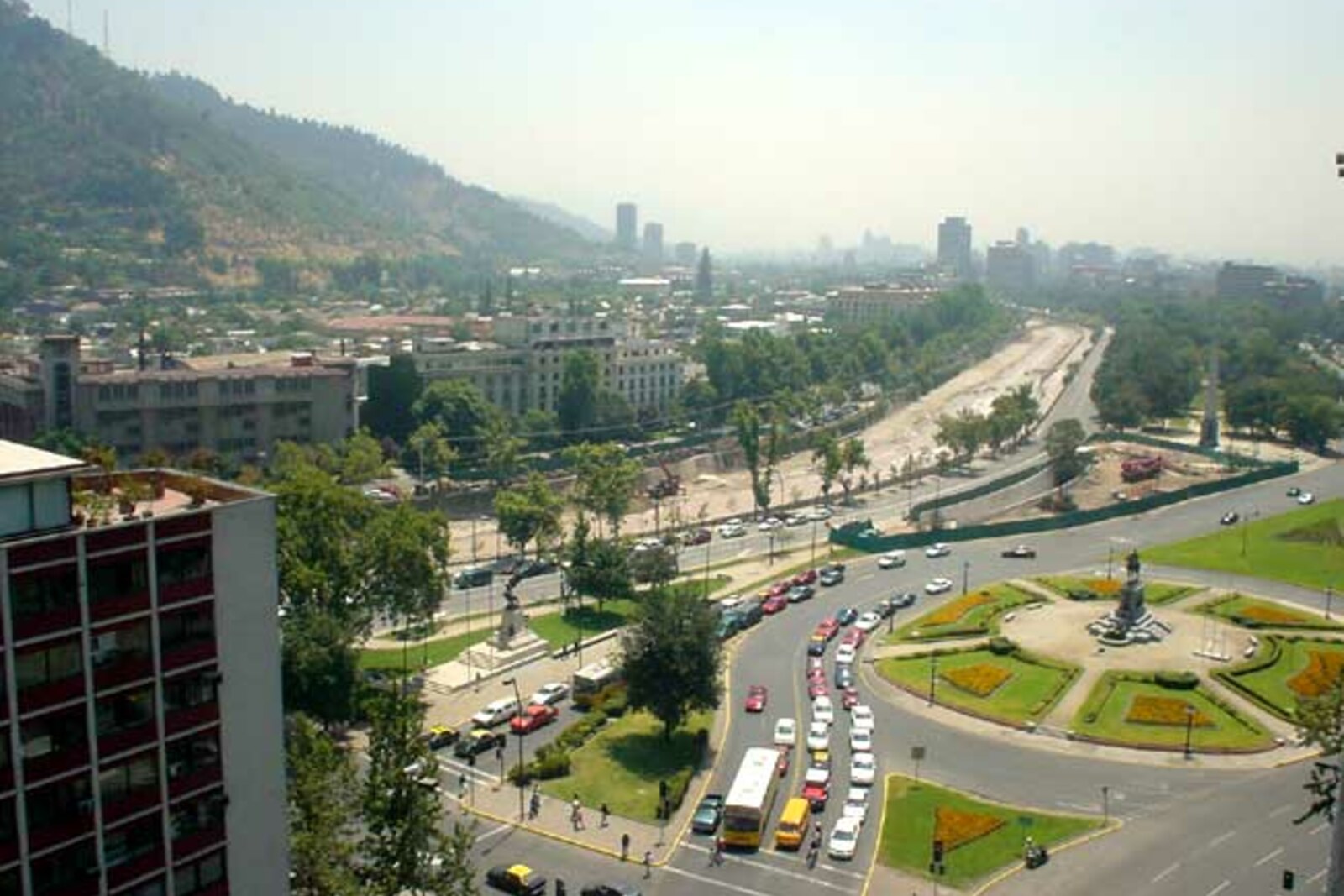
Look around first
What to notice
- Equestrian statue of Baquedano
- Winged figure with a torch
- Bronze lion
The story of the place
This square has two names. Officially, it bears the name of General Manuel Baquedano; in everyday speech, Santiago residents still call it Plaza Italia. Both names appeared because of monuments installed at the same center eighteen years apart.
In nineteen ten, this spot was called Plaza Colón. Here, the old rectangular street grid ended and Santiago’s expansion eastward began, along Avenida Providencia. A railway station operated nearby, and trams passed through the square. Chile’s Italian community chose this urban gateway for a gift marking the centennial of the independence of the country where its members had settled.
The sculptor Roberto Negri created the bronze Genius of Liberty: a winged figure raises a torch, while a lion representing Chile breaks chains. On September twentieth, nineteen ten, the Italian ambassador and Chilean ministers unveiled the monument. The Italian and Chilean flags were removed from the bronze, after which Plaza Colón was renamed Plaza Italia. The monument’s low base gave people a place to linger among the roads converging here. In this way, the transportation intersection gained a recognizable center and became a convenient meeting point for groups.
In nineteen twenty-eight, funds were raised through public subscription for a monument to Manuel Baquedano. He was a career cavalry officer and commanded the Chilean army in the War of the Pacific against Peru and Bolivia. At Miraflores, his reconnaissance party came under rifle fire; in the battle that began, Baquedano committed the reserve, and after the victory Chilean troops occupied Lima. He returned home with the rank of generalissimo. It was this military career that was chosen for commemoration in the capital three decades after his death.
The sculptor Virginio Arias portrayed the general in campaign uniform, mounted on his favorite horse, Diamante. To place the rider in the center of the square, the organizers moved the Italian angel and lion to one side, and named the square after Baquedano. The Italian community’s bronze figure later changed location several more times because of metro construction, but remained nearby.
Baquedano on Diamante stands in the center; nearby are the winged figure with a torch and the lion. The official name went to the rider; the monument moved aside for him preserved the colloquial name.
Useful on site
Open city square; access depends on traffic conditions, ongoing work, police restrictions, and events.
Checked: July 1, 2026. Check the official source before visiting.View the square from pedestrian areas and cross streets only on a green signal. Conditions may change because of gatherings, barriers, or roadworks.