 Guide On Map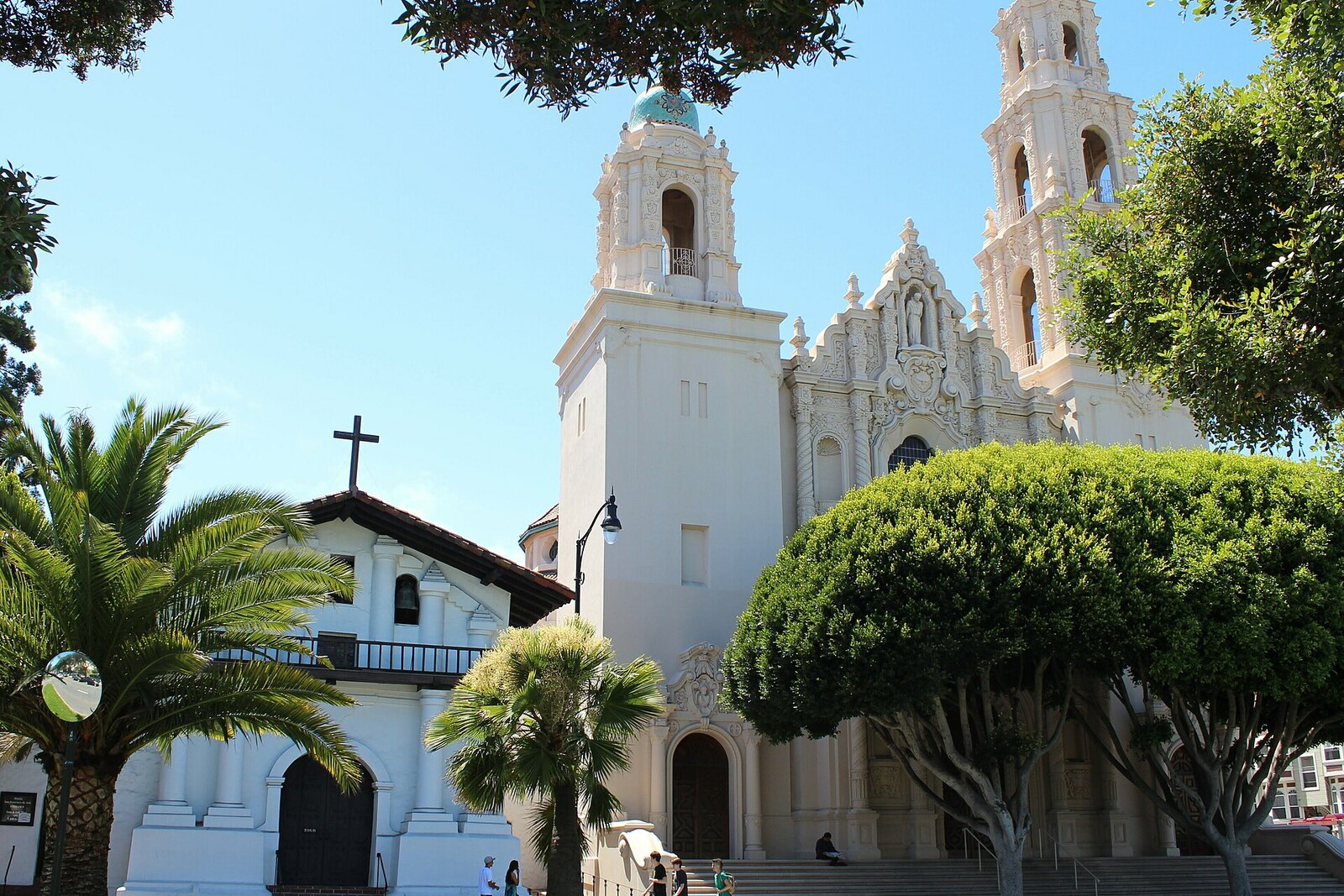
Look around first
What to notice
- Low white chapel
- Adobe walls
- Cemetery behind the chapel
- Inscribed headstones
The story of the place
The low white chapel, built of adobe bricks, survives from Mission Dolores. The Franciscans maintained an operation here with fields, herds, workshops, and a tannery, while Indigenous people from nearby settlements erected the buildings, sowed grain, and worked with livestock. The name Dolores passed to the mission and the neighborhood from a stream that once ran nearby, although its channel can no longer be seen near the chapel. Behind the chapel lies a cemetery: inscriptions on the stones appeared later, while information about those buried earlier remained in the mission's books.
In the summer of one thousand seven hundred ninety-five, two hundred eighty baptized Indigenous people fled from here. To the Franciscans, baptism meant that a person now lived at the mission, worked according to its schedule, and did not leave without permission. The runaways were therefore sought out and forcibly returned.
The mission was a large operation with fields, herds, workshops, and a tannery. People from nearby settlements built its buildings, tended livestock, grew grain, and received food from common stores. Indigenous people also built the low white chapel beside the basilica: they made adobe bricks, raised the thick walls, and laid the roof. Construction was completed in one thousand seven hundred ninety-one.
Four years later, a crop failure brought about two hundred more hungry people here from villages around San Francisco Bay. The mission's population nearly doubled, and then an epidemic began. People died, food was scarce, but the missionaries continued to demand work and punish those who broke the rules.
One of the runaways is recorded in a Spanish document under the name Milan. He worked here in the tannery and tried to feed his wife and child. During questioning, Milan said that he had worked all day once, but his family received no food. After work, he went to the shore to gather shellfish. The Franciscan Antonio Danti, who ran the mission and insisted that its regime be followed, ordered him whipped. The next day, Milan fled to the eastern shore of the bay. There, his wife and child died.
Another runaway, Tiburcio, lost his wife and daughter here. According to his testimony, Danti ordered him beaten five times because he wept for them. Liberato gave his reason: his mother, two brothers, and three nephews had died of hunger, and he left so that he would not die next. This is not a later legend. Their answers were recorded by Spanish military officers during an official investigation.
At first, the missionaries sent a detachment of baptized Indigenous people after the runaways. Seven of those sent were killed in a clash on the other shore. When reports of hunger, beatings, and mass flight reached Governor Diego de Borica, he ordered the workload reduced, punishments moderated, and food issued cooked rather than as dry grains and beans, which workers often had no time to prepare.
This order did not give the runaways freedom. In one thousand seven hundred ninety-seven, Borica authorized a military expedition after them. Soldiers killed eight defenders of the settlements and captured eighty-three men, women, and children. Most were returned to the mission. Fourteen people accused of resistance received lashes, stocks, or months of work in shackles. Milan was among those questioned; the documents do not say what became of him after his testimony.
By the beginning of the nineteenth century, nearly all Ramaytush—the Indigenous people of the San Francisco Peninsula, whom people today classify among the Ohlone peoples—were at the mission. About eighty percent of the former population had already died. The average life expectancy here after baptism was about four years.
The official name of the site is Mission Dolores. The Franciscans dedicated it to Francis of Assisi, the founder of their monastic order. The name Dolores came from the nearby Arroyo de Nuestra Señora de los Dolores—the stream of Our Lady of Sorrows. Juan Bautista de Anza's expedition gave it this name in one thousand seven hundred seventy-six; later, it passed to the mission and the entire neighborhood.
The stream is no longer visible near the chapel. Behind its wall, though, lies a cemetery where about five thousand Ohlone, Miwok, and other Indigenous Californians who built the mission and lived there are buried. The inscribed headstones now visible date only from the period after one thousand eight hundred thirty. There are no earlier names on the stones; they survive in the baptism and burial books that began to be kept here with the mission.
Useful on site
Old mission, museum, garden, cemetery, and basilica: Monday through Friday from 10:00 to 16:00, Saturday and Sunday from 10:00 to 17:00. Self-guided visits without a reservation; guided tours are temporarily unavailable.
Checked: June 30, 2026. Check the official source before visiting.The main difference between the two churches is visible from outside. Visit the chapel, garden, and cemetery only when they are open to visitors; a separate visit may add time to the route.