 Guide On Map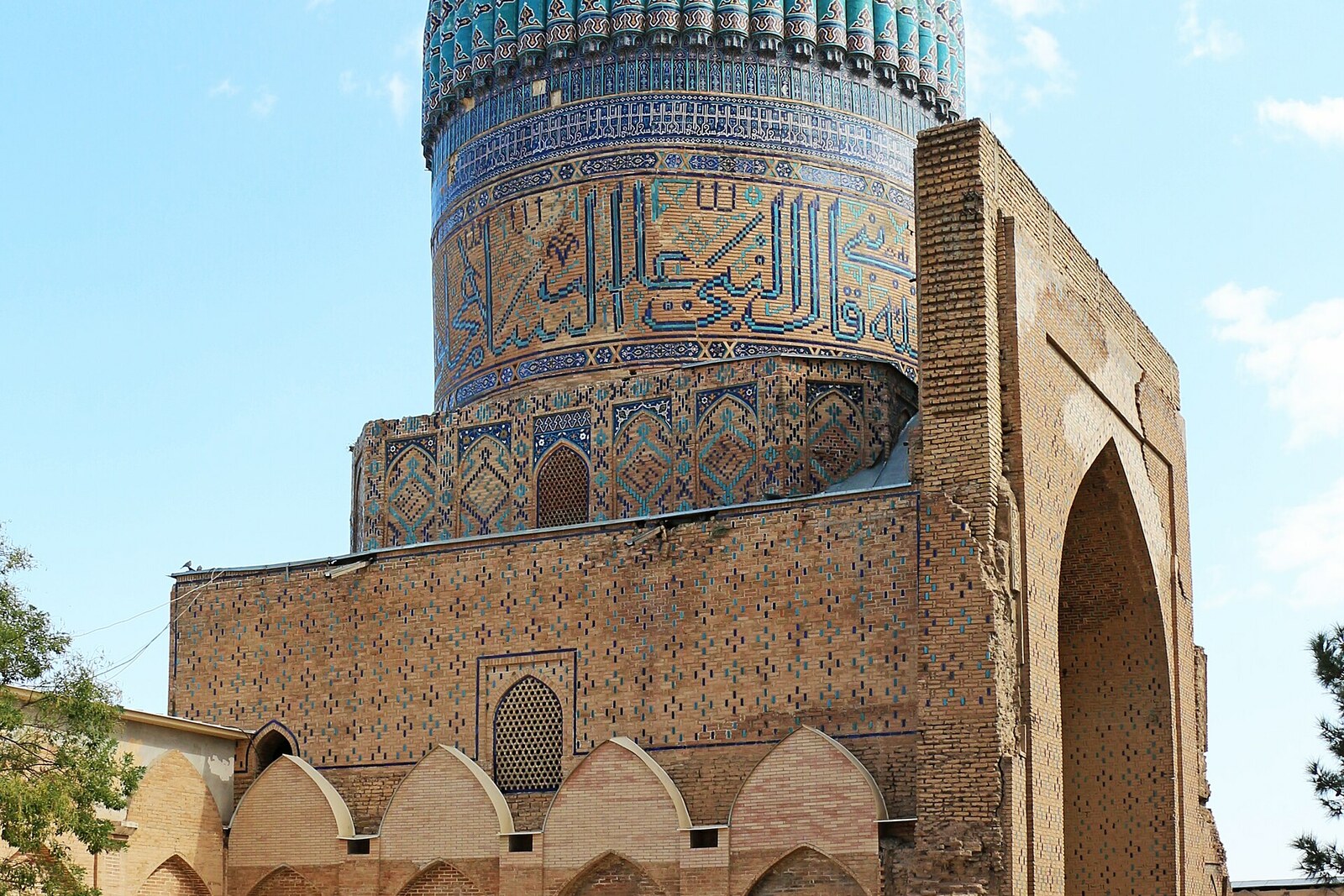
Look around first
What to notice
- The side pylons of the main portal
- The recreated upper part of the portal
- The stone inscription “Amir Timur Gurkan”
- The domed mausoleum opposite
The story of the place
The congregational mosque brought together the people of Samarkand for communal Friday prayer and was meant to become the city's principal building. Its main portal was raised so high that mainly the side pylons of the early structure survived; the upper part was restored later. Inside, a stone inscription bearing the patron's title has survived, and across the road stands a domed mausoleum on the site of the vanished madrasa associated with the name Bibi-Khanum.
In the autumn of fourteen oh four, Timur was brought here on a litter every morning. The ruler and patron of Samarkand's new principal mosque could no longer stand for long or mount a horse, yet he spent almost the entire day by the construction pits. He was dissatisfied with the entrance.
Five years earlier, Timur had returned from a campaign in India and ordered the construction of a congregational Friday mosque—a place where townspeople gathered for communal prayer. Craftsmen were assembled from conquered lands, and ninety-five elephants hauled stone blocks. Size was part of the plan: no building in Samarkand was to rival the new mosque.
Opposite it already stood the madrasa of Saray Mulk Khanum, Timur's senior wife. A madrasa was a higher school with rooms for students; Saray Mulk commissioned it in her own name. She came from the line of Genghis Khan, and through his marriage to her Timur bore the title gurkan—“the khan's son-in-law.” For a man who did not himself belong to the Chinggisids, this title was enormously important.
The portal of Saray Mulk's madrasa proved taller than the entrance to the mosque. Timur ordered the newly completed masonry dismantled and a new, taller portal laid. He personally undertook to oversee one of its supports, while entrusting the other to two close noblemen: construction turned into a race for speed.
The craftsmen worked day and night. Prepared meat was thrown, on Timur's orders, into the pits where they were digging the foundations. Coins were tossed down from above to the stonemasons whose work especially pleased the patron. This was the food and reward of the people from whom the ailing ruler demanded immediate results.
Winter snow stopped the construction. Soon Timur set out on a new campaign and died in Otrar in February of fourteen oh five, without ever seeing the entrance completed. Researchers believe that his successors completed the entire mosque. Nothing remains of the low portal that provoked Timur's anger: it was dismantled during his lifetime. The tall entrance later collapsed as well; by the time restoration began, mainly its side pylons remained, so the present upper part of the portal has been largely recreated.
The name “Bibi-Khanum” is an honorific designation for Saray Mulk Khanum. Chronicles name Timur as the patron of the mosque, while the question of its original dedication to his wife remains disputed. Saray Mulk's own building stood across the road: her madrasa was destroyed in the late sixteenth century, and its site is now marked by a surviving domed mausoleum.
In a stone building inscription inside the mosque, the patron is named “Amir Timur Gurkan.” Saray Mulk's name survives on the building, while the inscription preserves the title Timur received through his marriage to her.
Useful on site
The electronic ticket office for the 2026 season shows a 09:00–17:00 window; restoration work may change access to individual areas.
Checked: June 24, 2026. Check the official source before visiting.If you cannot get inside, remain in front of the main portal: its exterior scale and the proportions of its parts convey the main point of this stop.