 Guide On Map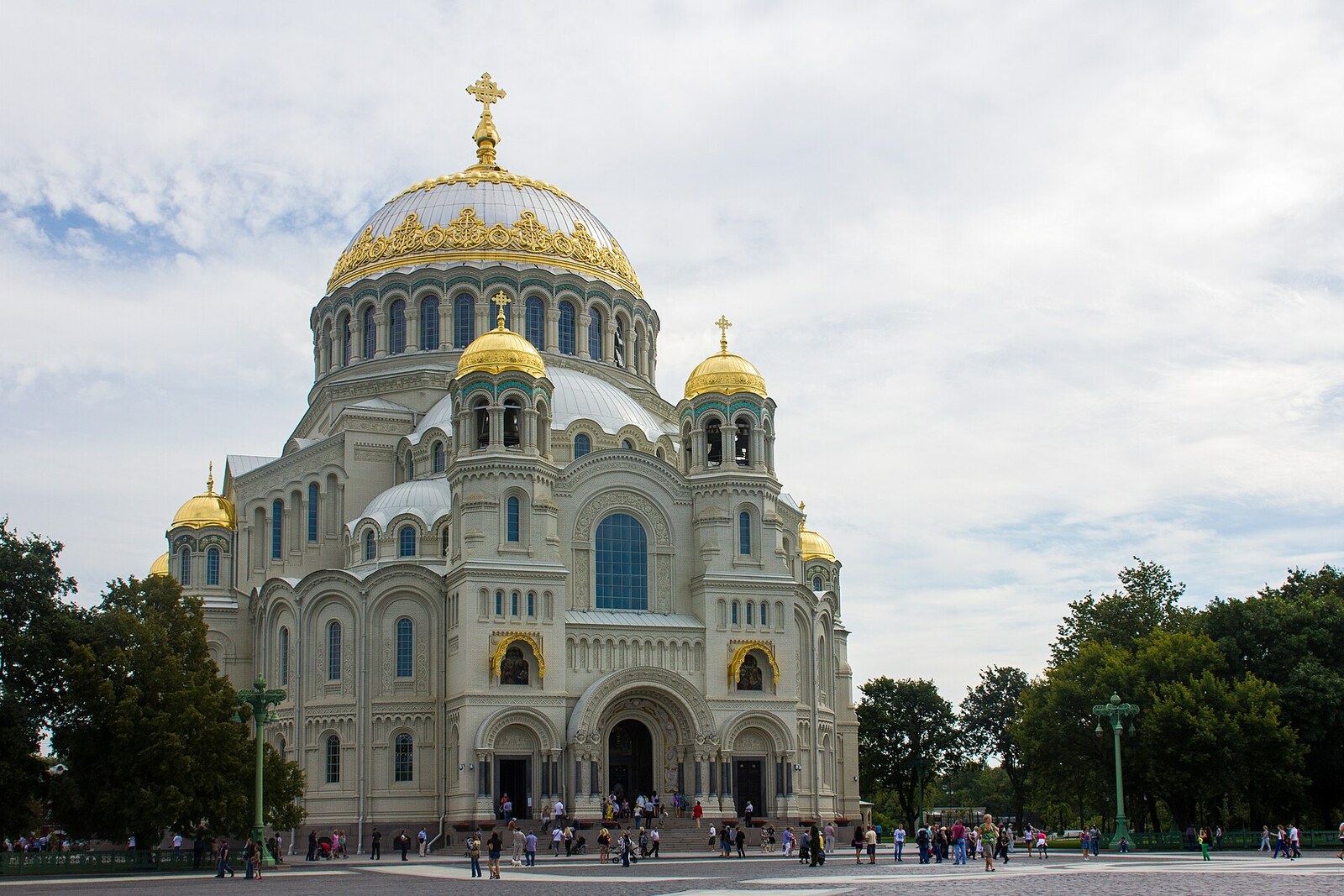
Look around first
What to notice
- Black memorial plaques
- Lines of names and ranks
- Main altar
The story of the place
On October fifteenth, eighteen ninety-six, Vice Admiral Nikolai Kaznakov, Chief Commander of Kronstadt Port, presented the naval minister with plans and a cost estimate for a new cathedral. Kaznakov wanted sailors to come here to pray and read on the walls the names of people who had died in service. The former wooden church could no longer hold the growing fleet, and sailors had no common memorial listing them by name.
Kaznakov proposed a site on Anchor Square. Old ship anchors were stored here; institutions of the Naval Ministry stood around it, and the size of the square made it possible to gather entire crews in front of the church. When the state allocated the first funds, after a prayer service about fourteen thousand people from fleet crews and training detachments came out here. They removed the top layer of soil and cleared the construction site without pay.
Employees of the Naval Ministry resolved to give one quarter of one percent of their salaries, meal allowances, and naval allowances to the cathedral each year. The contributions continued from eighteen ninety-eight until the beginning of nineteen fourteen and brought in two hundred eighty thousand rubles. The treasury covered the remaining expenses: the entire construction cost almost two million. Kaznakov did not live to see the result—he died in nineteen six, seven years before the consecration.
For the memorial plaques, the Naval Ministry enlisted General Apollon Krotkov, a historian of the fleet. He was tasked with deciding whom to inscribe on the cathedral walls and how. Krotkov compiled a list of the dead beginning in sixteen ninety-five. For officers, the plaques gave the name, rank, date, and circumstances of death. This is how about a thousand names of people of different faiths appeared—people killed in battle, while performing their duties, or who died of wounds.
Sailors and other lower ranks were almost never recorded individually: the plaques gave the total number of killed and wounded in each battle. Krotkov insisted that the wounded be counted as well. His explanation was quite practical: given the naval medicine of the time and conditions aboard ship, lower ranks rarely survived severe wounds. Their names often remained outside the records, but the number of people had to remain on the wall.
One hundred thirty black marble plaques were installed along the lower gallery. White ones were prepared for fallen naval priests. The main altar was dedicated to St Nicholas the Wonderworker, whom sailors revered as the patron of seafarers. Hence the full name—Naval Cathedral of St Nicholas.
After the church was closed in nineteen twenty-nine, the memorial plaques were removed and destroyed. Several copies were transferred to the Central Naval Museum, but they too were later lost. No genuine black marble bearing Krotkov's lists remains here.
In the nineteen nineties, Elena Isakova, a researcher of Kronstadt history, prepared a project to recreate the plaques from archival documents. During the restoration, the lists were returned to the walls, and the cathedral began commemorating fallen sailors again. The black slabs inside were made anew; the names, ranks, and circumstances of death were restored from the list that Apollon Krotkov had compiled for this place more than a century earlier.
Useful on site
Daily 10:00–19:00; services usually begin at 10:00 and 18:00.
Checked: June 24, 2026. Check the official source before visiting.If the cathedral is open to visitors, remember that this is a church: follow the current rules and do not disturb the service. The Monument to Stepan Makarov and the exterior architecture can be viewed regardless of entry.