 Guide On Map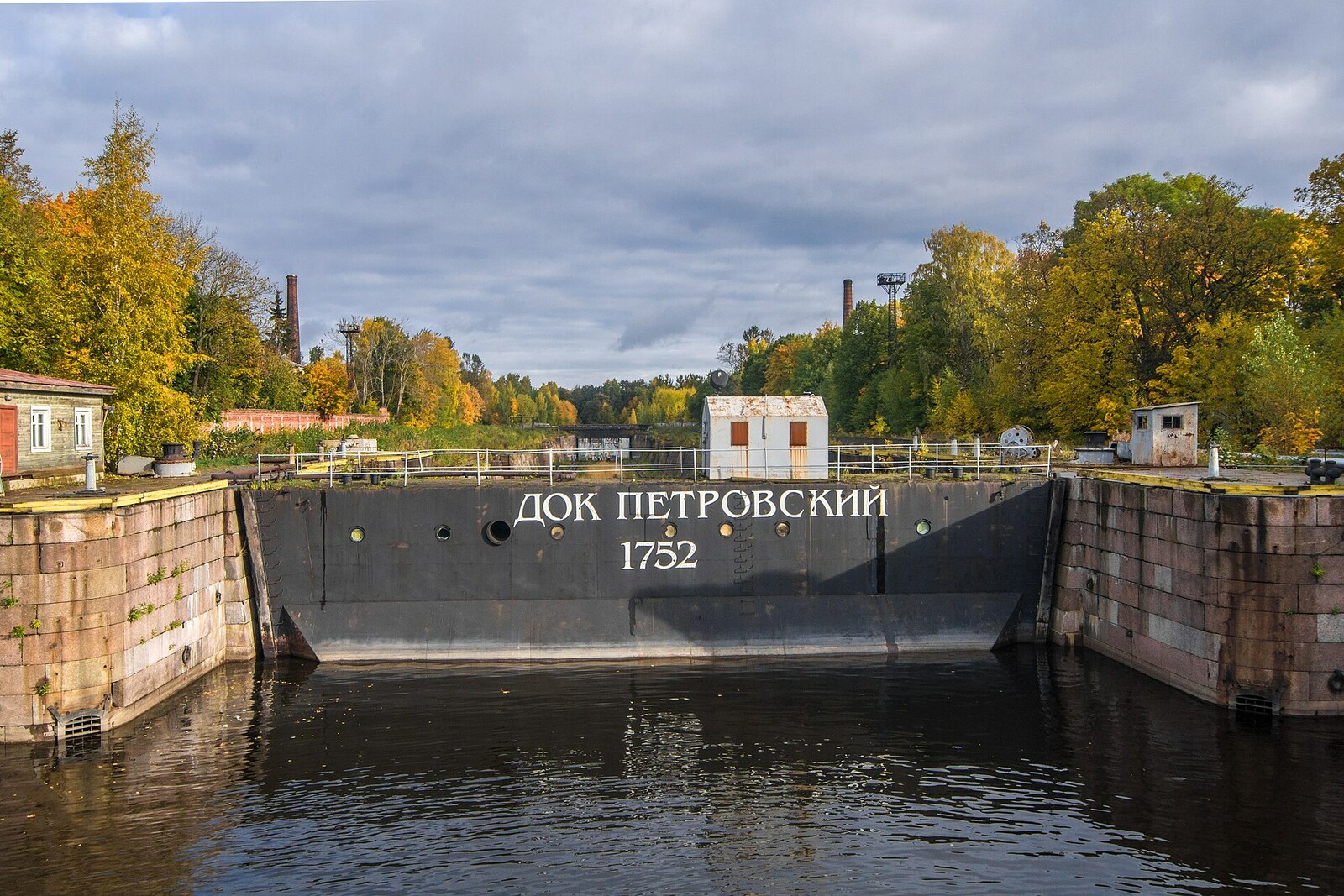
Look around first
What to notice
- Stone working chamber
- The inscription “Petrovsky Dock”
- The opening date on the wall
The story of the place
Along the southern side of Kronstadt runs a long stone chamber, linked to the harbor by a canal. Warships were brought in here, the gates were closed behind them, and the water was released into a lower receiving basin. The vessel remained on supports, while craftsmen gained access to its underwater section. After ship repairs ended, the passage along the chamber became a museum route; the dock's name and its opening date remain on the wall.
In the summer of seventeen twenty, Pyotr I came here to inspect the canal that had been dug. He walked along the excavation, inspected the drainage machines, praised what had been done, and ordered the walls to be reinforced with stone. The creator of the Baltic Fleet needed a place where warships could be repaired in their entirety, including the part of the hull usually hidden underwater.
Kotlin Island was better suited to this than the St Petersburg shipyards. Here the fleet stood at the entrance to the Gulf of Finland; returning damaged ships through the shallow mouth of the Neva was difficult. Another problem remained: how to remove an enormous mass of water from the dock quickly. While pumps were draining an ordinary dock chamber, carpenters and caulkers could not reach the bottom of the hull.
Pyotr ordered a separate basin to be dug behind the docks, lower than their level. A ship entered from the harbor through the canal, and the lock gates were closed behind it. The water was then released by gravity into the lower receiving basin. The hull came to rest on supports set in place beforehand, and workers gained access to the keel and underwater planking. The pumps only had to drain the receiving basin; this did not interfere with repairs.
Work began in seventeen nineteen, but Pyotr saw only the construction site. In the autumn of seventeen twenty-four, he handed the canal and docks over to the Admiralty Board, which managed the fleet, and died four months later. The dock excavation was completed without him, after which construction nearly came to a halt.
In seventeen thirty-two, Johann Luberas, a military engineer tasked with bringing the dock into working order, was sent to inspect the unfinished system. Luberas ordered the lower basin widened and deepened and rebuilt the spillway. After that, water left the repair chamber in about a day. It was precisely the difference in level between the dock and the basin that turned the long stone trench into a facility for servicing the fleet.
On July thirtieth, seventeen fifty-two, Elizaveta Petrovna, Pyotr's daughter, personally raised the lock gates' panels and ordered the canal named after her father. Two days later, the largest ship in the Russian fleet—the one-hundred-twenty-gun Empress Anna—entered here. Luberas received the Order of St Andrew the First-Called and died in the same year.
Ships were repaired here until two thousand six. Now a museum route runs along the southern side of the former working chamber, and the inscription “Petrovsky Dock” and the year of its opening—seventeen fifty-two—remain on the wall. The name belongs to the man who devised the dock's system; the date belongs to those who put it into operation twenty-seven years after his death.
Useful on site
From 1 May to 30 September — daily 11:00–18:00, ticket office until 17:30; from 1 October to 30 April, Wednesday — closed.
Checked: June 24, 2026. Check the official source before visiting.View the structure only from areas open to visitors. The inner route may be inaccessible; the barriers here protect not a decorative feature, but a deep technical structure.