 Guide On Map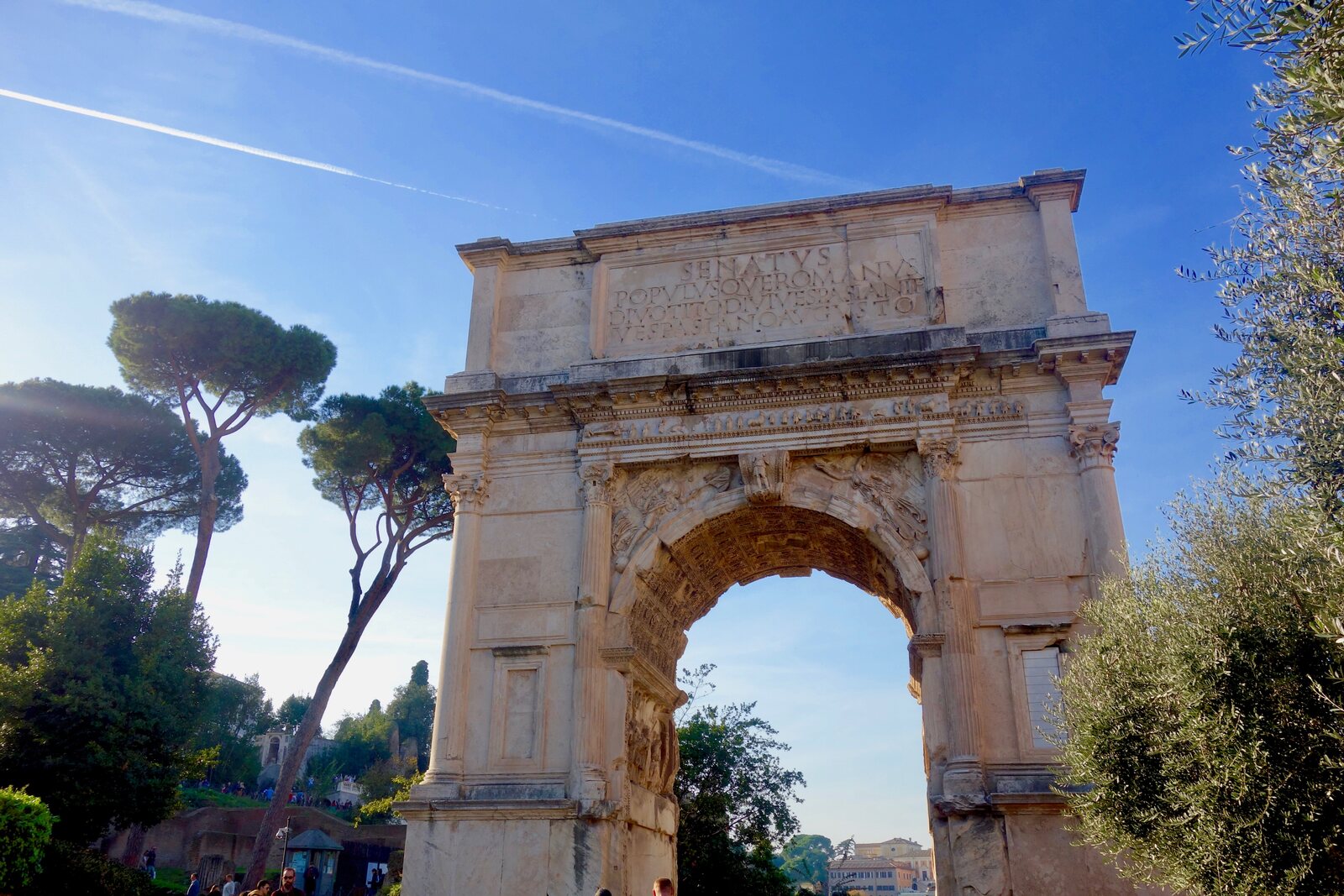
Look around first
What to notice
- Single-span Arch of Titus
- Relief with the procession
- Menorah on the inner relief
- Eagle on the vault
The story of the place
In the seventy-first year CE, Simon bar Giora was led along the Via Sacra. He commanded one of the largest armies of rebel Judea: he gathered peasants and runaway slaves around him, seized a significant part of Jerusalem, and fought both the Romans and rivals within the city at the same time. Defeat would cost him his army, his position, and his life.
The Roman siege was commanded by Titus, son of the recently proclaimed emperor Vespasian. His father had left to secure recognition in Rome, while his son remained to finish the war. Military success was meant to show that the new imperial family knew how to win after Rome's recent civil war. In the seventieth year, the legions captured Jerusalem and destroyed the Second Temple.
Simon hid in underground passages beneath the city. When the supplies ran out, he tried to make one final impression: he emerged from underground at the site of the destroyed temple, dressed in white and wearing a purple cloak. The Romans seized him, but did not kill him at once. Titus ordered that the captive be kept for the triumph in Rome.
A year later, Simon was led here with other captives. Ahead of them, the spoils from the Temple in Jerusalem were carried: a golden table and a seven-branched lampstand—the menorah. Vespasian and Titus followed, riding in laurel wreaths. The Via Sacra led the procession through the Roman Forum to the Temple of Jupiter on the Capitoline Hill. Roman authors explained its name—the Sacred Road—by precisely such ceremonial processions.
The ceremony followed an established order. Simon was led with a noose around his neck, then taken away from the procession to the place of execution by the Roman Forum and killed. Vespasian and Titus had already reached the Capitoline Hill, but they did not begin the sacrifice until a messenger reported the death of the enemy leader. Only after this news did those assembled shout, the emperors offer sacrifices, and a celebratory feast begin in the city. The captive's death was part of the rite that completed the victory.
Titus really did pass here, but not beneath this arch: it did not yet exist. After the triumph, he became Vespasian's heir, then emperor, and died after spending two years on the throne. His younger brother and successor Domitian ordered a commemorative arch built on the Via Sacra and secured the deification of the dead man. The inscription on the Colosseum side dedicates it to the divine Titus, son of the divine Vespasian. Hence the name—the Arch of Titus.
Inside the passage, one relief shows people carrying the menorah and the temple table; another shows Titus riding in a chariot, while on the vault an eagle raises him to the gods. The sculptors did not depict Simon bar Giora, whose death brought this triumph to its conclusion.
Useful on site
Inside the ticketed Roman Forum-Palatine area; in summer 2026, the area opens from 09:00, last entry is at 18:15, and it closes at 19:15.
Checked: June 27, 2026. Check the official source before visiting.On the ancient paving, watch your step and stop to look at the details. Do not go beyond the barriers for a better view of the reliefs.