 Guide On Map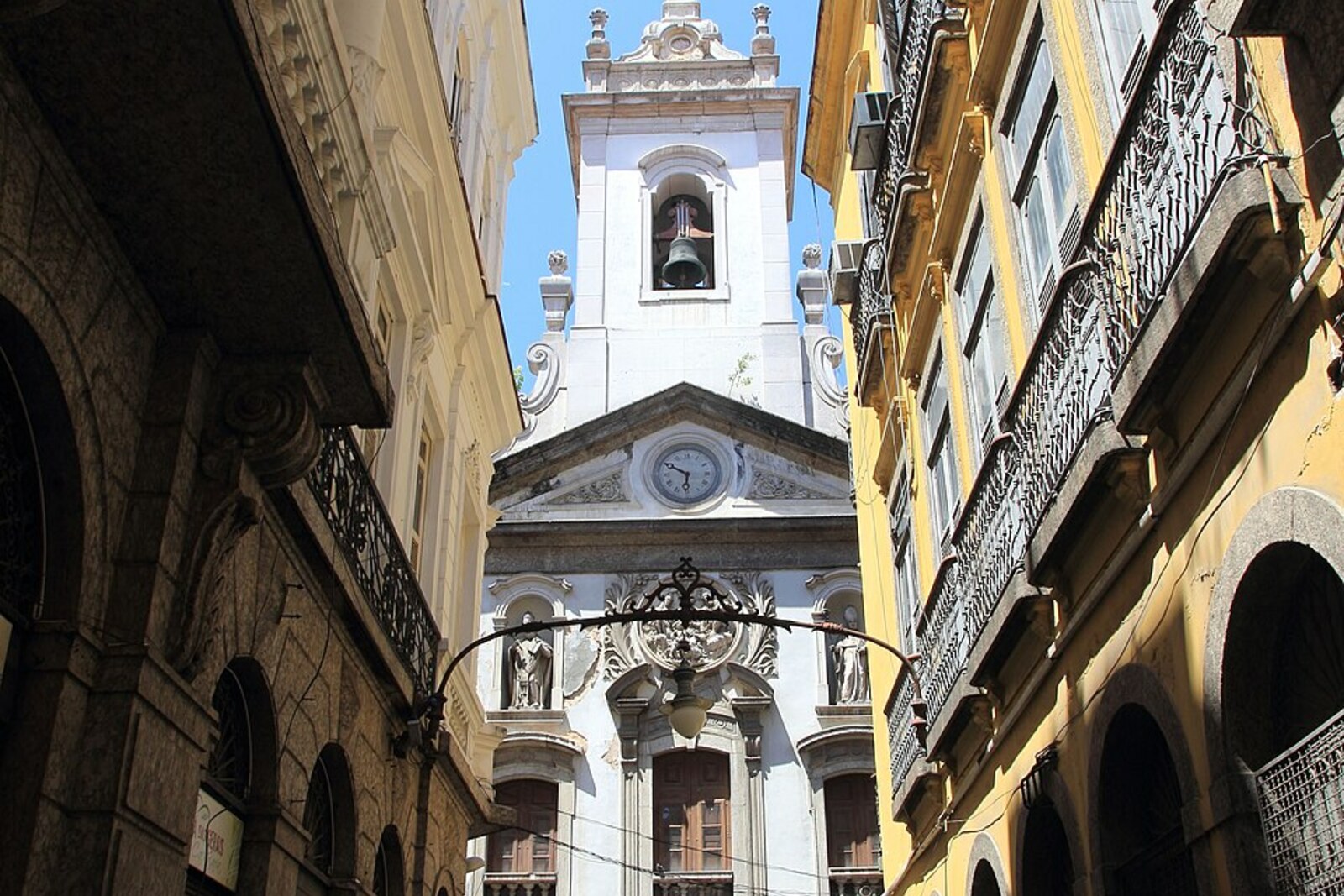
Look around first
What to notice
- Church façade
- Triangular pediment
- Bell tower
- Image of Our Lady in the consistory
The story of the place
The triangular pediment and bell tower mark the Church of Our Lady of Lapa of the Merchants on the street that led to the warehouses and docks of the old port. The church was managed by a brotherhood of nearby shop owners, with its own statutes, property, and pooled funds; expenses were covered by personal contributions, donations, and alms. The present silhouette of the façade appeared during a renovation in the second half of the nineteenth century, and an image of Our Lady is kept in the consistory behind it. An open street shrine once stood by the neighboring alley; it is gone now.
This corner once had two altars to the same Our Lady and two groups of merchants who could not peacefully share her feast.
The first altar appeared by present-day Travessa do Comércio, when this stretch of Rua do Ouvidor was called Rua da Cruz—the Street of the Cross. It was an open street shrine put up by mascates, small itinerant vendors who traded near the docks. Their earnings fit into a basket or a bale; they had no money for a separate church. They chose Our Lady of Lapa as their patroness. In Portuguese, “lapa” means a rock cave: the name refers to a Portuguese tradition about an image of Our Lady found in a cave.
On June twentieth, seventeen forty-seven, the wealthier owners of nearby shops decided to establish their own brotherhood. They sought a permanent church that they themselves would manage. The merchants contributed personal funds, collected donations and alms, bought three houses opposite the old shrine, and demolished them. Three years later, services were already being held in the completed part of the church. This is how the dedication to Our Lady of Lapa of the Merchants arose. The word “mercadores” refers specifically to the members of the brotherhood who paid for the church.
The old shrine of the itinerant vendors remained in place. The two sanctuaries of the same saint now stood opposite each other across the street: the modest communal altar of the mascates and the merchants’ church, with its own statutes and property. Parishioners gradually moved to the new church. The brotherhood itself preserved accounts of quarrels and provocations, especially during the feast of the patroness, when city officials had to be called in to calm the disputants. For the itinerant vendors, it was a dispute over the only place created with their pooled money, and over the image around which their community held together.
The resolution came on August twelfth, eighteen twelve. Supporters of the old shrine ended their separate services and moved their images of Our Lady of Lapa, the Christ Child, and Saint Anne into the church, together with the liturgical vessels and festive decorations. The wealthy brotherhood gained a single church, while the cult of the mascates ceased to exist independently.
The name Rua do Ouvidor became established a little earlier, around seventeen eighty. Francisco Berquó da Silveira, the district ouvidor—a royal judge who heard residents’ complaints—settled here. His office gave the whole street its name. Yet the church preserved the memory of the occupation of the people for whom this particular corner became important: from here, the road led to the warehouses and docks of the old port.
The brotherhood added the triangular pediment and bell tower during a renovation in the second half of the nineteenth century. The itinerant vendors’ original shrine by Travessa do Comércio is no longer there. Its image of Our Lady is kept in the consistory, behind the façade of the church that the shop owners once built opposite it.
Useful on site
The street is always accessible; access to the church and specific interiors depends on the parish schedule and the day of the week.
Checked: June 17, 2026. Check the official source before visiting.The street is easy to take in from outside; the damaged statue and the preserved core can be seen only when the church is accessible.