 Guide On Map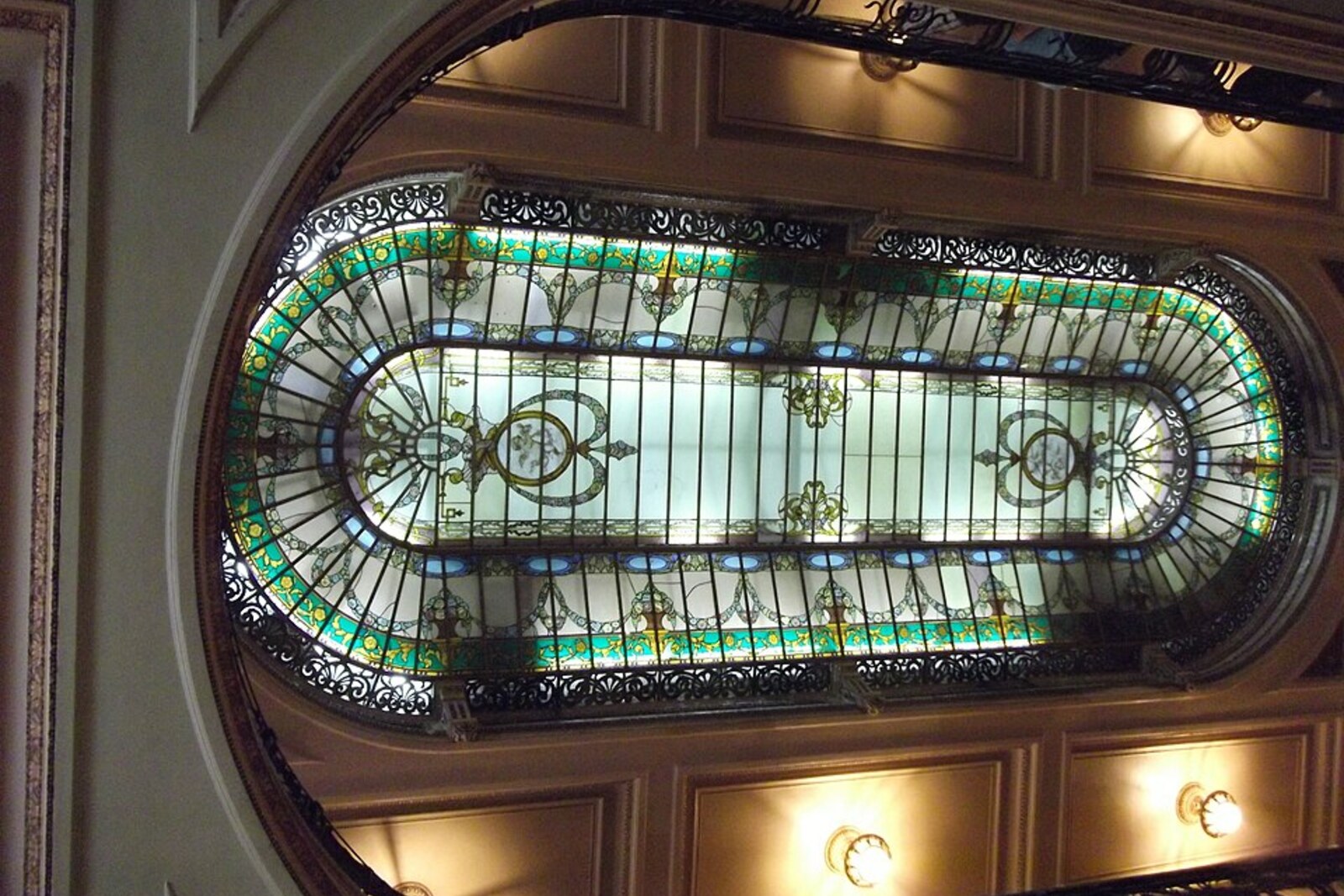
Look around first
What to notice
- Carved furniture
- Belgian mirrors
- Stained-glass skylight
- Upstairs tearoom
The story of the place
The confectionery was opened by immigrants from Portugal. At first, under one roof, goods were sold here, a warehouse was kept, sweets were made, and sugar was refined. When production was moved, the freed-up space was given to visitors. The carved furniture, enormous Belgian mirrors, and tearoom beneath a stained-glass skylight appeared during later renovations; sweets and lunches are still served here.
Olavo Bilac, a poet and newspaper writer, came here after a quarrel at another confectionery. He gathered journalists and writers around him, people who needed a regular table for conversation, arguments, and work. Earlier, Bilac's group met at Confeitaria Paschoal on neighboring Rua do Ouvidor. The cause of the falling-out was recounted in different ways; a later version links it to an unpaid bill. The outcome is known: Bilac declared that he would never set foot in Confeitaria Paschoal again and led his friends to Confeitaria Colombo.
The confectionery was opened by two Portuguese emigrants in eighteen ninety-four. Its name was dedicated to Christopher Columbus: Colombo is the Portuguese form of his surname. At first, it housed a salesroom, a warehouse, sweet production, and a sugar-refining workshop. The city's most important visitors still preferred Rua do Ouvidor, so co-owner Manuel José Lebrão looked for a way to draw them to Rua Gonçalves Dias.
Bilac's group offered such an opportunity, although these people could hardly be called profitable customers. Lebrão allowed them to put orders on credit and sometimes accepted advertisements in verse instead of money. The poet and journalist Emílio de Meneses once composed a sonnet at the table asking to borrow thirty thousand reis. In it, he rhymed pastries with money. In another poem, Meneses called Confeitaria Colombo a branch of the Brazilian Academy of Letters.
Lebrão risked unpaid bills, but the public came after the writers. People wanted to see those whose poems, articles, and caricatures appeared in newspapers. The group gained tables and a patient proprietor, while the proprietor gained a reputation that pastries alone could not provide. Confeitaria Colombo pushed aside its former rival and became a regular meeting place for writers, journalists, artists, and politicians.
Lebrão moved the production and sugar-refining workshop to another space, freeing up more room for visitors. Later renovations continued the transformation he had begun: between nineteen fourteen and nineteen eighteen, the present carved furniture and enormous Belgian mirrors were installed here, and in nineteen twenty-two the upstairs tearoom opened beneath a stained-glass skylight.
The confectionery still sells sweets and serves lunches. One of its restaurants bears Bilac's name—the man who brought here a group with bills on credit. The restaurant on the second floor is called Cristóvão: this is the Portuguese name of Christopher Columbus, whose surname remains on the sign above the entrance.
Useful on site
The central Confeitaria Colombo is generally open on weekdays from 11:00 to 18:00; on the official website, Saturday hours are listed differently in different sections, as 17:00 or 18:00; it is closed on Sunday.
Checked: June 17, 2026. Check the official source before visiting.Whether you can sit down, go upstairs, or take a leisurely look around the rooms depends on current operating arrangements; check visiting conditions separately.