 Guide On Map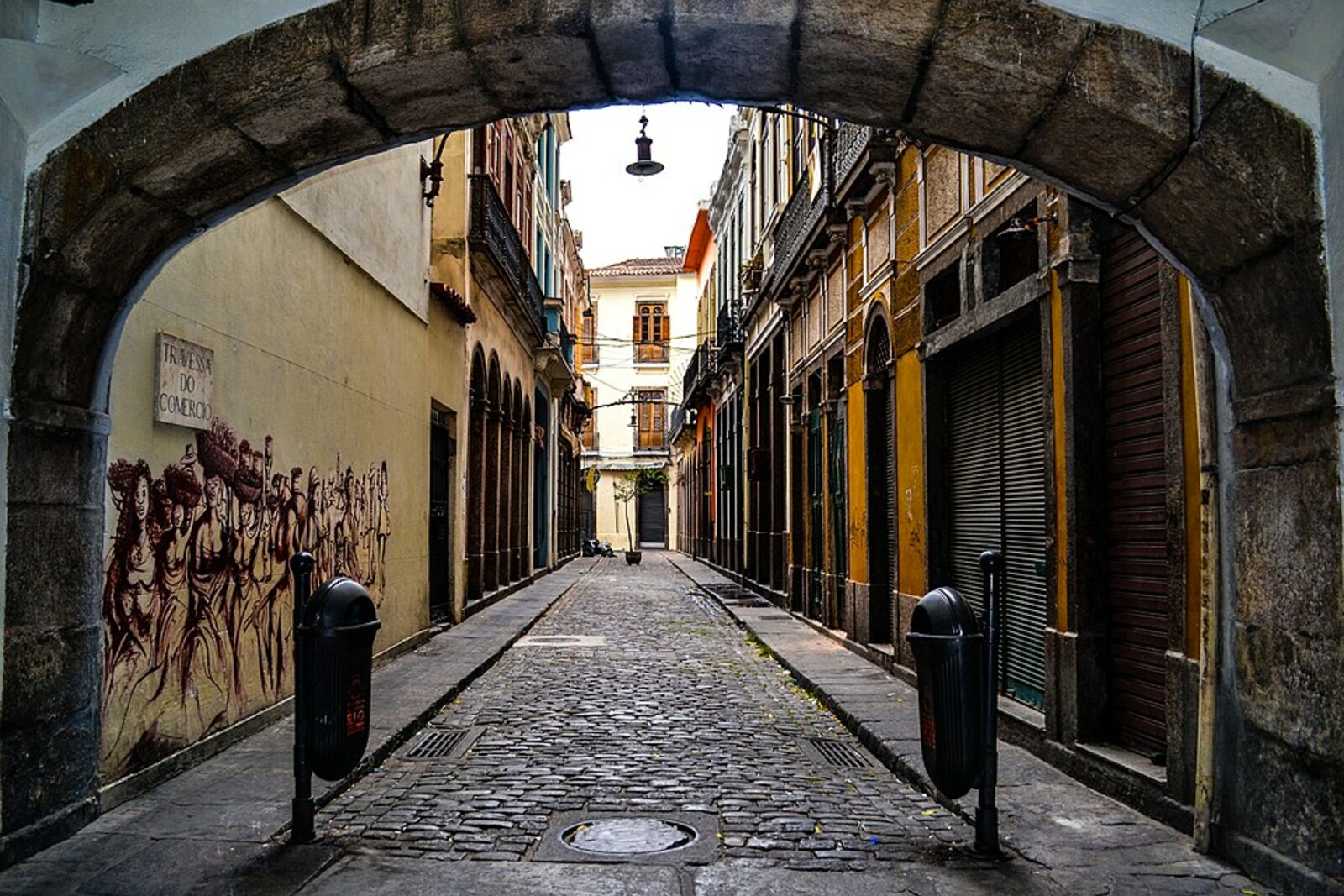
Look around first
What to notice
- The arch
- The passage beneath the house
- Travessa do Comércio
The story of the place
The living rooms of this house once extended directly above the passage, while below, the engineer José Alpoim left a route from the square to the market and trading streets. Francisco Teles de Meneses built rental houses here, intending to rent out the premises, so this private property came to have a corridor open to city residents. Later, the city senate met in one of the houses, and Travessa do Comércio still begins beneath the vault.
On July twentieth, seventeen ninety, the city archive burned above this arch. According to the findings of the investigation at the time, debtors commissioned the fire because the papers kept here prevented them from refusing to make payments for land.
By then, the name Teles had already become attached to the arch. In the seventeen forties, Francisco Teles de Meneses, the judge of orphans, commissioned the engineer José Alpoim to rebuild the family house and put up rental buildings beside it. The judge of orphans appointed guardians, compiled inventories of inheritances, and oversaw the property of minors. Teles invested money in real estate near Largo do Paço and intended to rent out the premises.
The new row of houses blocked the road from the square to the market and trading streets. Alpoim left a passage directly through the ground floor, with living rooms continuing above it. This is how Arco do Teles—the arch of the owner, Teles—appeared. The name Travessa do Comércio, Commercial Alley, was adopted later, but the passage already served a commercial purpose then.
From seventeen fifty-seven onward, the city senate rented one of the Teles houses. Officials met upstairs and kept here documents that made it possible to establish the boundaries of city lands, the names of plot holders, and the amount of annual fees. By the summer of seventeen ninety, the inspection of these holdings was almost complete. Holders who had not paid fees for years were about to be presented with their accumulated debts. For some, both money and the right to occupy land were at stake.
The fire began on the ground floor, in Francisco Xavier’s shop. He sold inexpensive ready-made clothing and lived on the proceeds from those goods. Xavier died in the fire. Old records call him a victim and attribute the commission to non-payers: investigators believed they wanted to destroy evidence of the city’s rights to the plots. The names of those who commissioned it could not be established, so arson remains the investigation’s conclusion, not a conclusively proven accusation.
The plan to make the papers disappear completely did not succeed. City councilors found forty-eight books in the fire ruins, took documents from the clerk’s house, requested copies from other institutions, and sent an agent to Lisbon for certified royal acts. Landholders were given thirty days to produce their contracts themselves. Most of the archive was restored, although disputes over payments continued for many years.
The senate house, Xavier’s shop, and the other Teles buildings burned down. Of the whole complex, the fire destroyed only everything except the arch. Travessa do Comércio still begins beneath it—the passage Alpoim left in a private house almost half a century before the fire.
Useful on site
The passage and street are accessible as public space; the daytime and evening atmospheres differ greatly.
Checked: June 17, 2026. Check the official source before visiting.The passage is narrow and lively: do not linger in the middle, and listen where you do not obstruct pedestrians or the work of businesses.