 Guide On Map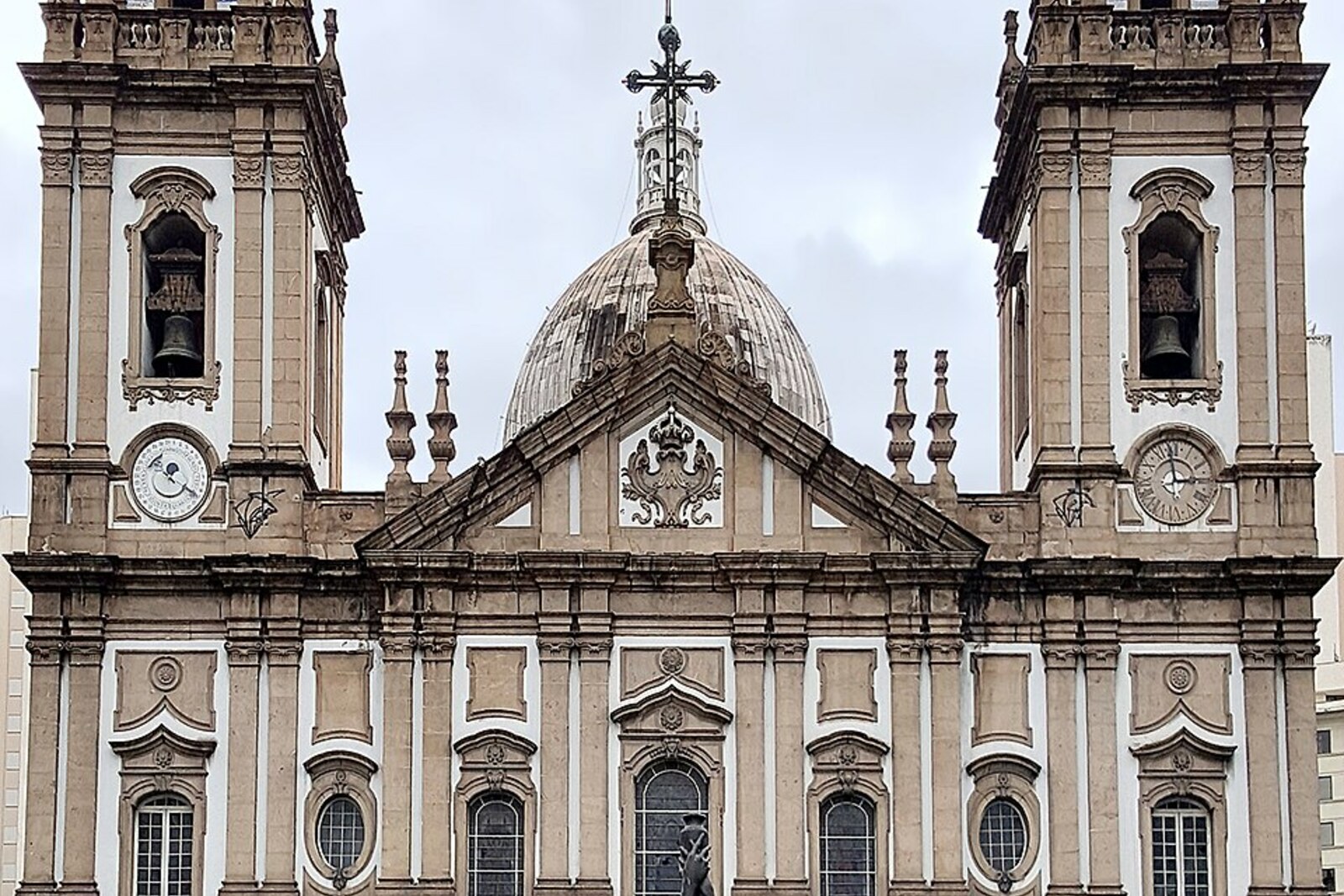
Look around first
What to notice
- The façade facing the bay
- The dome
- The central nave
- Six ceiling panels
The story of the place
The dome and the façade facing the bay belong to the church that rose where a small, dilapidated chapel once stood. Wealthy merchants from the Brotherhood of the Blessed Sacrament of Candelária raised money for the new church, and construction stretched over one hundred twenty-three years: different generations completed the dome, the vaults, and the decoration. Above the central nave, six ceiling panels form a maritime account of the sanctuary’s origin, while the church itself also led an ordinary parish life: people were baptized, married, and buried here, and parish records were kept. Long ago, land reclamation pushed the ground before the façade out into the bay, yet the church still looks in its direction.
António Martins da Palma made his living from sea voyages: church tradition calls him the captain of a merchant vessel from the Canary Island of La Palma. In the first third of the seventeenth century, a storm caught the ship in the Atlantic Ocean. As the tradition tells it, António and his wife Leonor Gonçalves promised to build a chapel in the first port they reached alive. The ship made it to Rio de Janeiro, and the couple paid for a small chapel near the landing place—at that time, the shore of Guanabara Bay ran through here.
They dedicated it to Our Lady of Candelária, especially venerated in the Canary Islands. This title of the Virgin Mary is connected with the Presentation—the bringing of the infant Jesus to the Temple in Jerusalem. In the Western Church, the feast was accompanied by a candlelit procession; the word “Candelária” also comes from candles.
The storm and the vow belong to tradition, while the documents leave a less polished story. They confirm the existence of António, Leonor, and the chapel that belonged to them, but they do not prove that the spouses sailed together. One analysis of old records, published as early as the late nineteenth century, asserted that António married Leonor in Rio de Janeiro. The later conflict over the chapel, however, can be traced much more clearly.
In sixteen thirty-four, church authorities made it the center of a new parish—the city’s second. A private fulfillment of a vow became a place for baptisms, marriages, funerals, and parish records. António and Leonor opposed this use of their chapel. Five years later, they signed a deed of gift in favor of the local Holy House of Mercy and relinquished their personal rights to the building. The ownership dispute nevertheless continued for generations; the church was legally transferred to the Brotherhood of the Blessed Sacrament of Candelária only in eighteen thirty-four.
Even before the lawsuit ended, wealthy merchants belonging to this brotherhood began raising funds for the present church. Their overseers ordered it to be built exactly on the site of the dilapidated chapel. The work lasted one hundred twenty-three years: each generation received an unfinished church and left the next a dome, vaults, or decoration.
Before construction was completed, members of the brotherhood commissioned João Zeferino da Costa, a professor at the Imperial Academy of Fine Arts, to paint the central nave. For the artist, the work stretched over almost two decades and became his main work. In six ceiling panels, he set down the version of the origin that the brotherhood preserved: “The Departure,” “The Storm,” “The Arrival,” “The Fulfilled Vow,” the laying of the new church’s foundation, and its opening. The archival dispute over whether Leonor sailed with António did not make it into this sequence.
Masses are still celebrated here, and baptisms and weddings still take place, while the Brotherhood of the Blessed Sacrament manages the church. The first chapel is gone, and the shore has been pushed back by land reclamation, but the façade still faces the bay. Inside, above the nave, the sea route remains painted toward the place where António and Leonor once ordered their chapel to be built.
Useful on site
The façade and square are accessible daily; interior access, services, and events depend on the parish calendar.
Checked: June 17, 2026. Check the official source before visiting.It is convenient to listen to the story outside without blocking the entrance; when visiting the church, take services into account and keep quiet.