 Guide On Map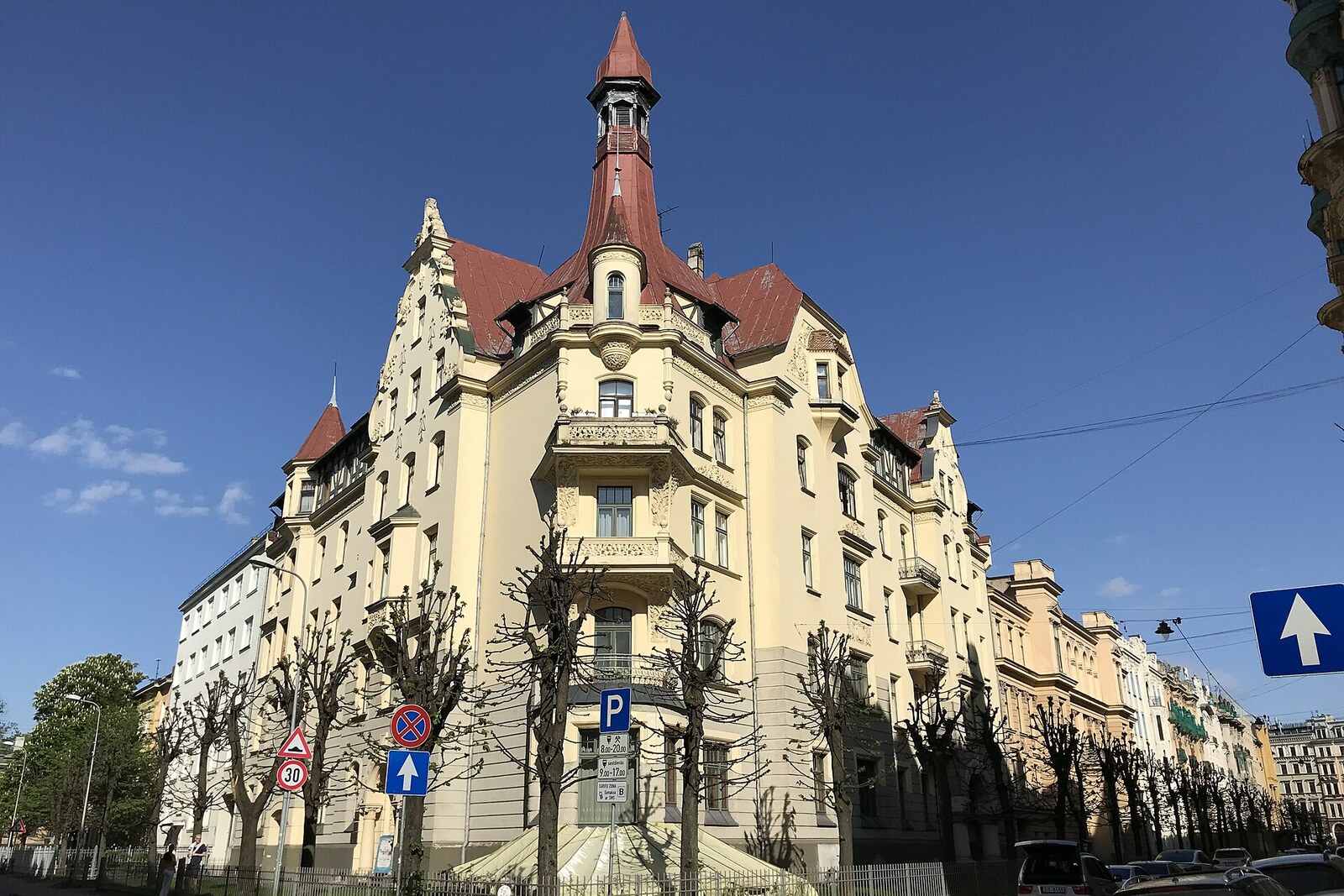
Look around first
What to notice
- Original radiators
- Paintings on the walls and ceilings
- Parquet floors
- Stained-glass window in the dining room
The story of the place
Behind the door at twelve Alberta Street, part of the old apartment layout has survived: the rooms, dining room, tall windows, doors, parquet floors, and paintings. When the museum opened here, restorers returned the altered spaces to their former arrangement and uncovered the finishes from the early twentieth century. Among the furniture, tableware, books, and photographs, the objects that remained in place are especially important: the original radiators with their valves, the stained-glass window in the dining room, the windows, and the floor.
In nineteen oh three, Konstantīns Pēkšēns built this house for three of his roles at once: he was the architect, the owner of the income-producing apartment building, and its future resident. Alberta Street had appeared only two years earlier, and large buildings with apartments for affluent tenants could be erected on its undeveloped lots. Any mistake here could not be blamed on the client: Pēkšēns himself was the client, and the costs would have to be recouped through rent.
He brought Eižens Laube into the project. Laube was a student in the architecture department who worked as a draftsman in Pēkšēns's office and wanted to become an independent architect. Laube helped develop the design of the house and produced its perspective drawing. Four years later, he received his diploma and opened his own office; twelve Alberta Street remained one of the works for which the authorship of both teacher and student has been confirmed.
Pēkšēns placed his apartment and studio on the ground floor. He lived here, made professional decisions, and prepared designs for other buildings in Riga until nineteen oh seven. He needed the rooms both for family life and for the work by which he earned his living. Even the heating connected these two sides of his life. Pēkšēns owned a plumbing and heating company. It installed central heating and, before the First World War, became the largest business of its kind in Riga. The company continued operating under his name until nineteen forty. The original radiators survive in the apartment, and the museum points out the Pēkšēns mark on their valves.
When the city authorities decided in two thousand eight to establish an Art Nouveau museum here, the rooms already needed repairs and some of the partitions had been altered. Restorers reinstated the apartment's layout and uncovered the original finishes: paintings on the walls and ceilings, parquet floors, doors, windows, and the stained-glass window in the dining room. The museum opened in two thousand nine. Its sign names it the Riga Art Nouveau Centre. In Riga, Art Nouveau is commonly called Jugendstil.
The furnishings inside are not a complete collection of Pēkšēns's personal belongings. The museum staff created a model apartment of an affluent Riga resident from the early twentieth century. When the museum opened, they asked city residents to bring in preserved family possessions: furniture, tableware, clothing, photographs, and books. These donations and later acquisitions grew into a collection of more than seven thousand objects.
Pēkšēns left the apartment in nineteen oh seven. What remains here from his time is the arrangement of the rooms, the paintings, parquet floors, windows, doors, and radiators. The furniture and table settings appeared later, and the kitchen stove was moved here from a neighboring apartment in the same building.
Useful on site
Tue–Sun 10:00–18:00; tickets until 17:45; closed Mon. Checked 29.06.2026 against the museum website and LiveRiga.
Checked: June 29, 2026. Check the official source before visiting.Plan your museum visit separately and check the admission conditions in advance; even without going inside, the stop still works as an exterior viewing of the architect-designed house.