 Guide On Map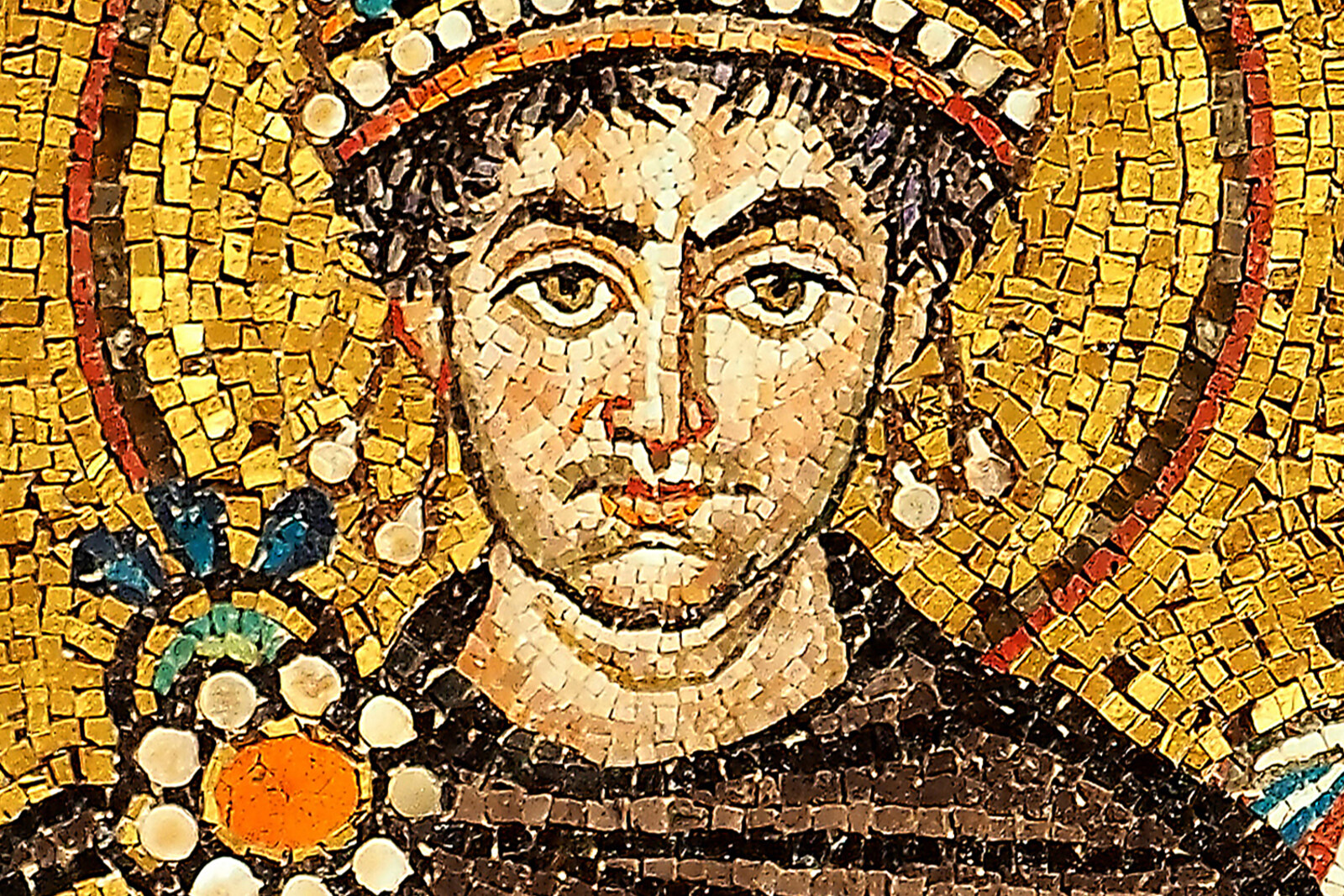
Look around first
What to notice
- The figure of Saint Vitalis in a military cloak
- The model of the basilica in the bishop's hands
- Interlaced letters on the stone blocks above the capitals
- The inscription above the bishop in the imperial procession
The story of the place
Above the altar, Christ extends a martyr's crown to a man in a military cloak. This is Saint Vitalis, after whom the basilica is named. No reliable biography of him has survived. According to church tradition, Vitalis served under the Roman judge Paulinus and, in Ravenna, supported a Christian physician, Ursicinus, who had been sentenced to death. For this, Paulinus ordered Vitalis to be buried alive. The tradition connects the execution specifically with this site. In the fifth century, a small structure dedicated to the martyr already stood here; it was later incorporated into the new church.
On the other side of Christ, Bishop Ecclesius holds a model of this church. He began construction in the twenties of the sixth century, when Ravenna was ruled by the Ostrogoths. The banker Julius Argentarius contributed twenty-six thousand solidi—gold coins of the time—to the work. Most of the construction fell during the tenure of the next bishop, Victor. His name is still hidden in interlaced letters on the stone blocks above the capitals.
But another man is named beside Emperor Justinian in the main mosaic—Maximian. He arrived in Ravenna when the church was nearly finished.
Maximian was a forty-eight-year-old deacon from Pula, a city on the opposite shore of the Adriatic Sea. After Victor's death, the clergy of Ravenna expected to receive one of their own candidates. Justinian chose Maximian and ordered Pope Vigilius to consecrate him as bishop. The consecration took place in the Greek city of Patras in five forty-six. To the people of Ravenna, the new bishop was an outsider who owed his position to the imperial court.
The priest of Ravenna Andrew Agnellus recorded this story almost three centuries later, so its details should be treated as local tradition. According to his account, the townspeople initially refused to accept Maximian. The future bishop had the means to buy favor. Still in Istria, while digging the ground before sowing, he supposedly found a vessel of gold. Maximian took some of the coins to Justinian and hid the rest in the carcass of a slaughtered bull and in goat skins sewn by a cobbler. The emperor asked whether he had any gold left. Maximian replied that only what was in the carcass and the clothing remained; Justinian understood these words quite differently.
With that very gold, Agnellus continues, Maximian acted at the gates of Ravenna. He invited influential townspeople and priests to dinners, gave out gifts, and repeated this until his opponents agreed to let him in. The treasure and the trick are not documented. The conflict itself, however, leaves almost no room for doubt: the emperor sent the city his own candidate, while the local church wanted another.
A few months later, Maximian consecrated San Vitale. At that very time, mosaicists were completing the two processions on either side of the altar. Justinian holds a gold dish for the Eucharistic bread, while Empress Theodora, on the opposite wall, carries a cup for the wine. Neither Justinian nor Theodora came to the consecration. They were depicted as participants in the liturgy, continually approaching with gifts the altar at which the emperor-appointed bishop officiated.
Researchers consider Maximian's head a later alteration within an already assembled panel. Victor, who directed most of the construction, was probably there before. His face was replaced, and Maximian's name was set in mosaic above the new one—the only inscription that indisputably identifies a person in the imperial procession.
Justinian, who secured Maximian's appointment, was never in Ravenna. In San Vitale, the bishop whom the townspeople at first did not want to let in has a face and a full name; Victor has interlaced letters in stone.
Useful on site
March 8 – November 1 2026: daily 9:00–19:00; November 3 2025 – March 7 2026: 10:00–17:00. Last admission 30 minutes before closing.
Checked: June 24, 2026. Check the official source before visiting.The main sights are in the altar area: let your eyes adjust to the light and examine the two processions one after the other, without blocking the passage.