 Guide On Map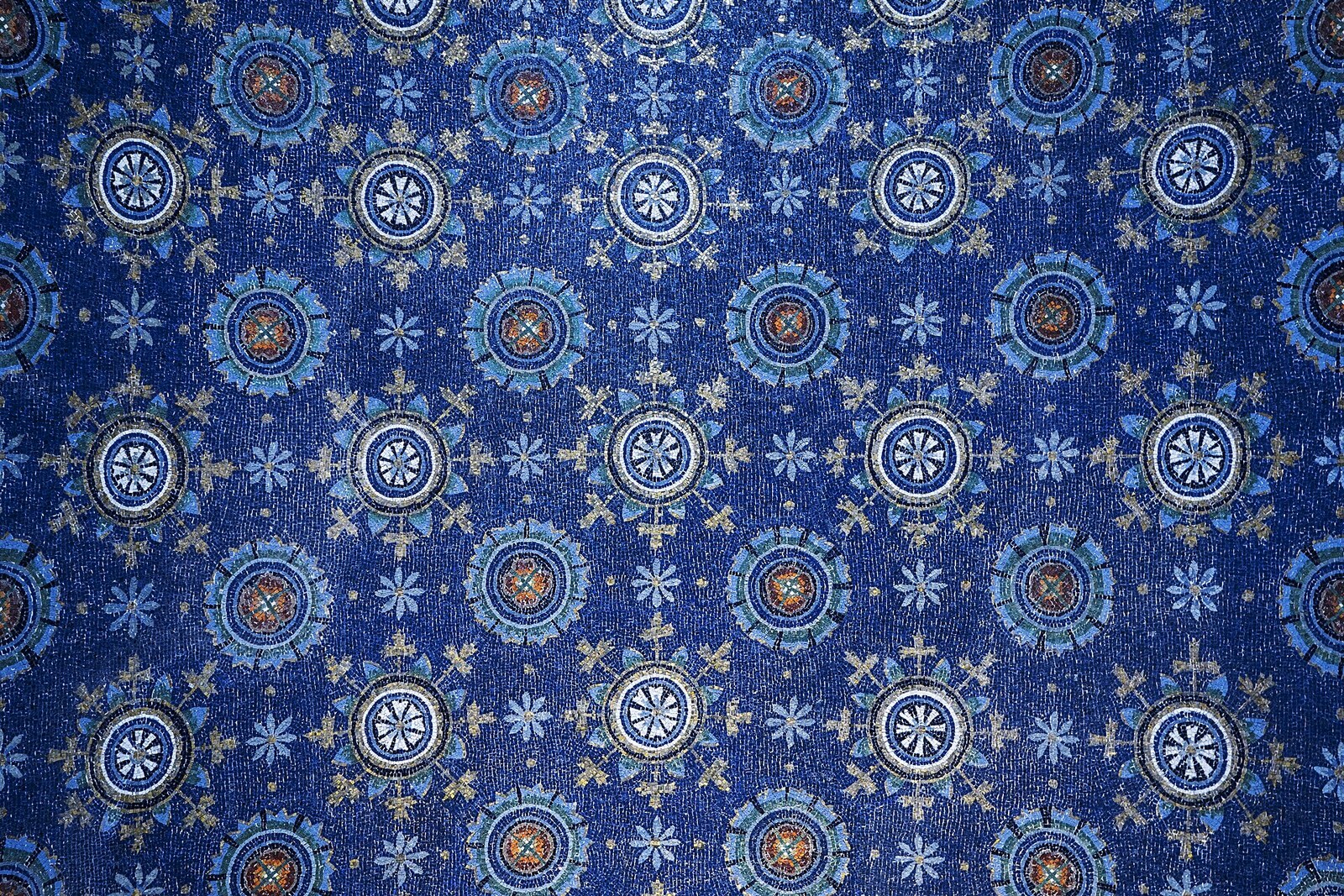
Look around first
What to notice
- The large sarcophagus opposite the entrance
- The opening in the rear wall of the sarcophagus
- Two smaller sarcophagi
- The mosaic of the Good Shepherd
The story of the place
The present separate brick building was once a side chapel beside the long portico of the Church of Santa Croce: it adjoined the portico, and people entered it from the gallery. The small room with a cruciform plan was used for prayer before mosaics of the apostles, the Good Shepherd, and Saint Lawrence; it may have borne the last saint's name. Later, the portico was dismantled, and the chapel remained on its own. Mosaics gleam on the walls, and opposite the entrance stands the largest of the three stone sarcophagi.
On the third of May, fifteen seventy-seven, the largest sarcophagus in this chapel caught fire from within. At the time, the building was called the Chapel of Saints Nazarius and Celsus. Following an old custom, the monks of Basilica of San Vitale opened it to the townspeople, and several children decided to look at the body that everyone believed belonged to Galla Placidia. They pushed burning candles through a narrow opening in the rear wall of the sarcophagus. The candles fell onto the cypress boards lining its interior.
The abbot ordered the plaster fastening the lid to the stone chest to be broken and the fire doused with water. Girolamo Rossi, a historian of Ravenna who recorded the events of his city, claimed that after the fire he saw scattered bones inside with his own eyes. He considered them the remains of the empress. Rossi did not report whether the children were punished. Their curiosity ended with an opened tomb, charred wooden lining, and a body that could no longer be identified.
The fire itself is well documented. The identity of the deceased is not.
Galla Placidia, whose name now stands at the entrance, was the daughter of Emperor Theodosius I and the mother of Valentinian III. After the death of her brother, Emperor Honorius, in four twenty-three, the western throne was seized by the palace official Joannes, who sought the imperial title. For Galla, defeat meant that her young son would be left without an inheritance and that she herself would be an exile at the eastern court.
She secured support for her son. Troops sent from the east captured Joannes, and in the autumn of four twenty-five, six-year-old Valentinian was proclaimed western emperor. Galla returned to Ravenna and governed in his name while he was a child. The construction of the small cruciform chapel, probably commissioned by the empress herself, is also dated to this period.
In those years, it looked different. There was no separate brick building: the chapel adjoined the end of the long portico of the Church of Santa Croce—the Holy Cross. It was entered through this portico. Here, people prayed before images of the apostles, the Good Shepherd, and Saint Lawrence walking toward the gridiron on which, according to tradition, he was burned. The chapel may have been dedicated specifically to Saint Lawrence. A funerary function is also probable, but neither its original purpose nor even the identity of its patron is confirmed by an inscription.
Galla secured the throne for her son: Valentinian ruled until four fifty-five. She herself died in Rome in four fifty and, according to the most reliable evidence, was buried there, in the imperial mausoleum beside the old St. Peter’s Basilica. Neither her body, nor the remains of her husband Constantius III, nor Valentinian's remains can be confidently connected with the three sarcophagi in the Ravenna chapel. The names of the deceased are not carved on them; it is not even known whether all these stone chests stood here from the beginning.
Later, the portico of the Church of Santa Croce was dismantled, and the chapel became a separate building. Medieval tradition turned the probable patron of the entire complex into its principal deceased, and the chapel into the Mausoleum of Galla Placidia.
The large sarcophagus opposite the entrance remains in the same place. In eighteen ninety-eight, restorers opened it again and found fragments of bone and charred cypress wood. The wood confirms the account of the fire. There was no inscription inside naming Galla Placidia.
Useful on site
8 March — 1 November 2026: daily 9:00–19:00; 3 November 2025 — 7 March 2026: 10:00–17:00. Last entry 15 minutes before closing.
Checked: June 24, 2026. Check the official source before visiting.Do not judge the room by its modest facade. Inside, pause for a moment without a screen in front of your eyes: the color of the mosaics depends on the incoming light.