 Guide On Map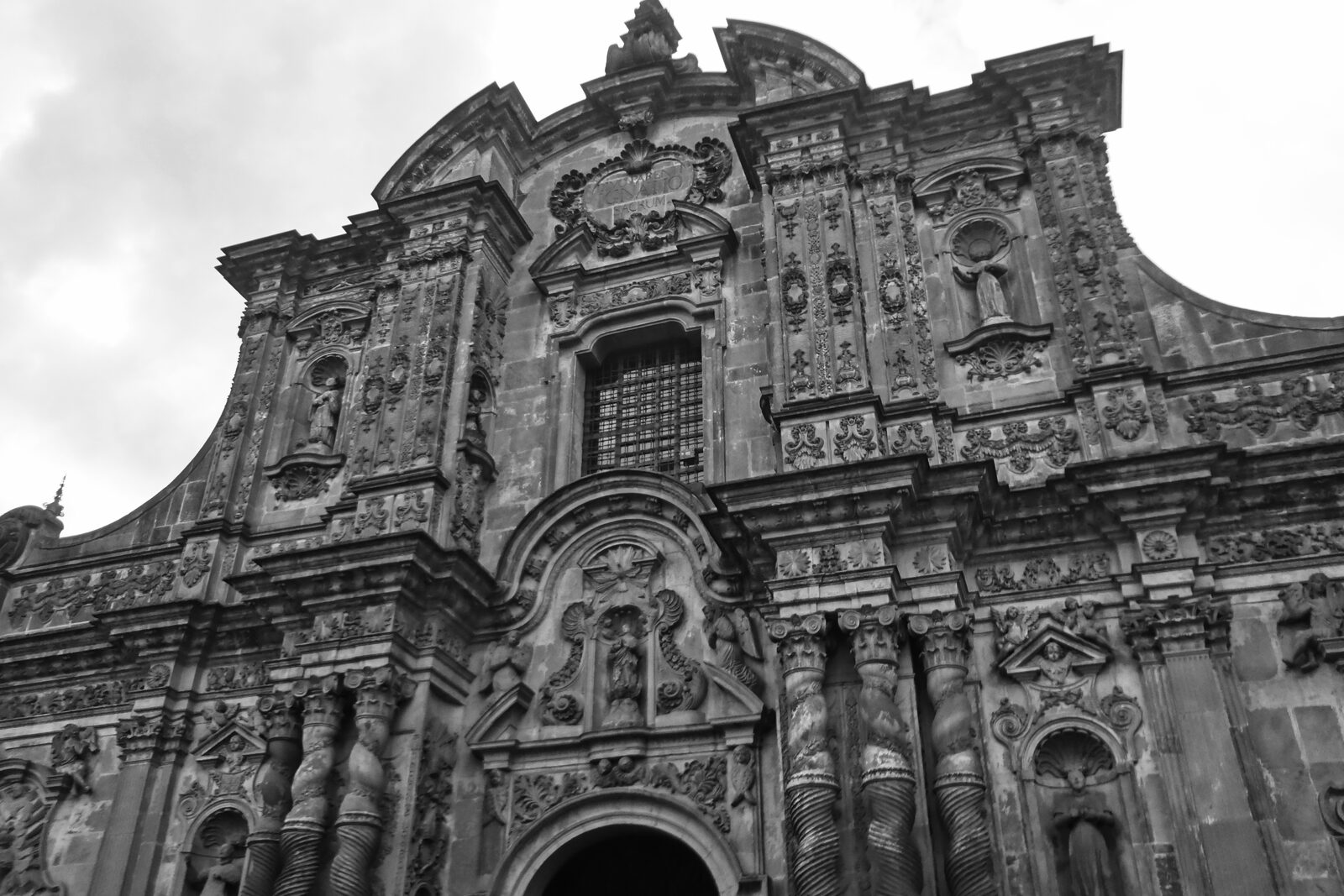
Look around first
What to notice
- Preacher’s pulpit
- Gilded high altar
- Bronze urn beneath the altar
- Our Lady of Loreto Altar
The story of the place
The gilded high altar belongs to the church around which the Jesuits established an entire quarter with a college and university. Masses were not the only thing held here: priests taught, heard the townspeople’s confessions, and delivered sermons. The word company in the order’s name once meant a circle of companions. The burial site remains at the Our Lady of Loreto Altar, and a bronze urn can be seen beneath the high altar.
In the spring of sixteen forty-five, the Jesuit Alonso de Rojas climbed into the pulpit of this church. He was a preacher and spiritual director who sought repentance from the people of Quito. Shortly before this, an earthquake had destroyed Riobamba, tremors had reached Quito, and an epidemic was spreading through the city. At the time, disasters were understood as punishment for sins. At the end of his sermon, Rojas offered God his own life, so that the city might be spared.
Near the pulpit stood twenty-six-year-old Mariana Paredes y Flores. She came from a well-off landowning family, lived in her elder sister’s home, and belonged to no convent. Mariana chose the life of a lay ascetic: Jesuits were her spiritual directors, and strict fasts and penitential practices had already damaged her health.
According to testimony gathered for a church investigation a quarter century later, Mariana decided that people needed Rojas more as a priest and offered herself in his place. Witnesses claimed that she fell ill that same day, never again left her room, and died on May twenty-sixth. They also linked the end of the tremors and the epidemic’s gradual retreat to her sacrifice. This causal link belongs to religious tradition; it cannot be verified as a medical or natural fact.
Rojas outlived Mariana. At her funeral, he delivered another sermon, and in sixteen forty-six it was printed in Lima. This created the first written account of Mariana’s death as voluntary martyrdom. Jesuits spread her story, sought church recognition, and called Mariana their spiritual daughter. She was buried here, at the Our Lady of Loreto Altar.
“Society of Jesus” in the church’s name is the official name of the Catholic Jesuit order, founded by Ignacio de Loyola. In older usage, “society,” or “company,” meant an association of companions. On arriving in Quito, the Jesuits established a church, college, and university in this quarter. Here they taught, heard confessions, and preached; that is why Rojas was in this pulpit, and why Mariana chose this church as a place of prayer and burial.
In eighteen fifty, Mariana was beatified. In nineteen fifty, Pius XII canonized her—she became Ecuador’s first saint. Today, the church is visited as a Baroque monument, services are held here, and her relics are venerated. Beneath the gilded high altar stands a bronze urn containing the remains of the woman who once listened here to Rojas’s sermon and decided that he should not be the one to die.
Useful on site
The official La Compañía foundation lists visits Monday through Friday 09:30–18:00, Saturday and holidays 10:00–16:00, and Sunday 12:00–16:00. Nighttime or after-hours visits require advance reservation; liturgy may affect access.
Checked: July 1, 2026. Check the official source before visiting.The interior calls for a slow look, but visiting may depend on services and photography rules. If the doors are closed, limit yourself to viewing the exterior.