 Guide On Map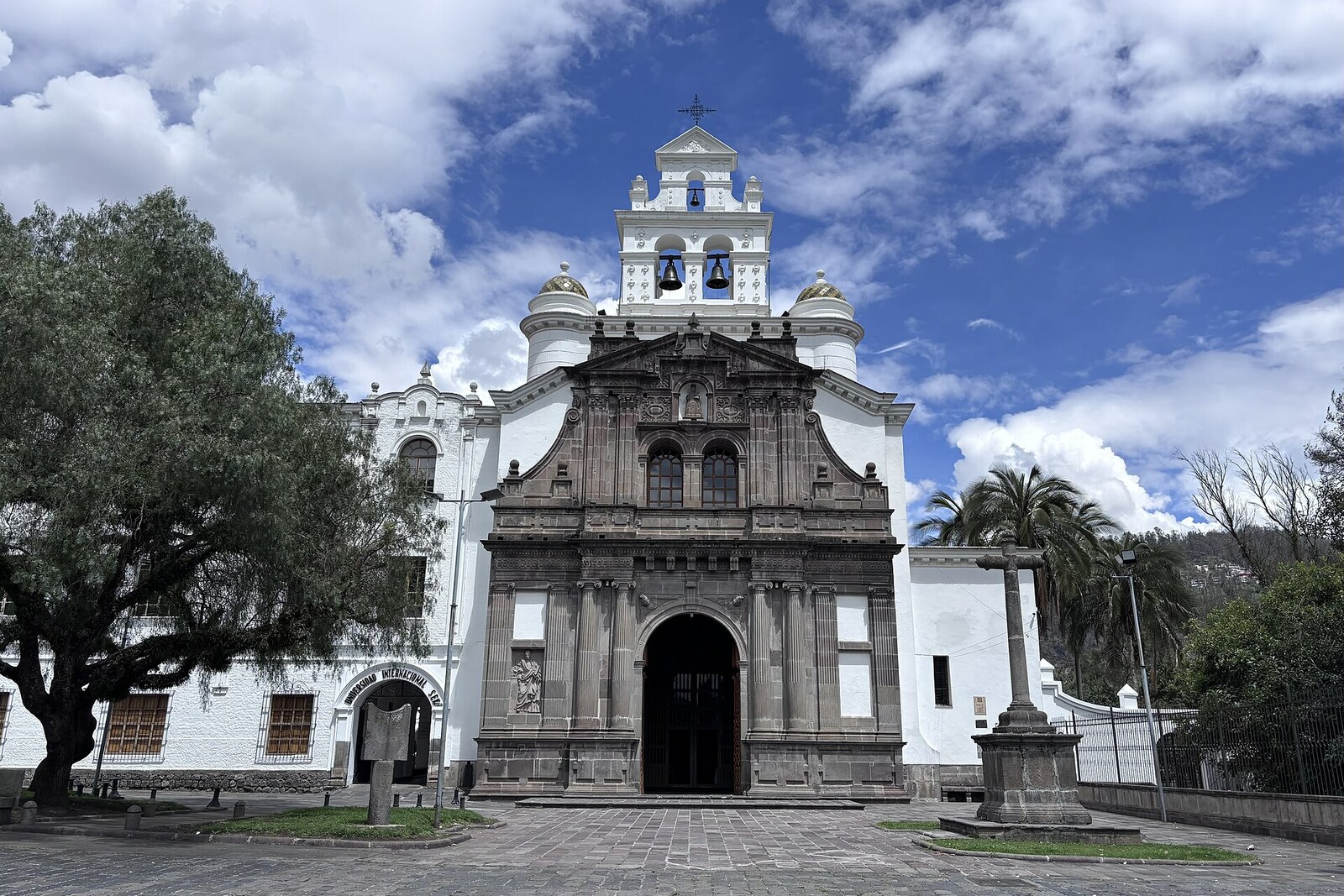
Look around first
What to notice
- The portable image on a wooden panel
- Two protruding bars
- Carved retablo
- Statue of Our Lady
The story of the place
Behind this church’s façade lies the Guápulo Sanctuary, a place people come to for a particularly venerated image. At first, pilgrims were received in a small chapel, but the flow of people required a more spacious church, completed by the end of the seventeenth century. The former statue in the high altar did not survive a fire, and the current one was carved only in the middle of the twentieth century. The carved retablo and the statue of Our Lady recall that regular services and a long procession of pilgrims were anticipated here.
In one of the chapels, a small panel bearing an image of Our Lady is kept. Two bars protrude from below: the panel was mounted on them on a carrying platform. This traveling image helped pay for the church before you today.
Veneration of Our Lady of Guápulo grew out of the Spanish cult of Our Lady of Guadalupe from Extremadura. In fifteen eighty-one, a religious brotherhood in Quito commissioned a local image from the sculptor Diego de Robles and the painter Luis de Rivera. The brotherhood’s steward, Cristóbal López, paid the masters four hundred sixty patacones—large silver coins. In December fifteen eighty-four, the statue was consecrated and then moved to a small chapel in Guápulo. Healings and help during disasters began to be attributed to it, and pilgrims started coming here. Thus the chapel became a sanctuary—a church people visit for a particularly venerated image.
In the middle of the following century, construction began on a large church for pilgrims, but there was not enough money. The parish priest José de Herrera y Cevallos undertook to finish it. In sixteen seventy-six, he set out to collect donations throughout Spanish America. Taking the statue from the altar was too dangerous, so Herrera took its flat image on a wooden panel. The image was named La Peregrina—the Wanderer.
Herrera covered more than six thousand leagues with it. He showed the panel, told of the miracles of Guápulo, and asked for money for construction. To collect donations permanently, the priest founded the Brotherhood of the Slaves of Our Lady of Guadalupe. Even the membership fee reflected the division of colonial society: a white member paid one patacón, an Indigenous person four reales, half that amount. The money collected made it possible by the end of the seventeenth century to complete the church and commission its altars, pulpit, and painted cycles.
Herrera wanted to ensure daily services here even after his death. He set aside funds for a community of secular priests and obtained papal approval for it from Pope Alexander VIII. The Spanish king did not grant permission: Quito was already considered to have too many religious houses. Herrera died after serving in Guápulo for almost forty years, without ever seeing the community he had envisioned. While waiting, he appointed four chaplains, obliged to recite the Liturgy of the Hours together every day and conduct services.
In eighteen thirty-nine, a fire destroyed the old high altar and that very statue by Diego de Robles, for which pilgrims had begun coming here. The Tejada brothers restored the altar from a painting by Miguel de Santiago depicting the former interior. The current statue of Our Lady was carved by the master Montesdeoca in nineteen fifty-three.
The original image is no longer in the high altar. But La Peregrina, with its two bars for the carrying platform, has survived in the chapel—the panel that José de Herrera carried throughout America so that Guápulo’s pilgrims would have this church.
Useful on site
The Archdiocese of Quito publishes a general schedule Tuesday–Saturday 09:00–13:00 and 15:00–19:00; Masses and parish events may limit tourist visits. Checked 2026-06-30.
Checked: June 30, 2026. Check the official source before visiting.Remember that this is a place of prayer: mute your phone, speak quietly, and observe photography restrictions. If entry is limited by a service, view the architecture from the plaza and return at another time.