 Guide On Map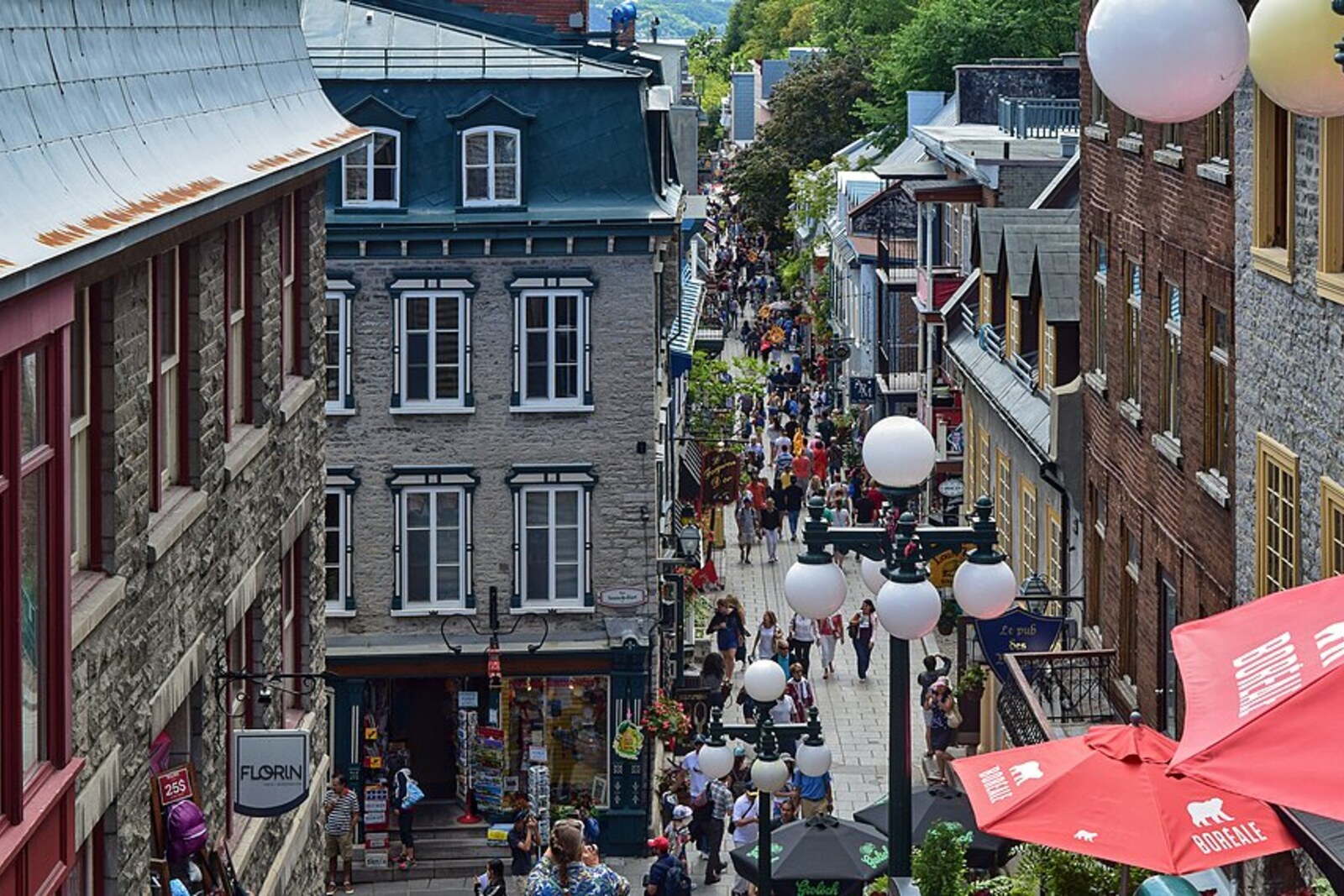
Look around first
What to notice
- Row of restored houses
- Shops and workshops
- Apartments above commercial premises
- Narrow street
The story of the place
In the narrow passage at the foot of the cliff, shop windows and doors stand side by side, and people still live above the commercial premises. French craftspeople settled here as early as colonial times; later this lower street was occupied by port stevedores and shipyard workers. Its name grew from a path to Champlain Fountain, and the word “Petit” refers only to the narrowness of the street itself. The old beams and doors in the houses were not hidden beneath colonial decoration: they were left alongside traces of later alterations.
On November twelfth, nineteen eighty-five, craftspeople and the owners of the shops here signed the charter of a cooperative in order to buy the buildings where they lived and worked. American investors were also interested in the same block. The sellers could have transferred all the real estate to them in a single transaction, but agreed to a buyout by local tenants. The cooperative received loan support, the craftspeople became co-owners of the houses, and they themselves began deciding whom to lease premises to and which shops to open on the street.
That purchase had a nine-year prehistory. By the end of the nineteen sixties, Lower Town had lost its former connection with the port and shipbuilding. There was less work, residents were leaving, stone walls were covered with metal sheets, and windows were boarded up. A municipal redevelopment project for Place Royale called for demolishing part of the Petit Champlain district houses and creating parking here for a planned open-air museum. Individual artists and craftspeople still occupied the inexpensive premises, but the street could have disappeared before they had time to establish themselves here.
In nineteen seventy-six, Jacques de Blois, an architect who wanted to restore a residential neighborhood without styling it after a single era, and Gérard Paris, an entrepreneur who invested money in the project, bought the first dilapidated houses. De Blois wanted to bring families, workshops, small restaurants, and shops back here. This was connected with the street's own past: craftspeople had settled at the foot of the cliff as early as the French colonial period, and later port stevedores and shipyard workers lived here.
De Blois and Paris did not strip from the houses everything that had appeared after the French period. Builders preserved traces of later alterations and reused old beams, doors, and other usable details; they even looked for some things at the municipal dump. Gradually, the partners acquired twenty-five buildings. In nineteen eighty-two, they ran out of available funds, and a Quebec company for the development of cultural industries put in money in exchange for fifty-one percent of the enterprise. By the following year, about fifty shops and workshops, six cafés and restaurants, and a theater were operating in the restored neighborhood; above them were about thirty apartments.
When de Blois and Paris decided to step away from the business because of their health, a sale to foreign buyers could have deprived the tenants of control over what they had already created. The craftspeople joined forces, bought out the houses, and retained two roles for the cooperative at once: owner of the real estate and manager of the commercial premises. That is how today's selection of small shops arose from the sellers' own decision to own the street jointly.
The name is much older than this story. At first, a path to Champlain Fountain ran here, then Champlain Street appeared, named after Quebec City's founder, Samuel de Champlain. On a map from eighteen seventy-four, it was marked as Rue du Petit-Champlain, to distinguish it from Grande Rue Champlain. “Petit” refers to the narrow street, not to the man himself.
The cooperative still operates today. Its members jointly own twenty-nine buildings, maintain the apartments above the commercial premises, and choose new tenants. Behind the shop windows of the Petit Champlain district lies real estate that the shop owners once bought together, when this entire row of houses was going to be replaced by a parking lot.
Useful on site
Open street. Shops, cafés, the lower funicular station, and individual establishments operate on their own schedules; the funicular is listed in the tourist directory as running daily 9:00—21:00, cash payment.
Checked: June 29, 2026. Check the official source before visiting.This is a busy shopping street: for listening, step away from shop entrances and do not block the narrow passage.