 Guide On Map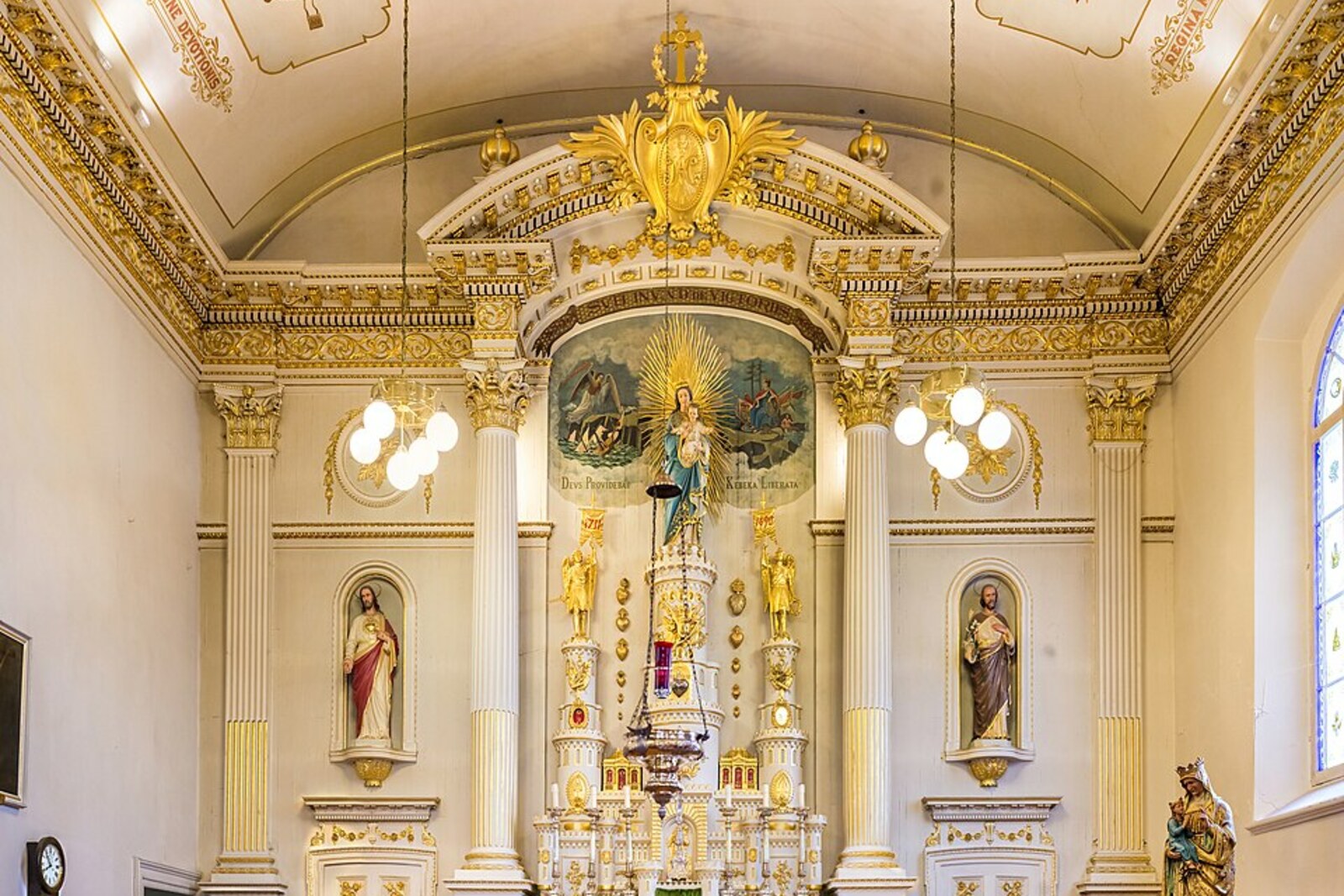
Look around first
What to notice
- Stone façade
- Portal
- Altar depicting a fortress
- Interior murals
The story of the place
The light stone façade and deep portal mark the church of the riverside quarter, where Lower Town residents came. The church was completed gradually: a master mason extended the nave and finished the front wall after money was collected from townspeople and religious communities. Inside, later murals and an altar with a fortress have survived, added to the church once it had already taken shape.
In October seventeen eleven, the people of Quebec City came to this church to give thanks for deliverance from the siege. It was still unfinished, but it already served Lower Town: the Basilica-Cathedral of Notre-Dame de Québec clergy held services here for families, merchants, and sailors who would otherwise have had to climb to the church in Upper Town.
The church was then called Notre-Dame-de-la-Victoire Church—in the singular. The first victory was linked to the siege of sixteen ninety. William Phips, commander of the English expedition, brought about thirty ships to Quebec City and demanded the city's surrender. While the defenders repelled the landing, the townspeople prayed to the Virgin Mary. Phips could not quickly break through the defenses and withdrew his ships, fearing that ice on the river would hold them up. The residents saw the retreat as an answer to their prayers, and the bishop ordered the church under construction to be dedicated to Our Lady of Victory, fulfilling a vow made during the siege.
Twenty-one years later, a new expedition was sent toward Quebec City. Great Britain intended to attack the city from the river while also sending a land force toward Montreal. Hovenden Walker commanded the naval forces. Shortly before the campaign, he had received an admiral's rank and a knighthood. He had several dozen warships and transport vessels at his disposal, along with about twelve thousand sailors and soldiers. However, Walker lacked pilots who knew the mouth and current of the St. Lawrence well.
At night in early September, wind and fog drove the ships toward the north shore. Walker thought the fleet was approaching the south shore and ordered a course north, expecting to return to the navigable channel. The order sent the vessels straight toward the reefs near Île aux Œufs. Nine or ten ships were wrecked; estimates put the dead at between nine hundred and one thousand four hundred people, including women and children accompanying the expedition. Walker and the council of war called off the campaign. The land force also had to turn back.
Quebec City learned of the shipwreck only in October. The townspeople took it as a second intervention by the Virgin Mary. After a thanksgiving service and procession, the residents gathered in the church in Lower Town. At a general meeting, they decided to raise money to complete its portal. Townspeople and religious communities contributed more than six thousand livres—the French monetary units of the time. Later, Jean-Baptiste Maillou, the master mason hired to complete the church, extended the nave and built the façade.
For Walker, the campaign ended differently. After a change of government, he was struck from the naval lists and required to provide a full report. Nine years later, he published his own account of the expedition in an attempt to defend his reputation.
The people of Quebec City added the plural to the church's name. The interior murals and the altar depicting a fortress appeared much later and recall both victories. The building was badly damaged in the bombardment of seventeen fifty-nine, so the most exact trace of the decision made here in seventeen eleven is the name itself: Notre-Dame-des-Victoires Church took on its plural form.
Useful on site
The parish page, as of the verification date, lists a season from 4 June—30 August 2026 and opening Thursday through Sunday, 10:00—16:00; Sunday Mass is listed at 11:00. The Bonjour-Québec register gives a season from 4 June—11 October 2026, with a note to confirm. Treat an exterior visit as the main scenario.
Checked: June 29, 2026. Check the official source before visiting.Treat the interior as a possible addition: if the doors are closed, look at the church's position within the square and do not delay your route.