 Guide On Map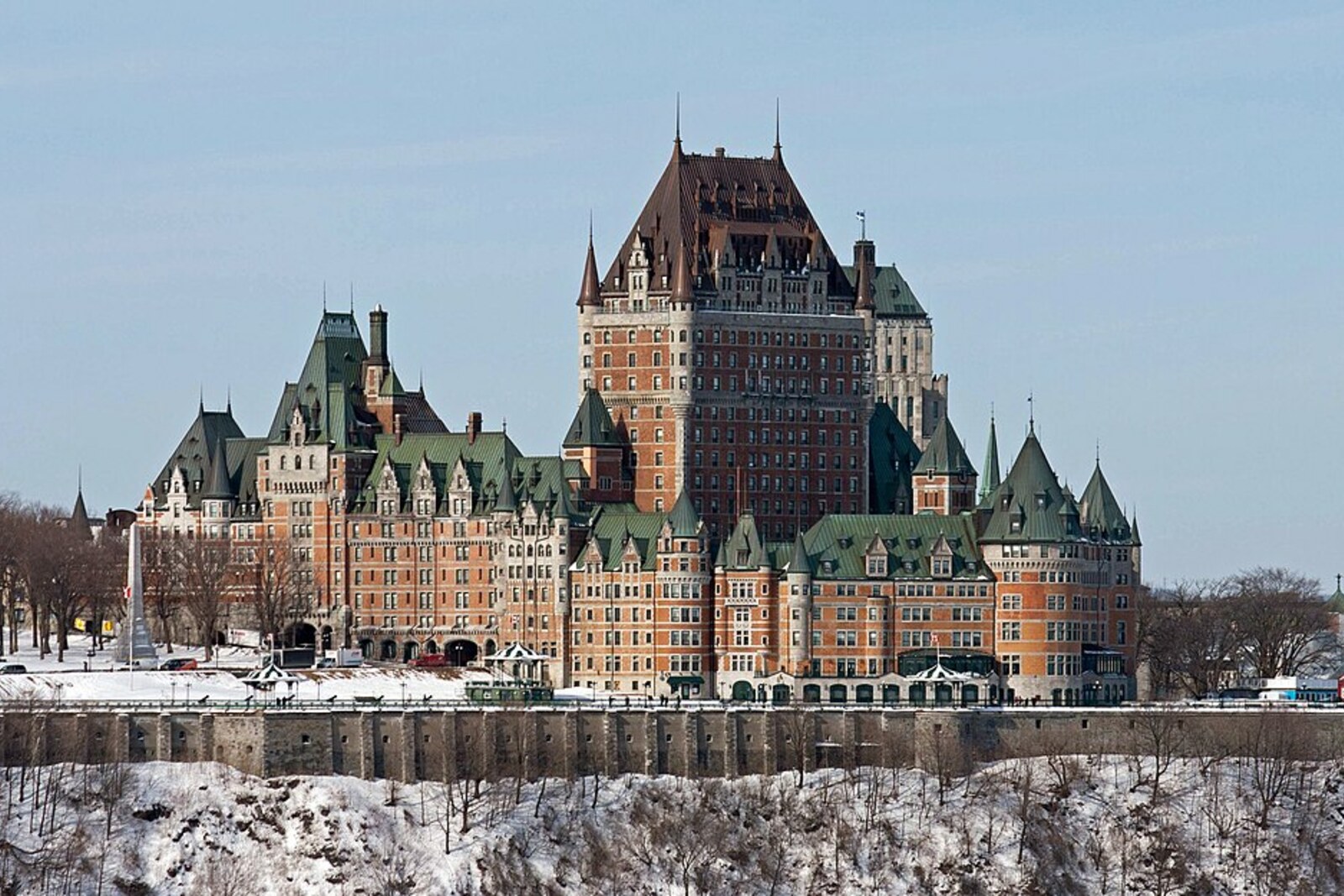
Look around first
What to notice
- Steep roof
- Fortress-like towers
- Commemorative plaque
- Hotel facade
The story of the place
In August nineteen forty-three, Canadian sergeant major Émile Couture was in charge of the stationery office at Château Frontenac. He issued paper to participants in closed meetings and collected the remaining sheets afterward. One morning, Couture found a document that openly listed possible dates for a landing in Western Europe, the number of troops and ships, and details of air cover.
Couture took the find to his commander. Washington, D.C., and London confirmed that the secret sheet had indeed been lost. The sergeant major and his superior were urgently summoned to Washington, D.C., and sworn to secrecy. A year later, when the landing had already taken place, both were awarded British Empire Medals for keeping the secret. The military did not disclose who had left the document at the hotel or what was done with it.
Such a sheet was here because of the First Quebec Conference. The Canadian government canceled all reservations, evacuated the guests, and completely closed the hotel to the public. The Royal Canadian Mounted Police guarded the entrances. The British and American delegations were housed in the rooms, some premises were assigned to communications and the press office, and the Combined Chiefs of Staff met daily in the halls.
American President Franklin D. Roosevelt and British Prime Minister Winston Churchill had to decide where to direct the Allies' main forces. The British military pressed for the offensive through Italy and the Mediterranean to continue. The American chiefs of staff feared that this route would take landing craft, aircraft, and divisions needed for the invasion of France. At Château Frontenac, they agreed on a compromise: operations in Italy continued, but the landing across the English Channel, codenamed Operation Overlord, was given priority in the allocation of forces. Its overall plan was approved here, and detailed preparations were authorized. The planned date had to be postponed; on June sixth, nineteen forty-four, Allied troops landed in Normandy.
The fortress-like towers before you have nothing to do with the seventeenth century. Leaders of the Canadian Pacific Railway began building the hotel in eighteen ninety-two so that wealthy travelers would come to Quebec City on its trains. Architect Bruce Price gave the building features of French châteaux of the Loire. The steep roof, turrets, and position above the cliff helped sell tourists the image of an old French city. The hotel opened in eighteen ninety-three and still serves its original purpose.
The railwaymen took the name from Louis de Buade, Comte de Frontenac, governor of New France. He governed the colony twice from Château Saint-Louis, the governor's residence that stood on this cape. The present hotel was never his home: it was built nearly two centuries after his death.
A commemorative plaque at Château Frontenac names Roosevelt, Churchill, and Canadian Prime Minister William Lyon Mackenzie King, who received the delegations as host. Émile Couture is not on it. In the official notice about his medal, the reason for the award fit into two words: “for services rendered.”
Useful on site
Operating hotel. Exterior viewing is unrestricted from public streets and the terrace; building tours have separate arrangements and are not needed for the basic route.
Checked: June 29, 2026. Check the official source before visiting.This is an operating hotel, so do not expect unrestricted access to all its rooms. For this stop, the facade and silhouette from the terrace are enough.