 Guide On Map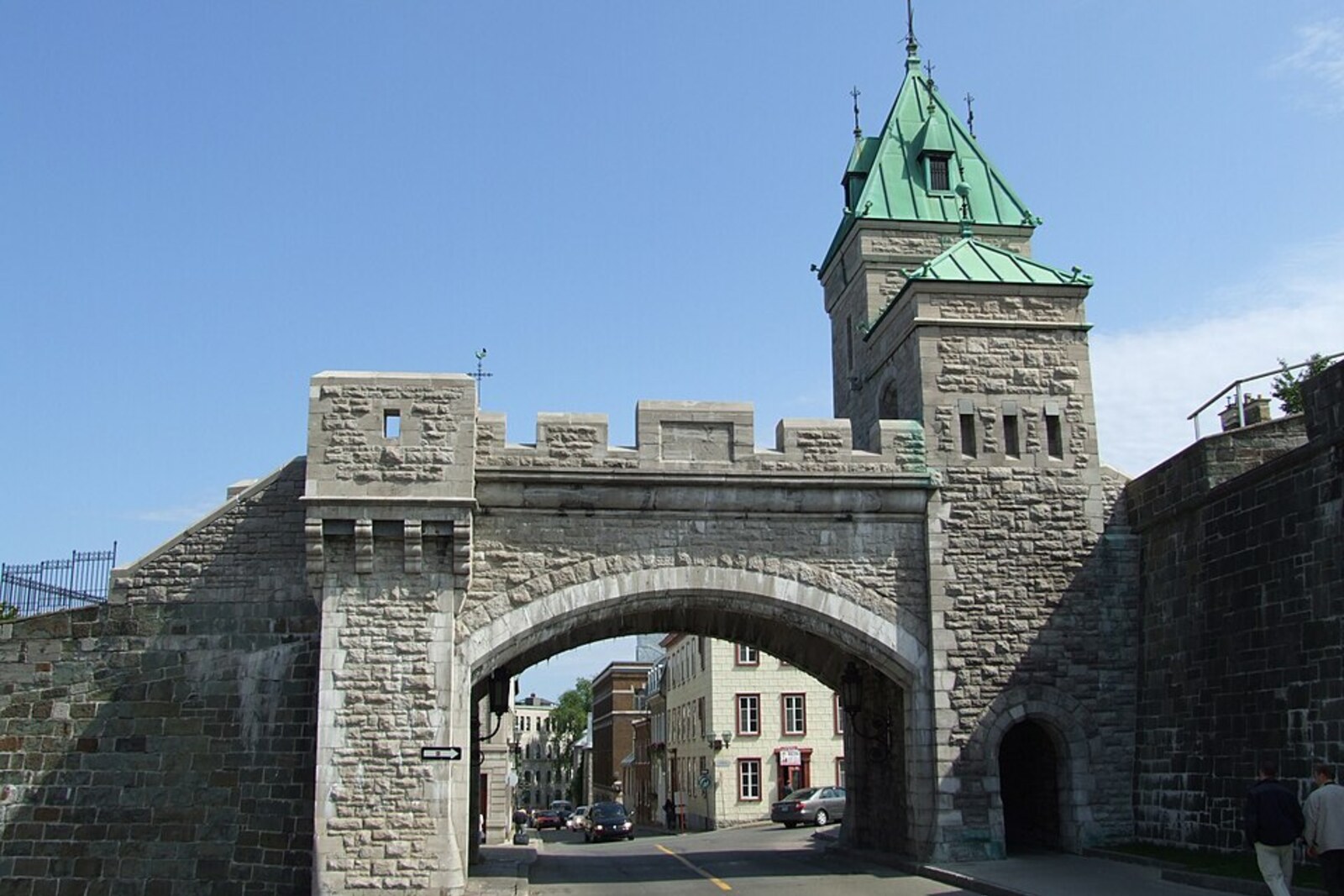
Look around first
What to notice
- Central carriage arch
- Pedestrian vault
- Tower with crenellations
- Path above the gate
The story of the place
Kent Gate is built into the city wall where Dauphine Street leaves the old city. Before the current passage appeared, this section had only a postern, a small gate for soldiers; beside the carriageway, a smaller vault for pedestrians has survived. The crenellated tower, loopholes, and embrasures remember not a single battle: from the beginning, they served as decoration rather than defense.
In eighteen seventy-eight, Lord Dufferin came to the end of Dauphine Street and revised the drawings for the future gate. He was Governor General of Canada—representing the British Crown—and worked to preserve the city wall. In architect William Lynn's design, Lord Dufferin ordered the structure turned, the central arch widened, and the side passages changed. He needed a gate through which carriages could pass, with the promenade along the fortifications continuing above it.
By then, the dismantling of the wall had already begun. After the British garrison left in eighteen seventy-one, the narrow military gates obstructed carts, trade, and the growth of neighborhoods beyond the fortifications. At this spot there had only been a postern—a small gate used by soldiers. The people of Québec City needed a proper exit from Dauphine Street. Lord Dufferin proposed cutting a wide breach here, facing it with stone, and thus removing one of the reasons city residents demanded the wall be further demolished. He covered part of the cost of the entire plan from his own funds; most of his project was carried out only after he left Canada.
Kent is the ducal title of Prince Edward Augustus, the father of Queen Victoria. In seventeen ninety-one, he arrived in Québec City as commander of the 7th Regiment of Foot and lived in the city for three years. The prince never passed through these gates: the arch appeared almost ninety years after his departure. Lord Dufferin secured funds from Queen Victoria for the new passage in memory of her father's stay in Québec City.
In June eighteen seventy-nine, Princess Louise—Queen Victoria's daughter, the granddaughter of the Duke of Kent, and the wife of Canada's Governor General at the time—laid the first stone here. Thus, three generations of one family came together in a single structure: the grandfather gave the gate its name, his daughter paid for part of the construction, and his granddaughter came to the laying ceremony.
The wide arch still carries Dauphine Street, the smaller vault serves pedestrians, and the path along the wall runs above. From the first day, the tower, crenellations, loopholes, and embrasures were decorative: Kent Gate never defended the city. It closed a breach that people had deliberately made for traffic.
Useful on site
Exterior viewing is unrestricted. Access to the top of the wall depends on the season, weather, and current restrictions imposed by park services.
Checked: June 30, 2026. Check the official source before visiting.View the decoration from the sidewalk opposite, without stepping into the roadway for a photograph. The gate is best understood by walking through it: it connects the two sides of the wall rather than controlling them.