 Guide On Map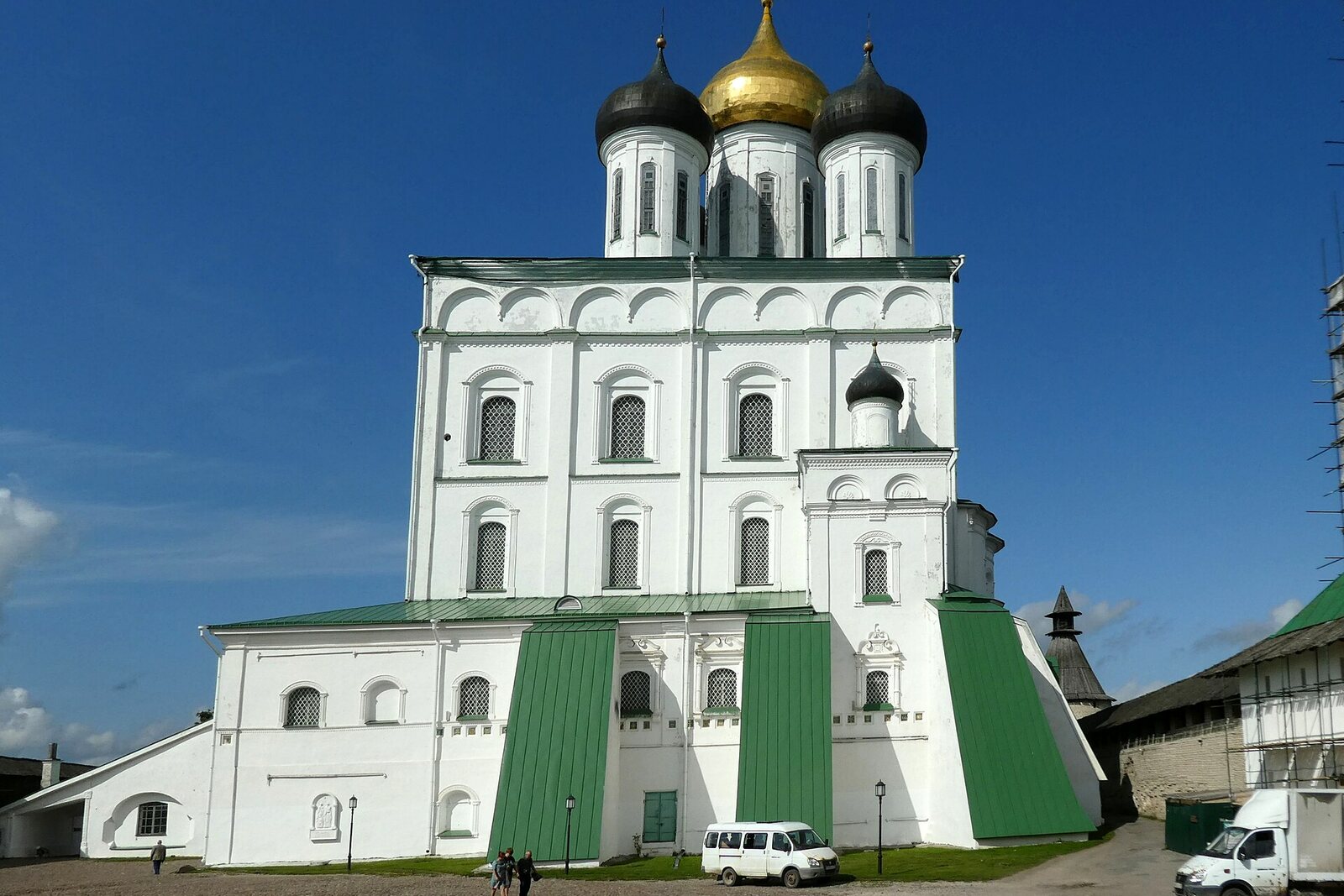
Look around first
What to notice
- Trinity Cathedral
- Bell tower
- Open space south of the cathedral
The story of the place
In January fifteen ten, the predecessor of today’s white cathedral stood on this site. Just south of it, Veche Square was tightly hemmed in, with a stone tribune—a stepped platform. A large bell in the belfry summoned townspeople here. The veche passed laws and trade treaties, decided questions of war, invited princes, and elected posadniks—the leaders of city affairs. The treasury, archive, and seals were kept in the cathedral vestibule, where the council of influential Pskov families also met. The assembly gathered by Trinity because both the documents and the people who would have to carry out the decision made were here.
The final decision proved to be a response to an ultimatum.
Pskov’s posadniks and boyars complained to Vasily the Third, Grand Prince of Moscow, about his new governor, Ivan Repnya-Obolensky—a prince appointed by the grand prince to govern, who was introducing Moscow’s rules. The people of Pskov invoked their old mutual oath with the princes of Moscow and sought to preserve their own laws. Vasily summoned the complainants to Novgorod and detained them there. He then sent the clerk Tretyak Dolmatov to Pskov with terms: disband the veche, abolish the posadniks, remove the bell, and place the city and its suburbs under the rule of the grand prince’s governors. If they refused, an army was to come to Pskov.
On January thirteenth, the bell gathered the townspeople for the last time. Many people who usually led the assembly remained in custody in Novgorod. They told their fellow citizens that resistance would end in everyone’s death: the grand prince had a large army. In the square, the people of Pskov repeated that they considered the former oath to have been broken, but that they themselves would not shut the city’s gates or take up arms. They agreed to comply with the demand.
That same day, the bell was lowered from the belfry by Trinity. The chronicler recorded that the people of Pskov looked at it and wept “for their old ways and for their freedom.” At night, Tretyak Dolmatov took the bell to Vasily in Novgorod. Eleven days later, the grand prince arrived in Pskov. The veche was never assembled again, and the posadniks were replaced by appointed administrators.
The matter did not end there. No fewer than three hundred families of posadniks, boyars, merchants, and other wealthy townspeople were taken out of Pskov, together with their wives and children. They were allowed to take only the property they could carry away at once. Their storehouses in the Krom, city homesteads, gardens, fields, and country estates passed to the grand prince, his service people, and settlers from other cities. Some Pskov merchants later settled in Moscow; the traces of many posadnik and boyar families were lost.
The open space south of the cathedral remained in place, but the old stepped platform, belfry, and veche bell disappeared. Today’s Trinity Cathedral was not completed until sixteen ninety-nine, and today’s bell tower was built later still. Its oldest bell is dated fifteen twenty-six—it appeared sixteen years after the last Pskov veche.
Useful on site
The cathedral is open daily from 08:00 to 20:00; services are held daily. The service schedule changes from week to week.
Checked: July 2, 2026. Check the official source before visiting.The cathedral is active, so it is best to listen to the main account outside. If a service is under way inside, mute the audio or use headphones so as not to disturb worshippers.