 Guide On Map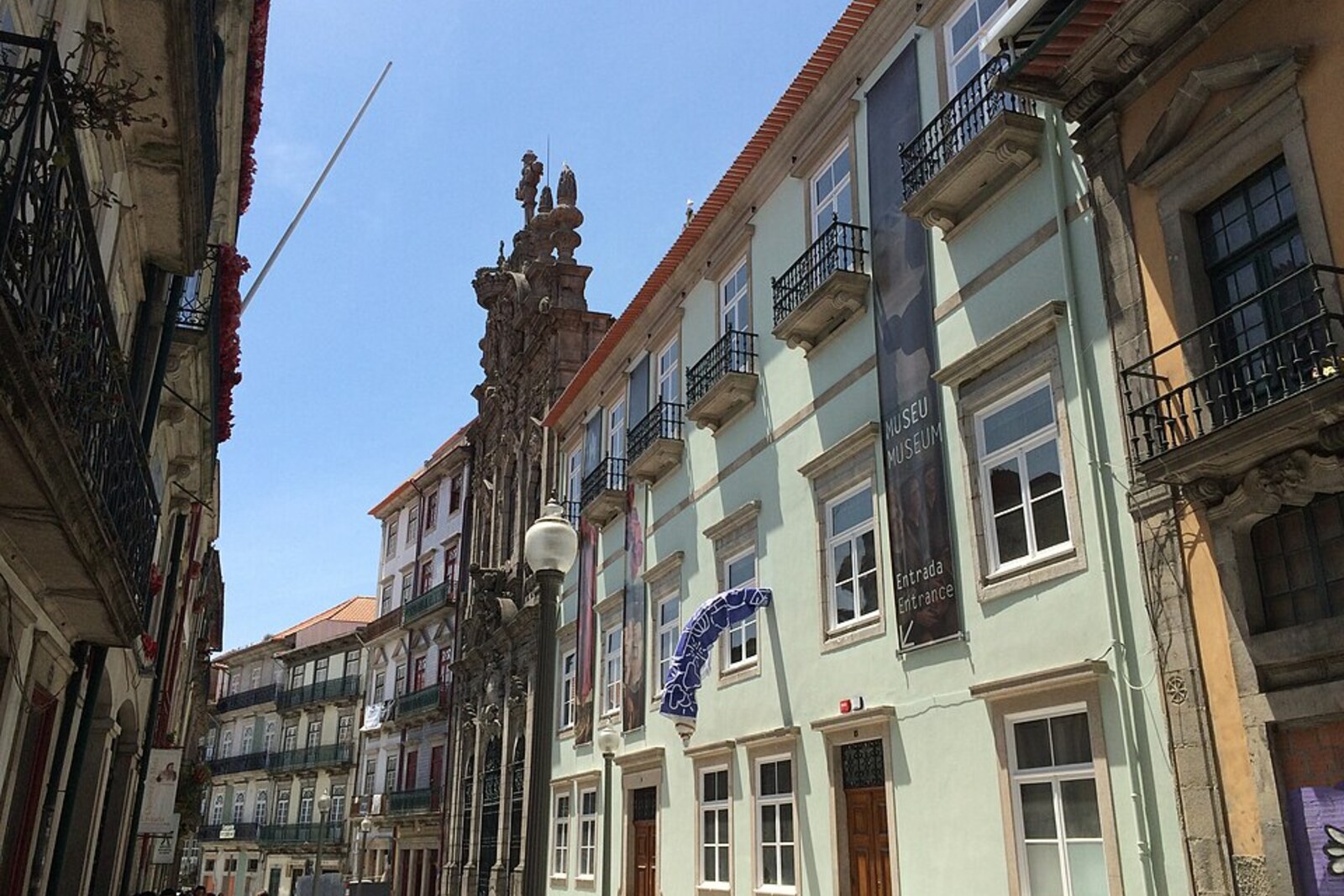
Look around first
What to notice
- Stone wheel with blades
- Stone Archangel Michael
- Facades of old houses
The story of the place
Rua das Flores is made up of old residential facades on the site of former gardens, vegetable plots, and workshops within the city wall. The land on both sides was leased out in small plots for houses, and wealthy merchants, officials, and nobles built here while continuing to pay ground rent. Later, jewelers occupied one side and sellers of other goods the other, so the street was nicknamed the Golden Street.
On March eighteenth, fifteen twenty-three, the agreement for developing this land recorded two reasons for the new street: the townspeople needed a direct passage, and the bishop needed greater income from the plots. Two years earlier, King Manuel I had ordered a road laid from Largo de São Domingos to São Bento de Ave Maria Monastery and Porta de Carros—the city gate on the site of today’s Praça de Almeida Garrett.
Previously, there had been vegetable gardens, orchards, and workshops here, inside the city wall. They belonged to Porto’s bishop, Pedro Álvares da Costa, and to the cathedral’s canons. The population was growing, merchants needed a convenient connection between the river district and the way out of the city, and it was difficult to reach the new monastery through the old lanes. The king demanded that a straight street be cut through the properties and built up with substantial houses.
The land was not taken from its church owners. The bishop and the canons divided both sides of the street into plots and leased them out for construction in return for ground rent. A merchant or official invested in a house of his own but continued to pay the landowner. So that collectors would not confuse the payments, the bishop ordered the corners of the buildings to be marked. On his plots, they carved a wheel with blades; on the canons’ lands, Archangel Michael.
The wheel also explains the original name—Rua de Santa Catarina das Flores. Pedro Álvares da Costa venerated Saint Catherine of Alexandria, whom, according to Christian tradition, they intended to execute on a wheel with blades. “Flores,” meaning “flowers,” recalled the gardens through which the road was laid. Over time, the saint’s name disappeared from the address, while the flowers remained.
The first phase of construction was completed by fifteen twenty-six. Wealthy merchants, municipal and royal officials, some nobles, and New Christians moved here—this was what baptized Jews and their descendants were called in Porto. Merchants moved their business here from the old Rua dos Mercadores, which gradually lost its former importance. Later, jewelers occupied one side of Rua das Flores and sellers of other goods the other; the street was even nicknamed Porto’s Rua do Ouro, the Golden Street.
The gardens disappeared, but commerce remained. And on the corners of several old houses, the wheel with blades and Archangel Michael can still be seen: by these stone signs, a collector could determine to whom the residents owed payment for the land.
Useful on site
Examine the architecture while standing by a wall: this narrow street remains a busy passage where it is easy to obstruct others.