 Guide On Map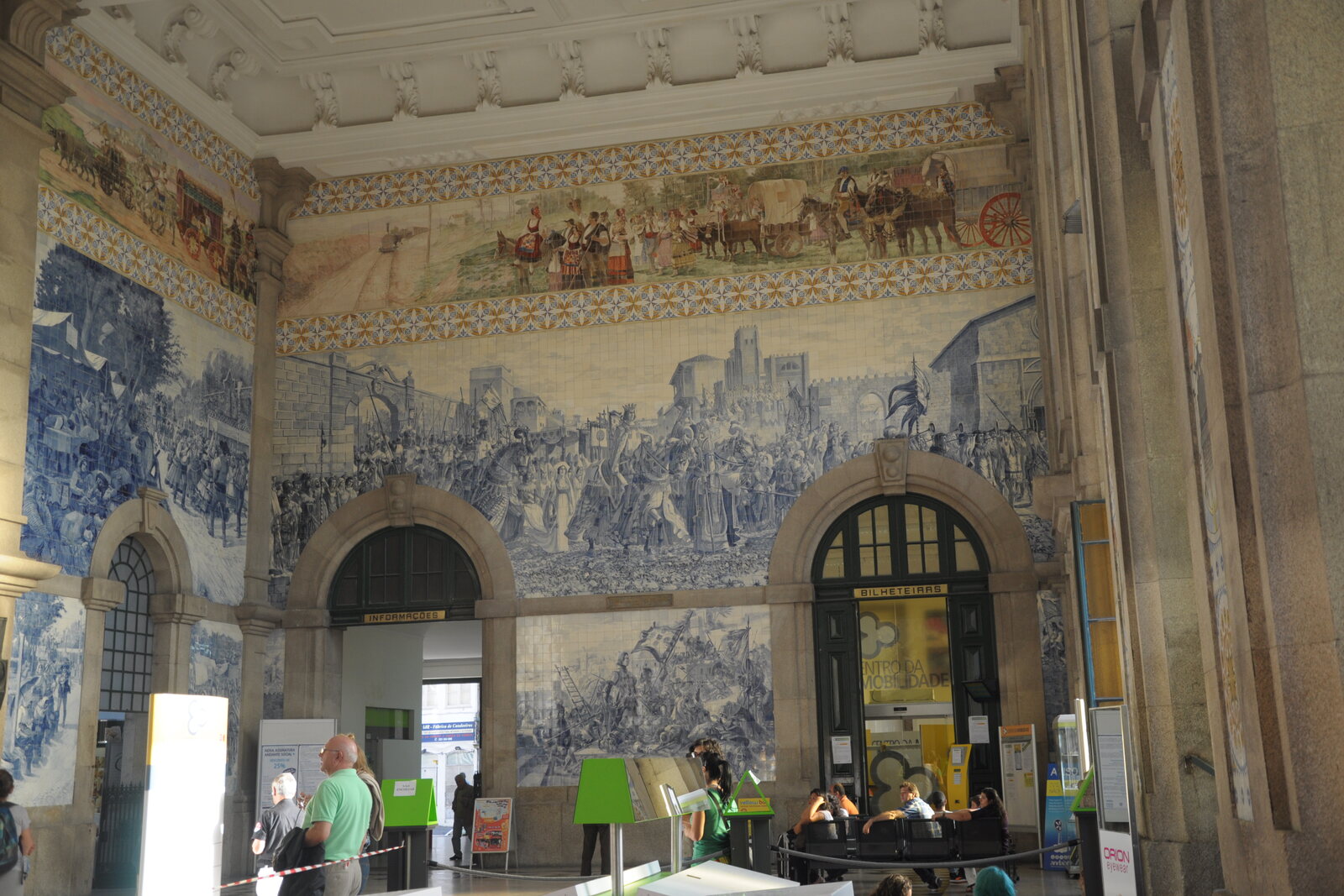
Look around first
What to notice
- Azulejo panels in the vestibule
- White plastered ceiling
- Platforms and tunnel mouths
- The name “São Bento” on the signs
The story of the place
In eighteen eighty-eight, engineers came here to measure the convent's holdings. They were laying a railroad from Campanhã to the center of Porto and already knew where the tracks would end: on the site of the São Bento de Ave Maria Monastery, a women's convent.
Maria da Glória Dias Guimarães, the convent's last abbess, witnessed the measurements. She took her monastic vows in eighteen twenty-six. For sixty-six years, the convent gave her shelter and support; the community owned land and received income, and the nuns sold sweets they made in the square. For Maria da Glória, the future station meant losing the only home she had known for almost her entire adult life.
A city legend attributes a reply to the abbess: the surveyors could measure as much as they liked, but the convent would not be demolished while nuns remained in it. She is said to have added that Saint Benedict would make the minister behind the construction leave. The account of the abbess's words is not documented. The legal basis for her confidence was entirely real.
After the civil war, the Portuguese government dissolved the religious orders in eighteen thirty-four and transferred their property to the state treasury. Men's monasteries were closed at once. Women's communities were forbidden to admit new novices, but the nuns living there were allowed to remain until the last of them died. It created a reprieve with no end date: the state already considered the building its own, yet could not evict its last resident.
While Maria da Glória lived, the city council approved the line, workers began boring tunnels, engineers drew up plans, and the convent stood at the end of the future tracks. On May seventeenth, eighteen ninety-two, the abbess died. The next day, her funeral service was held in the convent church, after which the military occupied the premises. Two years later, they began dismantling the cloister and the residential quarters.
On November seventh, eighteen ninety-six, the first train arrived here. Passengers were received in a temporary wooden station: part of the convent church was still standing beside it then. Between October nineteen hundred and October of the following year, it was dismantled completely. The remains of the nuns buried beneath the church and in the courtyard were moved to a communal vault at Prado do Repouso Cemetery. Some stone details from the old convent ended up there as well.
The present passenger building opened on October fifth, nineteen sixteen. Trains enter it from the Campanhã side through three tunnels and end their journey here: the railroad was deliberately routed beneath the hill so that residents could board trains in the very center of Porto.
The vestibule was conceived as a ceremonial hall for arrivals. In nineteen five, the railway administrator José Fernando de Sousa commissioned the artist Jorge Colaço to cover the walls with scenes of Portuguese history, northern landscapes, rural life, and the development of transportation. Colaço was a co-owner of a ceramics factory and received a commission that took several years: the tiles were installed in the summer of nineteen fifteen. The artist also wanted to paint the coffered ceiling, but that part of the project was not carried out—above the tens of thousands of tiles, white plaster was left.
The station's name has preserved what is no longer within its walls. São Bento is the Portuguese name for Saint Benedict of Nursia, under whose monastic rule Maria da Glória's community lived. Where the tracks now end and the platforms stand, there were convent buildings and a church; all that remains of them here is an abbreviated inscription on the railway signs.
Useful on site
Stand at the edge of the vestibule and watch the flow of passengers: this is first and foremost an operating station, not a museum hall.