 Guide On Map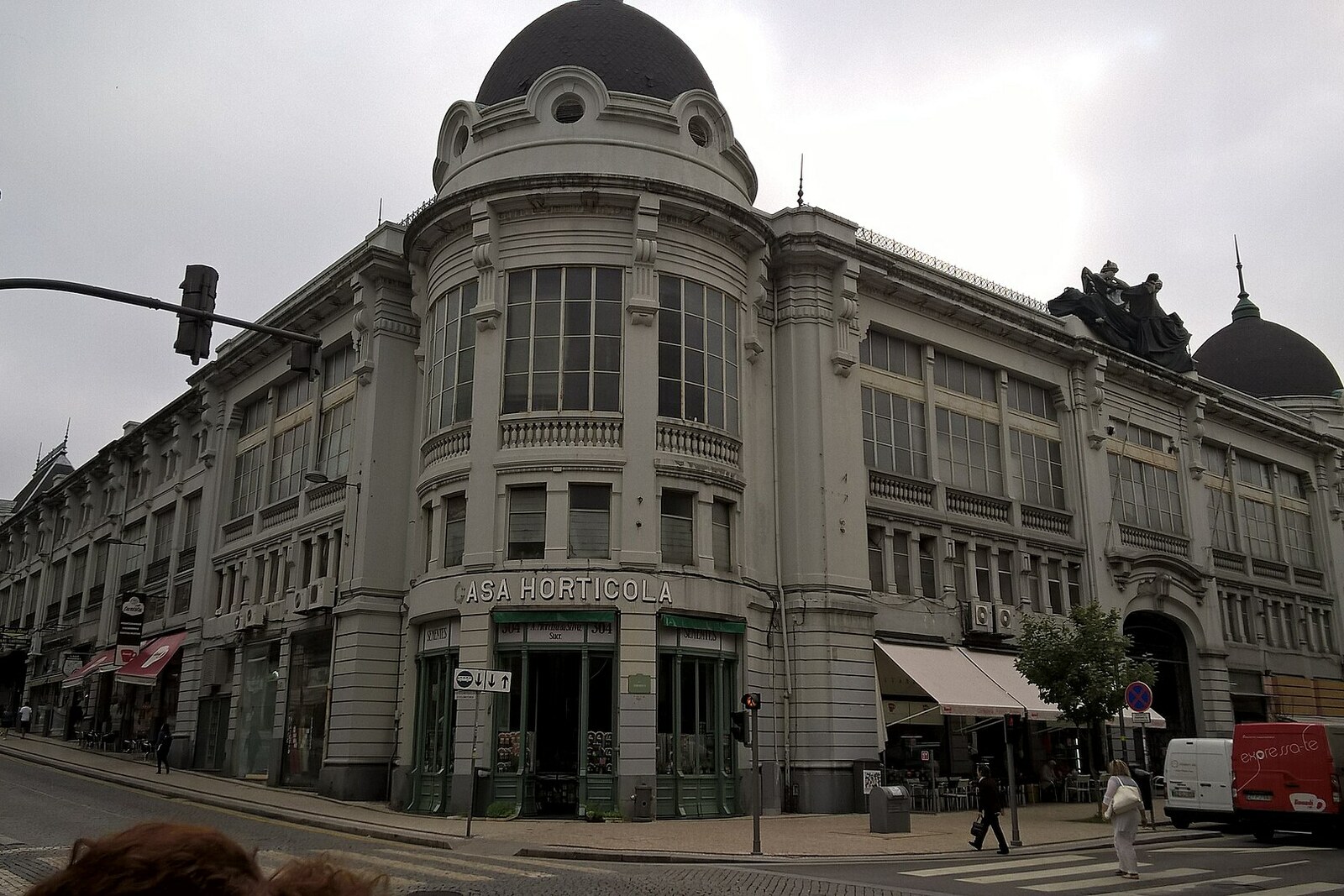
Look around first
What to notice
- Inner courtyard
- Fish stalls
- Ermelinda’s name above the stall
- Number 179
The story of the place
Trade has been gathered here under one roof since nineteen fourteen. Shops run along the building’s outer edge, while fish, meat, vegetable, and flower rows operate side by side in the open inner courtyard. Sellers came to this block from the city and surrounding settlements, while buyers arrived from all over Porto. Among the fish stalls by the stairs, you can spot number one hundred seventy-nine.
The name Bolhão is older than the present building. According to the traditional explanation, a boggy meadow once lay between Rua Formosa and Rua de Fernandes Tomás. A stream flowing through it caused a large water “bolha”—a bubble—to swell on the surface; the augmentative form of this word, “Bolhão,” became attached to the whole area.
In eighteen thirty-nine, municipal officials ordered that almost all the city’s markets be brought together here. At first, an iron fence enclosed the market square. The present building was erected in nineteen fourteen: permanent shops were placed around the outer perimeter, while fish, meat, vegetable, and flower trading took place in the inner courtyard. This layout brought together in one block sellers arriving from the city and surrounding settlements and buyers from all over Porto.
Ermelinda Lopes, a fishmonger today, represents the fifth generation of her family at Bolhão. Her mother worked here as a fishmonger, so Ermelinda first came to the market before she was born. At the age of five, the girl was orphaned, and her grandmother, who supported the family by selling fish, began raising her.
Her grandmother placed a small wooden box in front of her stall. It held rope scales and one sardine—Ermelinda’s entire stock. Customers gave the child small change, and she took the money to her grandmother. This was how the girl learned the trade on which their home depended.
Later, Ermelinda became one of the market’s most successful fishmongers. She reinvested her earnings here: she set up storage for ice, salt, and packaging, built refrigerated rooms, and hired three workers. Bolhão was the place in her life where the family bought fish, sold it, and used the earnings to expand the same trade.
In August two thousand twelve, a nighttime fire destroyed four stalls, including Ermelinda’s place. No one was injured, but her former point of sale was gone. She opened a new stall near the stairs and continued selling fish. Then the entire market was closed for restoration for four years, the traders were moved to temporary premises, and in September two thousand twenty-two they returned to the renovated building.
In the hall where a five-year-old girl once had room for one sardine and a small pair of scales, her name now stands above fish stall number one hundred seventy-nine.
Useful on site
Mon–Fri 08:00–19:00, Sat 08:00–18:00; Sun closed. Restaurants on the upper level are open until 24:00.
Checked: June 17, 2026. Check the official source before visiting.Do not disrupt trading while listening, and step away from the narrow passage if goods are being unloaded nearby. Photograph people only with their consent. The market is best experienced in its working rhythm, but even without buying anything, you can observe the layout of the courtyard and rows here.