 Guide On Map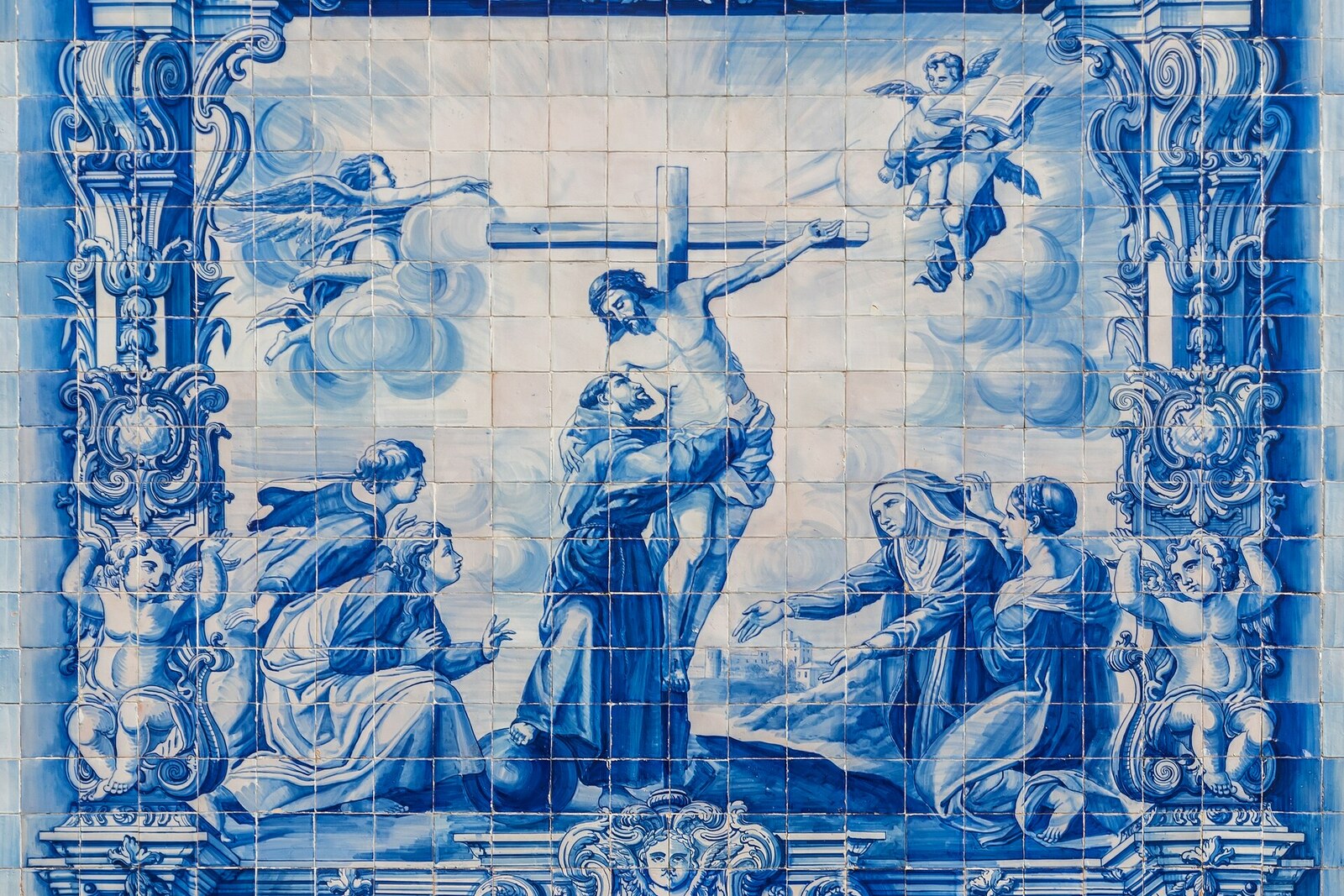
Look around first
What to notice
- Blue-and-white panels
- Scenes from the lives of Francis and Catherine
- The chapel's long wall
- Stained-glass window with souls above the entrance
The story of the place
Behind the blue-and-white panels on the long wall stands a chapel that began very small and wooden. Its former dedication to Saint Catherine of Alexandria gave Rua de Santa Catarina its name. When the community no longer fit inside, the wooden structure was dismantled and the present church was built by the end of the eighteenth century, then expanded later. Nearly sixteen thousand tiles covered its formerly whitewashed walls only in nineteen twenty-nine, and the stained-glass window above the entrance recalls for whom masses continue to be celebrated here.
In seventeen eighty-nine, the Brotherhood of Souls and Wounds of Saint Francis moved here. It had been founded in Porto one hundred twenty-one years earlier. The brotherhood's members commissioned prayers and masses for the dead: under Catholic teaching, the living could ease souls' time in purgatory. The wounds in its name meant the stigmata of Saint Francis of Assisi—marks resembling the wounds of the crucified Christ.
For someone joining, the stake was personal. He expected that after his death, the other brothers would pray for him. In seventeen ninety-five, Pope Pius VI granted new members of the brotherhood a plenary indulgence on condition that they received Communion on the day they joined. An indulgence was the remission of punishment for sins that had already been forgiven in confession.
The brotherhood came from Santa Clara Monastery to the small wooden chapel of Saint Catherine of Alexandria. According to church tradition, Catherine was an educated Christian woman from Alexandria who refused to renounce her faith before the emperor and was executed. She had been venerated here even before the brotherhood appeared; it was this chapel that gave Rua de Santa Catarina its name.
After the brotherhood moved, the number of parishioners grew. The community's leaders dismantled the cramped wooden chapel and built the present building by the end of the eighteenth century, expanding it in eighteen oh one. The new church came to be called the Chapel of Souls, although Catherine retained her place in its dedication.
The blue panels appeared much later. Until nineteen twenty-nine, the exterior walls were plastered and whitewashed. Ceramic artist Eduardo Leite prepared the designs, and craftsmen at Lisbon's Fábrica Viúva Lamego produced nearly sixteen thousand tiles with scenes from the lives of Francis and Catherine.
Leite combined episodes from the biographies of two different saints: Saint Catherine of Alexandria and the medieval nun Saint Catherine of Siena. The old chapel had been dedicated specifically to the Alexandrian Catherine. Now her namesake also remains beside her on the tiles, the long wall tells the story of Francis, and the stained-glass window above the entrance depicts the souls for whom the brotherhood came here in seventeen eighty-nine. Catholic masses are still celebrated inside, and the chapel is run by the same Brotherhood of Souls and Wounds of Saint Francis.
Useful on site
Mon–Fri 07:30–18:00; Sat 07:30–12:45 and 18:00–19:00; Sun 07:30–12:45 and 18:00–19:00.
Checked: June 17, 2026. Check the official source before visiting.The main story is read from outside, so a closed door does not interfere with the stop. View the walls from a safe place by the busy intersection. If the chapel is open, enter quietly and do not play audio during a service or prayer.