 Guide On Map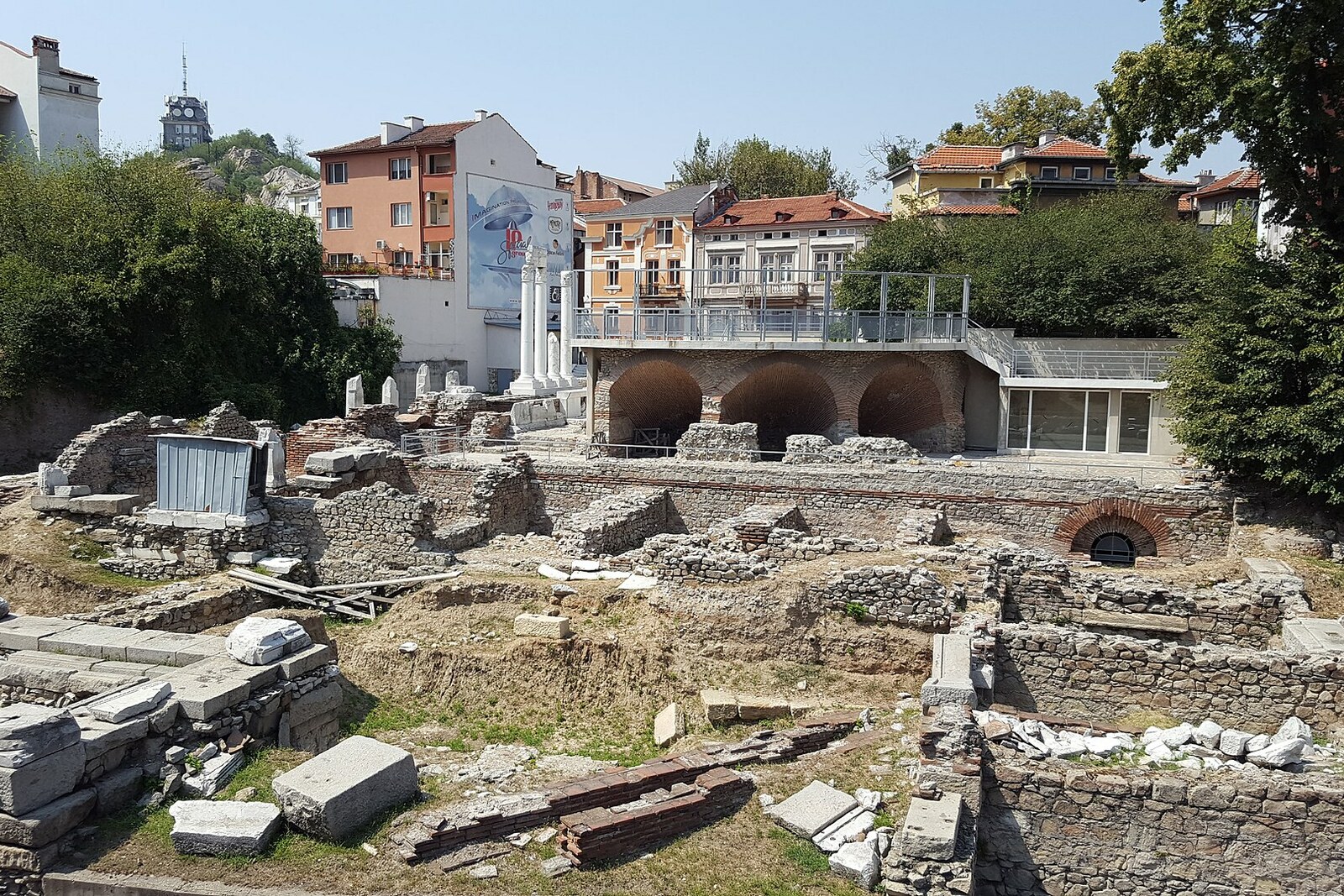
Look around first
What to notice
- The semicircle of the Odeon's stone rows
- The open space of the Forum
- Remains of the northern public buildings
The story of the place
Archaeologists found the end of a Roman emperor's letter in the northern part of the Forum. Eight lines survive on the marble: the beginning, with the names and explanation of the case, is lost, but the conclusion remains. Two townsmen secured an audience with the emperor, the city was to pay a fine, and the envoys' travel expenses were to be reimbursed.
Historians link the letter to the civil war that began in one hundred ninety-three. After the emperor's murder, several military commanders fought for the throne at the same time. The city council of Philippopolis—the name Plovdiv bore in Roman times—supported Pescennius Niger, governor of Syria, whom his legions had proclaimed emperor. Niger hoped to hold the eastern provinces and reach Rome. His rival, Septimius Severus, commanded troops on the Danube River and sought the same throne.
The councillors of Philippopolis had to choose before the winner was known. They chose Niger. In one hundred ninety-four, Severus's troops defeated him at Issus; Niger was captured and executed. Septimius Severus became emperor and demanded money from the cities that had helped his rival. Severus's name has not survived on the Plovdiv slab, so this decipherment remains an inference by epigraphists, rather than a literal reading of the text.
Philippus and Caecilius Cerealis went to answer for the council's decision—Roman citizens named in the surviving lines as envoys of Philippopolis. They were to submit a petition and settle the payment. At first, they paid for the journey themselves: the final formula orders that their travel expenses be reimbursed. For historians, this routine accounting line confirms that the assignment was carried out and that the envoys did indeed reach the emperor.
The city escaped with a financial penalty. The fine was to be paid by one wealthy resident, who had previously covered public expenses from his own funds. The fragment does not say whether he agreed himself or whether the council imposed the payment on him. Neither the sum, nor the man's name, nor the source of his wealth has survived. Only what was at stake for him is known: after the city leaders' mistake, he was to pay.
Two neighboring spaces existed in Philippopolis for this case. In the open Forum, townspeople traded, performed rites, listened to speeches, and read decisions carved in stone. The northern side was set aside for public buildings, imperial statues, and inscriptions intended for everyone to read. This is where the emperor's reply was displayed: the city's punishment did not remain a sealed letter for a few councillors.
In the northeastern corner stood the building where they met. It was called the Bouleuterion—the house of the boule, the city council that managed finances, adopted decrees, and sent embassies. Later, the hall was rebuilt for musical and theatrical performances; hence its second name, the Odeon. The semicircular rows of about three hundred fifty seats belong to this later, stage life of the building.
What survives from the whole affair is precisely its public ending: the names of the two envoys, the order concerning travel money, and the memory of the unnamed townsman who was left with the bill. Beside them remain the open Forum, where the letter was read, and the semicircle of the Odeon, where the people who had chosen the losing side once gathered.
Useful on site
The Forum is always visible from outside; the Odeon is open Tuesday–Sunday 09:00–18:00, break 13:00–14:00.
Checked: June 24, 2026. Check the official source before visiting.If entry to the Odeon is unavailable, you can still appreciate its shape and its proximity to the new city from outside.