 Guide On Map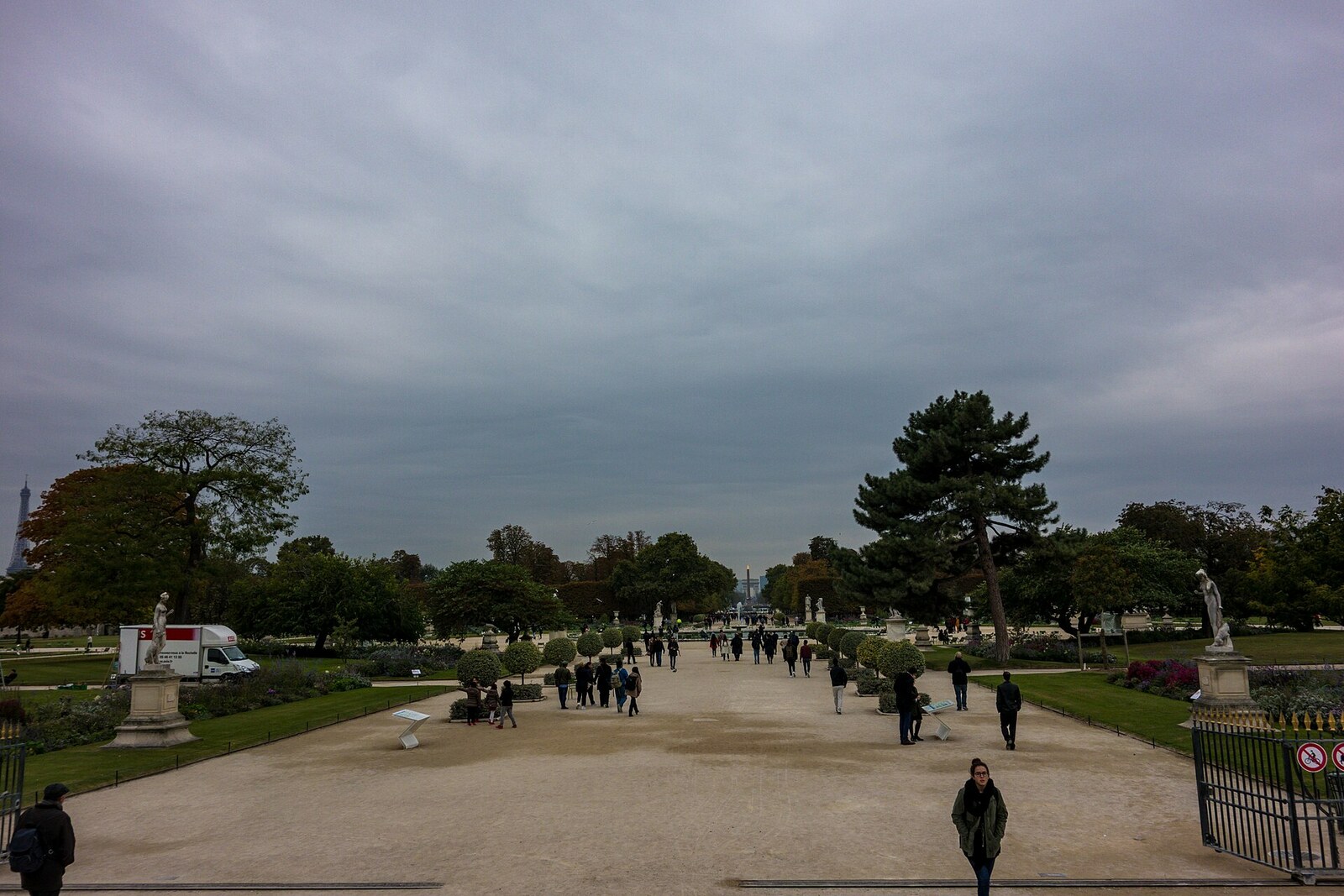
Look around first
What to notice
- Broad central avenue
- Rows of elm trees
- Stone benches
The story of the place
Jean-Baptiste Colbert came to the Grande Allée to close the garden to Parisians. He oversaw Louis XIV's royal building works and was responsible for preserving the newly redesigned Tuileries Garden. Jean-Baptiste Colbert was certain: if the gates were left open, visitors would soon trample the paths and spoil the flowerbeds.
The garden had recently been redesigned by André Le Nôtre, the king's gardener. He laid a broad, straight avenue through it, from the circular basin to the Octagonal Basin, then extended the vista toward the future Champs-Élysées. That is where the name Grande Allée comes from: it is the main passage crossing the whole wooded part of the garden. At that time, the Tuileries Palace stood at its eastern end, and the path began in front of its façade.
Charles Perrault, his subordinate in the royal building department, walked along the avenue with Jean-Baptiste Colbert. Perrault's position and salary depended on the man he was about to contradict. He argued to his superior that women and children did not pick flowers here, and that visitors calmly kept to the paths. People came here to recover after illness, discuss business, and make arrangements for marriage. If the garden were locked, Perrault added, such meetings would have to be arranged in churches.
Jean-Baptiste Colbert replied that only idlers walked in the Tuileries Garden. Perrault then asked him to consult those who were actually responsible for the plantings. The gardeners confirmed it: people damaged nothing; they only walked and looked. One argument proved especially practical: where visitors walked, weeds grew less well on the paths.
Perrault described this scene many years later in his own memoirs, so his remarks are known from his account, not from a record. He recounted the outcome without embellishment: Jean-Baptiste Colbert walked around the garden, gave instructions for its upkeep, and said no more about closing it.
The Tuileries Garden remained accessible for walks, although it was not yet completely open: guards did not admit servants, soldiers, or beggars. Wooden benches were placed along the avenues; by the end of the seventeenth century, there were nearly two hundred of them.
The palace from whose windows this vista was planned is gone. The Grande Allée has survived between the two basins. Among the elm trees planted along it stand twenty-six stone benches—on the very passage where the superior intended to remove the walkers, and his subordinate persuaded him to leave them.
Useful on site
The free-access part of the Tuileries Garden; hours are seasonal and may change because of events.
Checked: date not specified. Check the official source before visiting.Choose a spot at the edge of the avenue so as not to obstruct oncoming foot traffic. After rain, the gravel can be damp, and in dry heat, dusty; shade is unevenly distributed.