 Guide On Map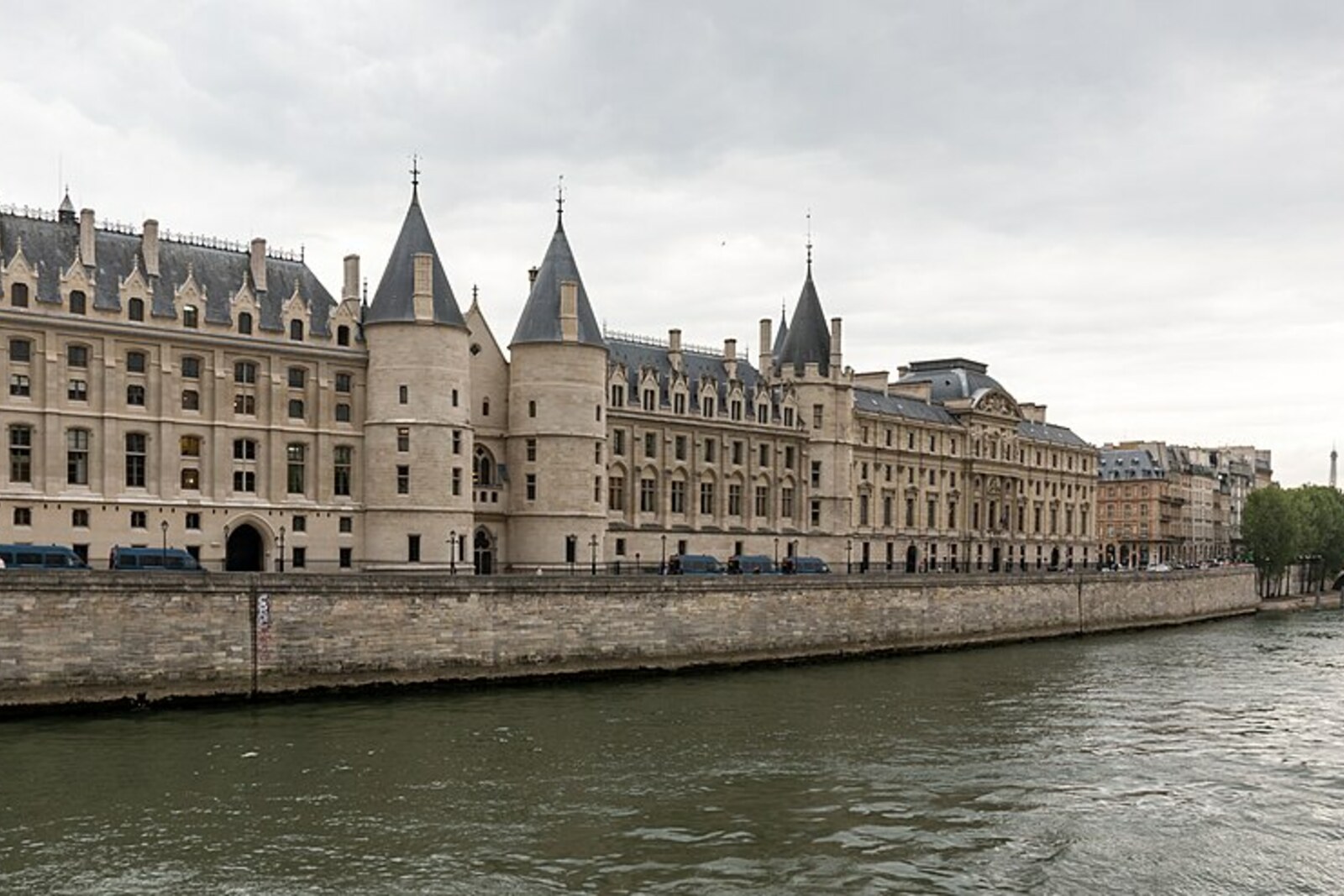
Look around first
What to notice
- Medieval towers
- Black walls of the memorial chapel
- Silver tears on the walls
The story of the place
Behind the walls of the Conciergerie, which housed a prison during the Revolution, on August twenty-eighth, seventeen ninety-three, prison inspector Jean-Baptiste Michonis led a visitor into the cell of the former French queen. To the guards, he was someone admitted by an official. Marie Antoinette recognized Alexandre Gonsse de Rougeville—a royalist determined to get her out of prison. Rougeville dropped two carnations at her feet. Hidden in the petals of one was a note: he had men, money, and an escape plan.
Marie Antoinette had been here for twenty-six days. Her husband, Louis XVI, had already been executed. The children remained in custody at Temple Prison in Paris, while Marie Antoinette herself had been moved from there alone on the night of August first to second: the National Convention—the assembly governing the republic—was preparing a separate trial of the former queen.
This was why Marie Antoinette was placed in the Conciergerie. At the end of the fourteenth century, the kings stopped living in the palace on Île de la Cité, but left the courts and prison here. They were overseen by the concierge, then the title of a high royal official with judicial powers. The name Conciergerie comes from that office. During the Revolution, the Revolutionary Tribunal—an extraordinary court for opponents of the republic—sat upstairs, while the accused waited downstairs to be called. Most spent several days here: a person was led from a cell to the courtroom, then, after sentencing, to a cart in the courtyard. Executions themselves were not carried out at the Conciergerie.
Marie Antoinette was scarcely allowed to write. Two gendarmes stood guard in the cell day and night, even while she changed clothes. She used a pin to write her reply to Rougeville on a scrap of paper: she was being watched constantly, but agreed to go. Michonis was risking his position and his life—without his pass, Rougeville could not have made it through the prison doors. The escape was set for the night of September second to third.
After this, the accounts diverge. According to a later account by participants, Marie Antoinette left her cell, passed several doors, and was stopped by a guard before the last grille, beyond which the courtyard began. The documents allow only one firm conclusion: the attempt to free her was uncovered, and the queen did not get outside. Rougeville fled and reached Belgium. Michonis was arrested and sent to the guillotine in the summer of the following year. Richard, the prison governor, and his wife were also arrested, and the guard was reinforced.
Marie Antoinette was moved to another cell, where she could be watched more easily. On October third, the Convention demanded that she be tried without delay. Her two appointed lawyers were allowed access to the case only on the eve of the hearing; before them lay a pile of documents, with only hours left to read them. On October fourteenth, the trial began upstairs, above the prison quarters. More than forty witnesses testified over twenty hours. She was accused of conspiring with foreign monarchs, spending state money, and attempting to restore the monarchy. When one of the accusers repeated the false charge involving her own son, she replied that nature itself did not allow a mother to answer such a thing, and appealed to the mothers in the courtroom.
At dawn on October sixteenth, the jurors found Marie Antoinette guilty. She was led downstairs again. In her cell, she wrote a final letter to her husband's sister; its intended recipient never received it. Around noon, the former queen was taken to Place de la Révolution—today's Place de la Concorde—and executed.
In eighteen sixteen, Louis XVIII, brother of the executed king, approved the creation of a memorial chapel on the site of that second cell. Today, its black walls are painted with silver tears. Marie Antoinette's first cell was closer to the women's courtyard; the chapel marks the room to which she was moved after Rougeville's carnations and the failed escape.
Useful on site
You can listen to the story from outside while looking at the palace façade. A separate entrance is required for the halls and memorial chapel; do not mistake the later chapel for Marie Antoinette's surviving cell.