 Guide On Map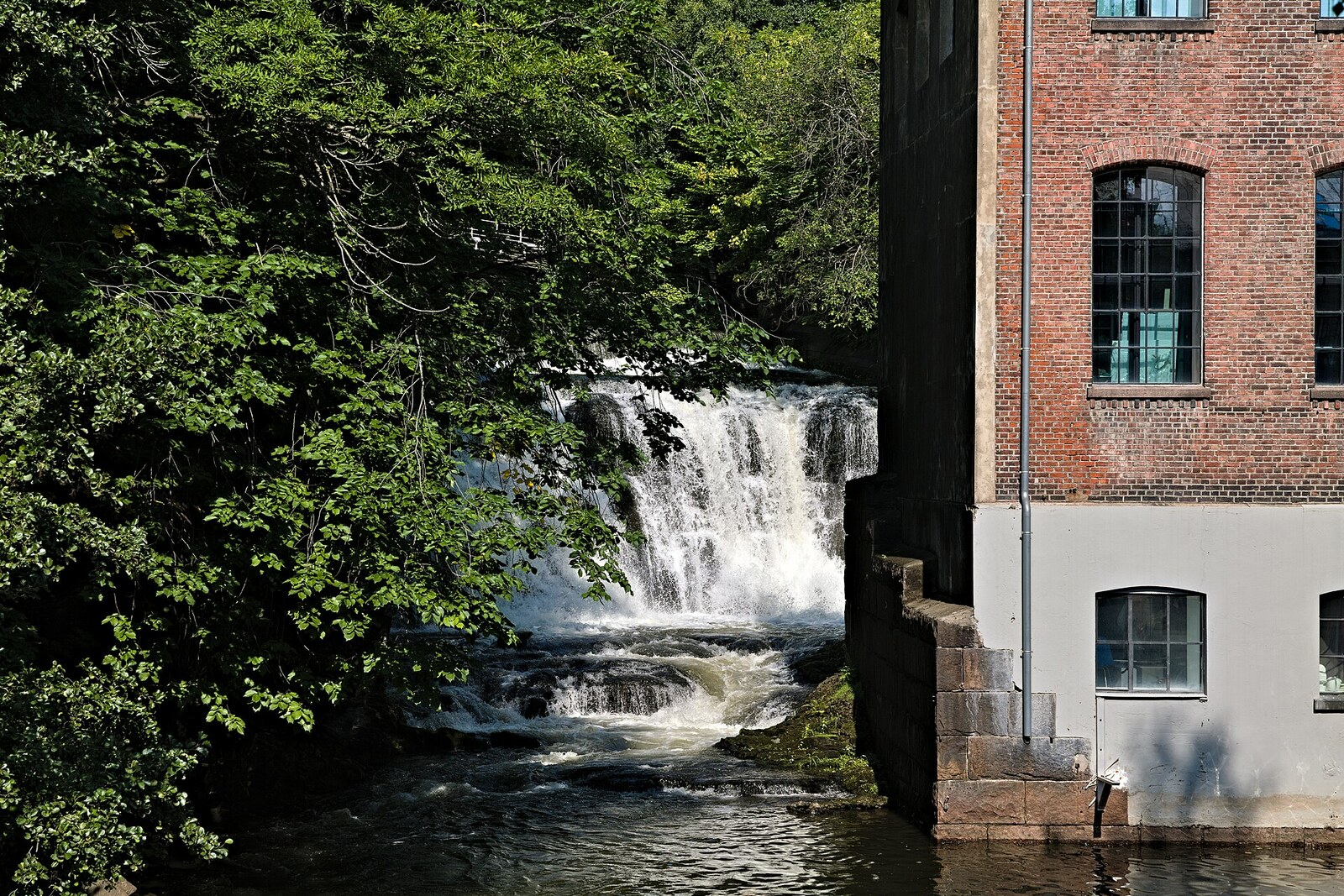
Look around first
What to notice
- The Akerselva river channel
- Former factory buildings
- Stone slope reinforcements
- Walking path
The story of the place
In December nineteen thirteen, foundryman Ernst Poleszynski wrote to the police: twenty windows had been smashed in his factory building by Akerselva. Poleszynski made his living from commissions for artistic casting—bronze monuments were cast in the workshops here—so the damage concerned an operating workshop. He linked the broken glass to people gathering on the opposite bank and asked for the bank to be separated off by a fence.
Police officer Høel came to investigate the complaint. He decided that the stones were unlikely to have reached across the river: the distance was too great. But he confirmed something else: drinking parties really were held on the overgrown slope, and in summer detained people had repeatedly been taken away from there. The link between these people and the broken windows remained unproven, but the letter had already reached the city administration.
The case was assigned to Jacob Høe. He was a burgomaster—the name for a permanent municipal official who prepared decisions for the municipal council. The director of the power station proposed putting up a fence. The manager of the neighboring church thought the fence would change nothing and asked for the slope to be cleared, a park to be created, and it to be placed under police supervision. Høe ordered the fence and then began preparing a separate project to improve the riverbanks.
In July nineteen fifteen, the municipal council agreed to allocate money for the first section and announced a competition for an overall plan. Manufacturers hindered its continuation: they needed a railway branch along Akerselva to bring in raw materials and send out goods. Covering part of the river channel to gain new land was also discussed. While engineers looked for a place for the rails, work on the long park was postponed. Later, automobiles took over transport, and the factory branch line lost its purpose.
The city gardeners gradually moved upstream. By nineteen twenty-eight, their plan covered both banks from Nybrua to Brenneriveien—here, by the former factories. The slopes were reinforced with stone, walking paths were laid out, and passages were cleared. By nineteen thirty-seven, the lower part of the riverside park was almost complete.
Now the continuous urban B10 route runs along Akerselva—from Lake Maridalsvannet to Vaterland. The section by Brenneriveien became part of it back when neighboring enterprises were still operating, and the documented history of this path began with a letter about twenty smashed factory windows.
Useful on site
The pedestrian trail along Akerselva is open around the clock, but some sections may be closed in winter because of ice. The walkways are slippery after rain.
Checked: June 17, 2026. Check the official source before visiting.This is an extended stop without a single main object; take short pauses wherever it is convenient to listen and see both the river and the old buildings at the same time.