 Guide On Map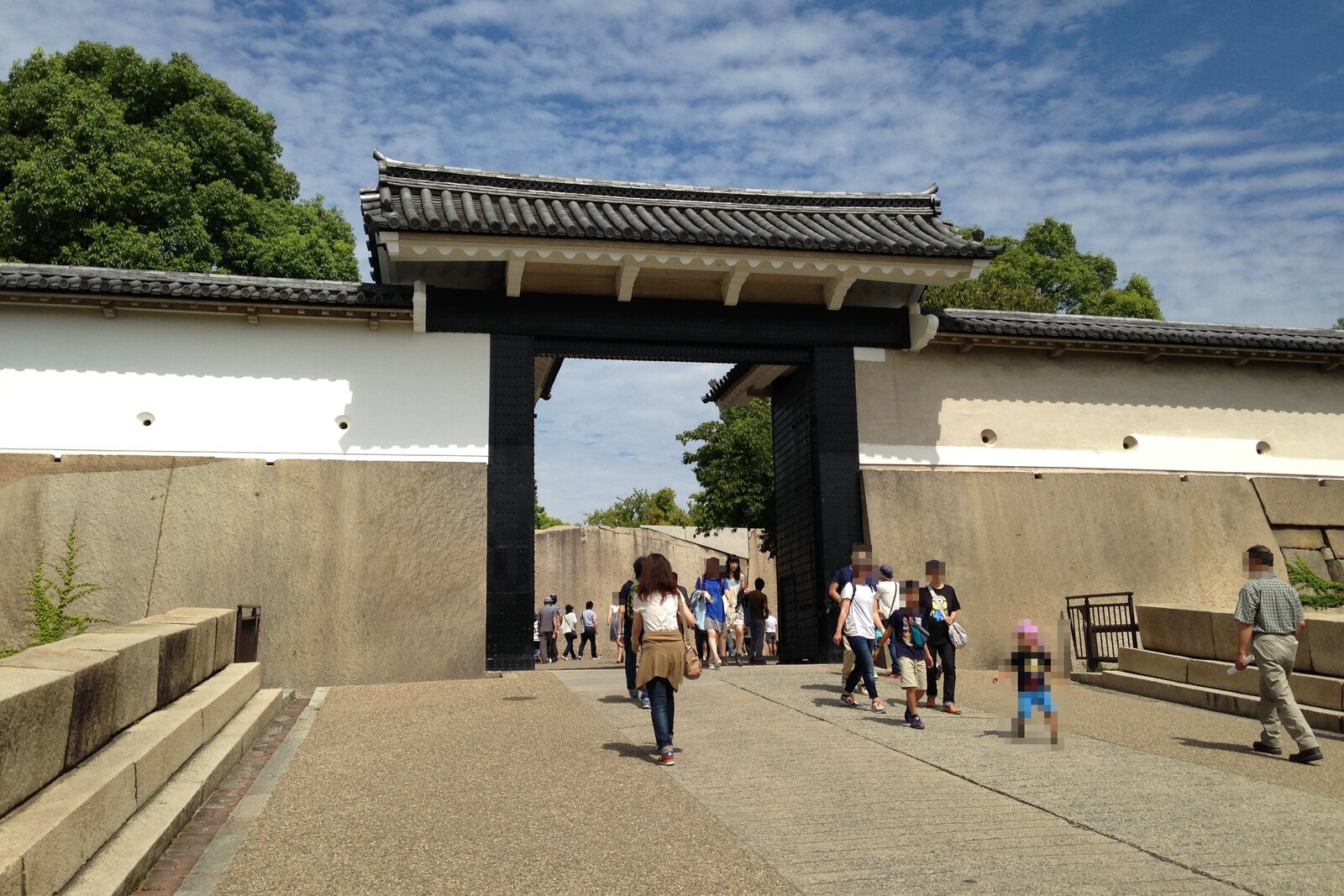
Look around first
What to notice
- Sakuramon Gate
- The granite slab of Takoishi
- The mark in the lower left part of the slab
- The side stones of the passage
The story of the place
The gate's name remained from the old fortress, where horses were kept among cherry trees near the former entrance; the passage now faces in another direction. Behind it lies a masugata, a rectangular courtyard that prevented a direct approach to the center of the castle: a stone barrier rose before anyone entering, and the path led into a turn watched from the gallery above. Takoishi, the castle's largest boulder, is built into its wall, with an exposed granite surface of about sixty square meters and a weight of about one hundred eight tons. On either side of the passage lie two more stones, known as the Dragon Stone and the Tiger Stone; legend says that rain reveals their outlines on wet granite.
In sixteen twenty-four, Yokogawa Shigenobu, a vassal of the Ikeda clan, received an assignment: to quarry a huge granite slab on Inujima Island and deliver it to the main gate of the inner courtyard of Osaka Castle. Yokogawa was a ship commander. It was precisely the ability to command vessels and people that was needed to transport the stone across the Seto Inland Sea.
Ten years earlier, he had come to Osaka as a warrior. In one of the first battles of the siege, Yokogawa killed a Toyotomi unit commander and received a commendation document from Tokugawa Ieyasu. He lived in service to the Ikeda clan: his land income was assessed at five hundred koku—the amount of rice an estate could yield in a year. After the Toyotomi clan was destroyed, his lords were ordered to build a fortress for the victors, and Yokogawa returned here with a stone.
Shogun Tokugawa Hidetada divided the restoration of the castle among sixty-four daimyō—major hereditary rulers obliged to serve the shogun. Each clan brought people and delivered materials for its assigned section. Ikeda Tadao, the ruler of Okayama Domain, was responsible for Sakuramon Gate and the space immediately beyond it.
Yokogawa's slab was transported more than one hundred kilometers. It was installed directly opposite the entrance. Its visible surface covers about sixty square meters, and its weight is estimated at one hundred eight tons. It is the largest stone at Osaka Castle. An inscription on Yokogawa's grave later praised him for quarrying and transporting the huge stone; local history links this achievement specifically to this slab.
The stone is called Takoishi. According to legend, a mark at its lower left edge resembles an octopus spread flat. No one carved the outline: the name was given to a natural pattern in the granite.
Ikeda set the slab into the wall of the masugata—a rectangular courtyard behind the gate. Anyone entering found a stone barrier in front of them and had to turn to proceed farther, into the central part of the castle. A wooden gallery ran above the walls, from which defenders kept this turn under observation. The huge facing slab met everyone who had already been admitted through the first gate but had not yet been allowed into the main courtyard.
Two more animals remained outside. The stones on either side of the passage are called the Dragon Stone and the Tiger Stone. In the Edo period, people said that in rain a dragon appeared on the stone to the right and a tiger on the one to the left; an old manuscript description of the castle even depicted these silhouettes. This is a legend about marks on wet granite, not images made by stonecutters.
Sakuramon means “cherry-blossom gate.” People preserved the name from the Toyotomi fortress: near the former entrance was a horse yard with rows of cherry trees. The Tokugawa clan moved the entrance and turned it in another direction. The wooden structures above the masugata burned down in eighteen sixty-eight, and the military built the current gate in eighteen eighty-seven. The gallery above Takoishi was not rebuilt; the granite delivered by the Ikeda clan's people remained in place.
Useful on site
Do not expect to see clear images of animals: rain only strengthens the veins and marks. First take in the size of the boulders, then look for the surface pattern.