 Guide On Map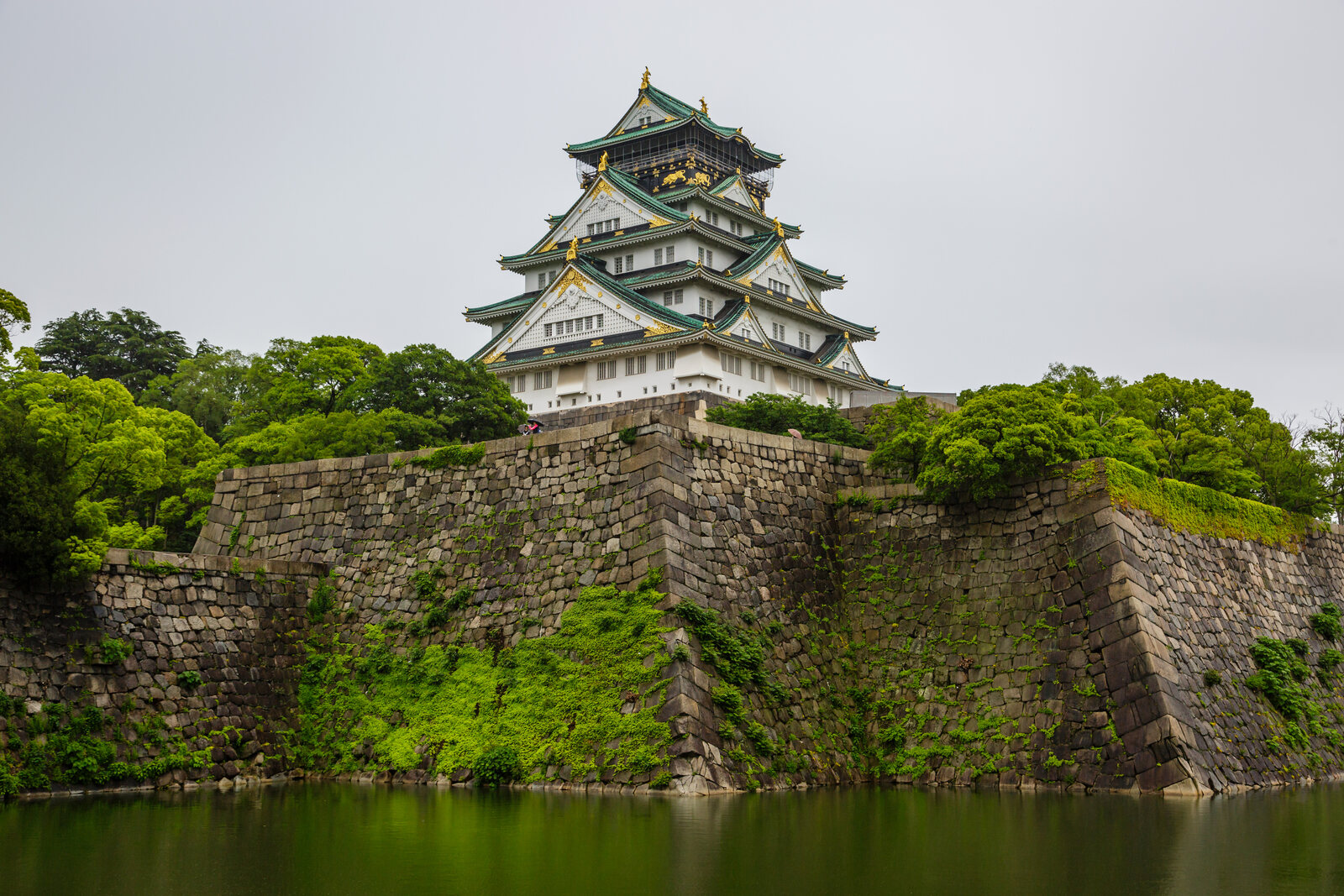
Look around first
What to notice
- Open square of Honmaru
- Osaka Castle Main Tower
- Japanese garden
- Former Fourth Division Headquarters
The story of the place
Osaka Castle Main Tower and the Former Fourth Division Headquarters stand at the edges of the open courtyard, which was once the castle's residential core. A palace complex with ceremonial halls and residential buildings stood here. Later, the military moved part of a palace here from Wakayama: the emperor stayed in these buildings, and high-ranking guests were housed there. The buildings vanished in fire, while the Japanese garden beside the square remained from them.
The empty space between Osaka Castle Main Tower and the Former Fourth Division Headquarters was occupied by Honmaru Palace—the residential and ceremonial buildings in the castle's most heavily defended courtyard. Decisions were made here, retainers were housed, and formal audiences were held. In the spring of eighteen sixty-seven, the palace was needed by Tokugawa Yoshinobu, the fifteenth shogun—the military head of the Tokugawa shogunate. He was seeking to have foreign diplomats recognize him as someone capable of carrying out international treaties.
The main dispute remained Hyogo Port, now part of Kobe. Japan had promised to open it to foreign trade, but the deadline had already been postponed, and the imperial court in Kyoto objected. The British envoy Harry Parkes insisted that the treaty be carried out. Yoshinobu invited him and representatives of France, the United States, and the Netherlands here to Osaka: the castle served as the government's base in the west of the country and was closer to the future port than the shogun's residence in Edo—present-day Tokyo.
Two meetings were arranged for each envoy. At the official one, the diplomats presented their letters of credence in the great hall. Yoshinobu turned the private reception into a European dinner. Harry Parkes was seated to the host's right. French dishes were served on imported tableware; after dessert, the shogun raised a glass to the British queen, and the guests were then offered coffee in another building.
The description has come down not as an exact palace inventory, but as a retelling of the diary of a Dutch diplomat. In it, a Brussels carpet appears alongside Japanese walls with birds and flowers against a gold background. Yoshinobu's men, who had previously been abroad, deliberately used a ceremony familiar to the diplomats. The new shogun was showing that he could speak with them without intermediaries and bring the opening of the port to completion.
The envoys were pleased with the reception and held Yoshinobu himself in high regard. His government set the opening of Hyogo and Osaka for January first, eighteen sixty-eight, and the port began receiving foreign vessels on the appointed day. Yoshinobu's personal success was short-lived. He had already resigned as shogun the previous autumn, hoping to retain a leading role under the country's new order. After his troops were defeated near Kyoto, he returned to Osaka Castle, then secretly left for Edo at night and soon withdrew from state affairs.
During the fire that followed, Honmaru Palace burned down. Sources explain differently who exactly set the castle on fire, so the culprit cannot be identified with confidence. Seventeen years later, the military moved part of a palace here from Wakayama Castle. It was called Kishu Palace; it served as an imperial residence and as accommodation for high-ranking guests. This second palace survived military bombing, but burned down in nineteen forty-seven.
The Japanese garden beside the square was created for Kishu Palace, and it has survived. Nothing remains above ground of the halls where Yoshinobu treated Parkes to a French dinner and promised to open Hyogo: the square itself now occupies their place.
Useful on site
The main narration is intended for outdoors. Plan a visit to the museum inside the tower separately, and check access conditions in advance.