 Guide On Map
Osaka Castle and Nakanoshima: Power by the Water
From Otemon Gate through Honmaru and Gokurakubashi Bridge to Osaka City Central Public Hall
Guide On Map on your phone
Open the walk like a regular app
It takes about 10 seconds to install. No app store needed.
The whole path
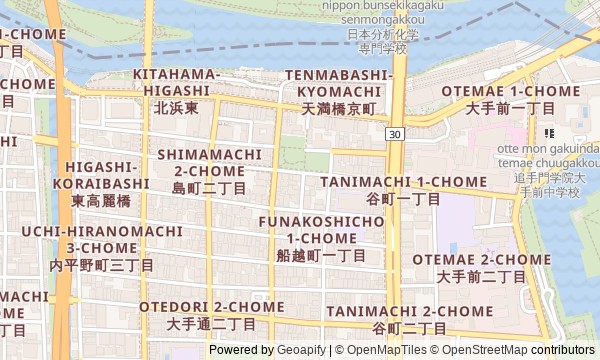
Route map
About the walk
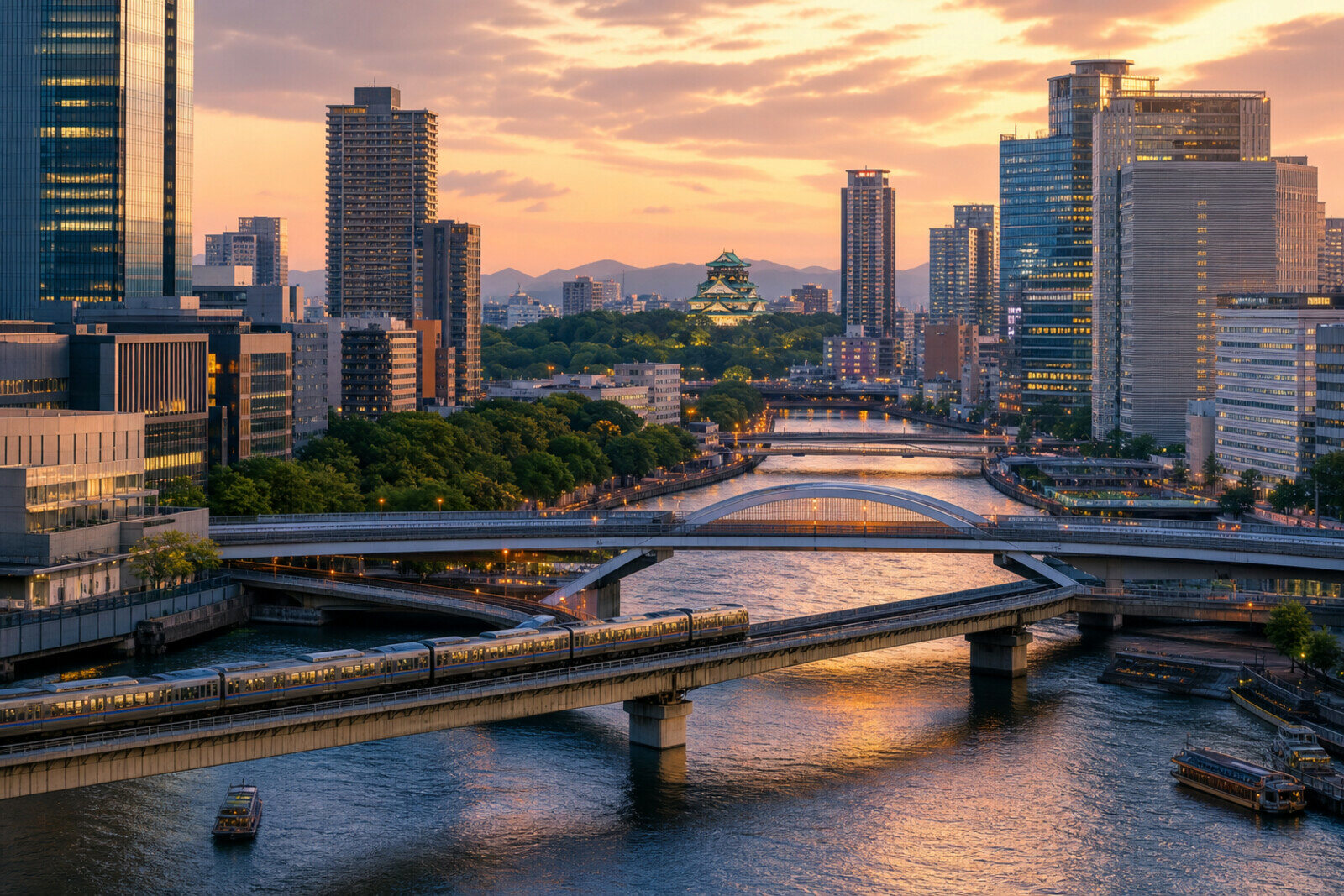
You will enter Osaka Castle through Otemon Gate, cross two stone courtyards, and emerge onto a square where the palace no longer stands. Then you will circle the tower, descend to the northern moat, and leave the fortress across Gokurakubashi Bridge. At Temmabashi Bridge, the scale changes: shoguns and gates give way to boatmen, a pier, and a short stretch of river once disputed with the magistrate. From there, you will follow the water to Nakanoshima—to a rose garden on an artificially extended island and the red-brick Osaka City Central Public Hall.
The stories stay with things that are easy to miss: a seam in a wooden post, a mark on granite, an empty square, an ordinary bridge. They unpack particular decisions—what was preserved, moved, seized, reclaimed, and given away. The answers will not be given away beforehand.
After the walk, you will read this part of Osaka through who controlled passage, water, land, and the city’s money—and how.
Why this order
Otemon Gate and Sakuramon Gate come one after the other because the route follows the movement deeper into the fortifications. First, a wooden support shows how an old gate was preserved; then an enormous slab reveals how the victors rebuilt the castle in stone. Honmaru begins beyond Sakuramon Gate. You will hear the palace’s story where the main buildings would be expected after the ceremonial gate, but only a square remains. From there, the route crosses the inner court toward the northern exit. Gokurakubashi Bridge continues the story of vanished structures through a structure whose part was taken from the castle. After the bridge, fortress control over passage gives way to Temmabashi Bridge, where control became the city’s right to the last meters of river. From the pier, the same water leads to Nakanoshima: the story of reshaping the riverbed explains the land beneath the rose garden. Farther along the island stands Osaka City Central Public Hall, a finale about how private money became a civic building.
Those who want to understand how a castle worked, not just see its tower Those interested in urban engineering, trade, and private decisions Those who enjoy the shift from fortress walls to a river city
Those looking for a route devoted only to contemporary food-focused Osaka Those who do not enjoy detailed historical stories Those who want to stay inside Osaka Castle Park
Before you go
Most of the route is outdoors, so choose clothing and shoes for the weather and a long walk. Treat the museum in Osaka Castle Main Tower and the interiors of Osaka City Central Public Hall as separate stops: check access, events, and possible restrictions ahead of time, but do not build the whole walk around them. After rain, patterns in the stone may be easier to read, though the legendary figures may not appear clearly. Roses bloom seasonally; even without them, the stop still works through the layout of the beds, variety labels, and the park’s own history.
When to go
Start in good daylight: you will need it for marks in the masonry, stains in the large stones, and traces of damage near the tower. Leave enough time for the walk to the Okawa River, and do not rush the river section—the change of scale after the tight castle passages is half the experience.
Backup plan
If weather or fatigue makes it impossible to do everything at once, split the route at its natural dividing line. On the first outing, walk from Otemon Gate to Gokurakubashi Bridge: it is a complete story of the castle, its losses, and its returns. On the second, begin at Temmabashi Bridge and continue through the rose garden to Osaka City Central Public Hall. If the roses are sparse, do not skip Nakanoshima: focus on the water, the park layout, and the neighboring historic buildings. If interiors are closed, the exterior stops still carry the whole main story.
Route conditions
Surface. Paved — 3.6 km (data covers 87% of the route)
Stairs. Flights: 4, 37 m in total
Access. Wheelchair — no; stroller — limited (stairs)
Facilities. Toilets — 12; drinking water — 2
Elevation. Ascent — 81 m; descent — 99 m
OpenStreetMap extract of June 18, 2026: database data, not a check on the ground. Data © OpenStreetMap contributors, ODbL licence
Walk plan
Open in maps ↗- 1
Otemon Gate
Here, the workings of the defenses begin with a detail hidden inside a load-bearing post. - 2
Sakuramon Gate
This point will show the effort by which the victors turned military success into stone architecture. - 3
Square of the Vanished Palace
The empty space makes it possible to reconstruct the scene of the Tokugawa shogunate's last diplomatic success. - 4
Gokurakubashi Bridge
The transition will link the present bridge to a structure that changed location and purpose several times. - 5
Temmabashi Bridge: the last hundred ken
Here, fortress control gives way to the city's monopoly over the last meters of river delivery. - 6
A Rose Garden on the Site of Rice Warehouses
The history of this plot explains where the land beneath the eastern part of the island came from. - 7
Osaka City Central Public Hall
The finale will show why a properly structured gift was able to survive the donor’s ruin and death.
Route features
Everything you need stays in the browser
Progress, saves and your trip plan are stored on this device.
Add Guide On Map to your home screen so the walk opens outside the browser.
How we handle sources, maps and corrections: our editorial standards