 Guide On Map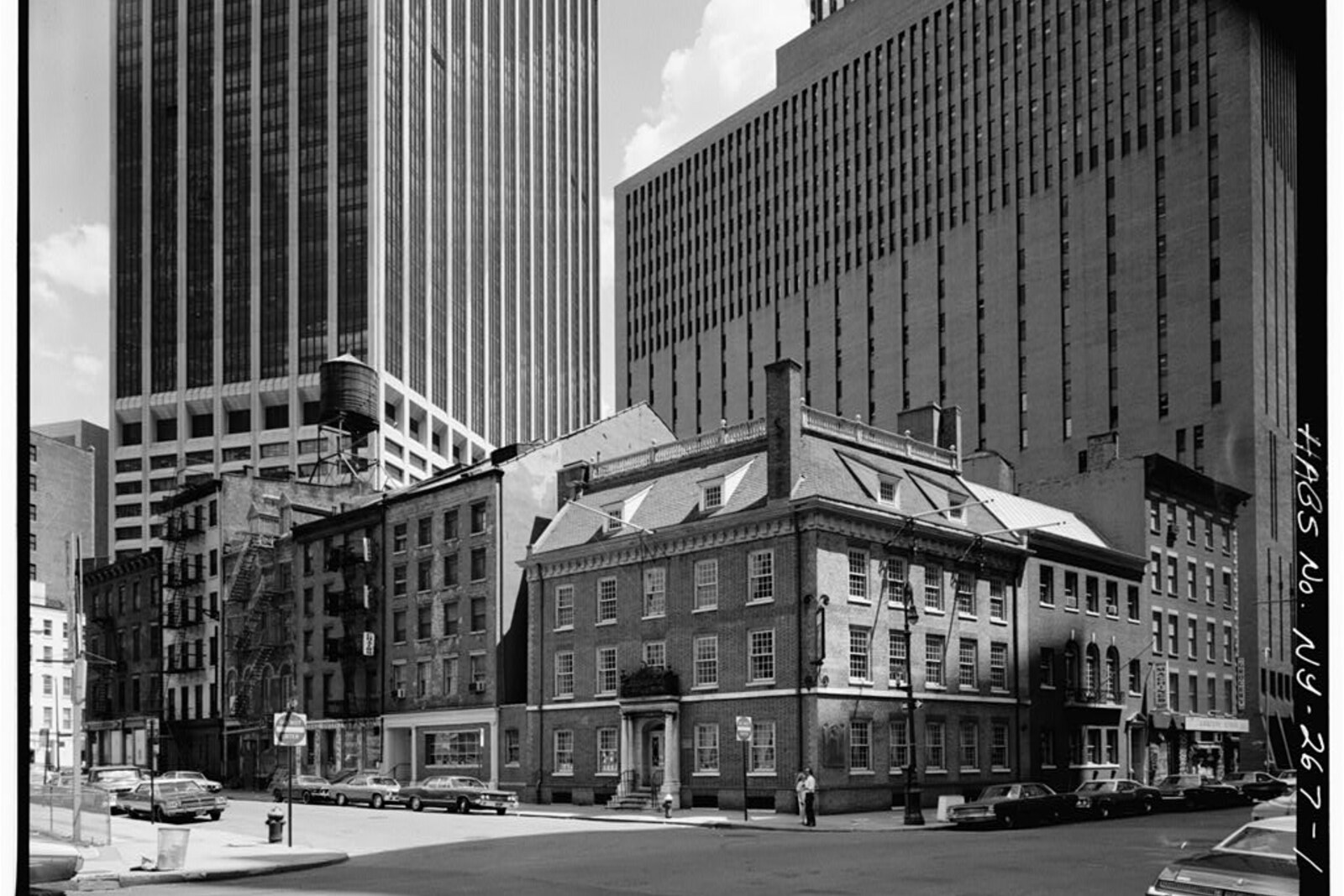
Look around first
What to notice
- Brick facade
- Tavern sign
- Long Room
- Old ceiling beams
The story of the place
In the eighteenth century, city clubs and businesspeople often had nowhere to meet indoors, and taverns took on that role. On the second floor of this brick house was the Long Room, where private dinners and meetings were held; nearby, the exchange, harbor, and slip were already in operation. Later, the rooms were occupied by departments of the general government of the states. Now there is still a restaurant downstairs and a museum upstairs; old walls, the ceiling, and beams survive in the Long Room.
The current sign preserves the surname of Samuel Fraunces, a New York City tavern keeper. He earned money from catered dinners, prepared food, and payments from lodgers. To buy this large brick house by the city docks, Fraunces mortgaged his previous tavern. In seventeen sixty-two, an establishment opened here under the sign of Queen Charlotte, also known as the Queen's Head. It came to be called Fraunces Tavern after its owner.
An eighteenth-century tavern gave the city a space that was often unavailable anywhere else. The Long Room on the second floor hosted private dinners, club meetings, and business gatherings. Nearby were the exchange, the harbor, and Whitehall Slip. That is why, on December fourth, seventeen eighty-three, George Washington called his final meeting with his officers here.
Washington commanded the Continental Army—the shared army of the states that had rebelled against Great Britain. He wanted to surrender the command entrusted to him by their representatives and return home after eight years of war. For his officers, the parting meant the loss of the service many depended on for their livelihood. Their pay had been delayed for years; in the spring, an anonymous address circulated among the military, proposing that they not disband and force Congress to pay its debts. Washington then persuaded the officers to abandon the threats. Great Britain had now recognized independence, its troops had left New York City nine days earlier, and Washington had to confirm his earlier words by departing himself.
The only detailed testimony from a participant was left by Colonel Benjamin Tallmadge, who headed Washington's intelligence network during the war. He recorded his recollections forty-seven years later, so the exact words are known from late memory; the meeting itself and its tension were confirmed by a New York City newspaper published two days afterward.
According to Tallmadge's account, the officers had gathered in the Long Room by noon. Washington entered, drank wine with them, and said, “With a heart full of love and gratitude, I bid you farewell.” He then asked each man to come forward and shake his hand.
Standing closest was Henry Knox, the chief of artillery, who now had to part from the man under whose command he had spent almost the entire war. Knox approached first. Washington could not continue his speech; he clasped Knox's hand and embraced him. The other officers said goodbye after him. They left together with their commander and accompanied him to Whitehall Slip. From there, a barge carried Washington to Paulus Hook, as present-day Jersey City was then called.
On December twenty-third in Annapolis, Washington returned his commission to the Continental Congress, the assembly of state representatives that had appointed him commander in chief. The next day, he arrived at Mount Vernon as a private citizen.
For Knox, the history of this building continued differently. Two years later, the rooms of the tavern were leased by the general government of the states: the departments of foreign affairs, war, and the treasury were housed here. Knox returned to the same house as secretary for military affairs. Treasury clerks here also sorted out debts in soldiers' pay and reimbursed officers' expenses—the very money over which the army had nearly refused to disband.
The first floor is still occupied by a restaurant, while the Long Room is part of the museum on the upper floors. After fires and numerous alterations, the facade was restored to its colonial appearance in nineteen oh seven; the room itself retained its former layout and part of its old walls, ceiling, and beams. The museum also keeps Tallmadge's manuscript—the account written forty-seven years after he left here behind Washington on the way to the slip.
Useful on site
The facade and the Pearl Street/Broad Street corner are accessible at any time of day; the museum rooms upstairs follow the museum's separate schedule and may close for holidays or events. The route does not require going inside, but before visiting the interior, it is best to check the museum's official website.
Checked: June 15, 2026. Check the official source before visiting.For this stop, it is enough to view the building from outside. The museum and historic rooms are visited separately after checking the admission conditions.