 Guide On Map
Lower Manhattan: Harbor and Power
From The Battery through Wall Street to City Hall Park
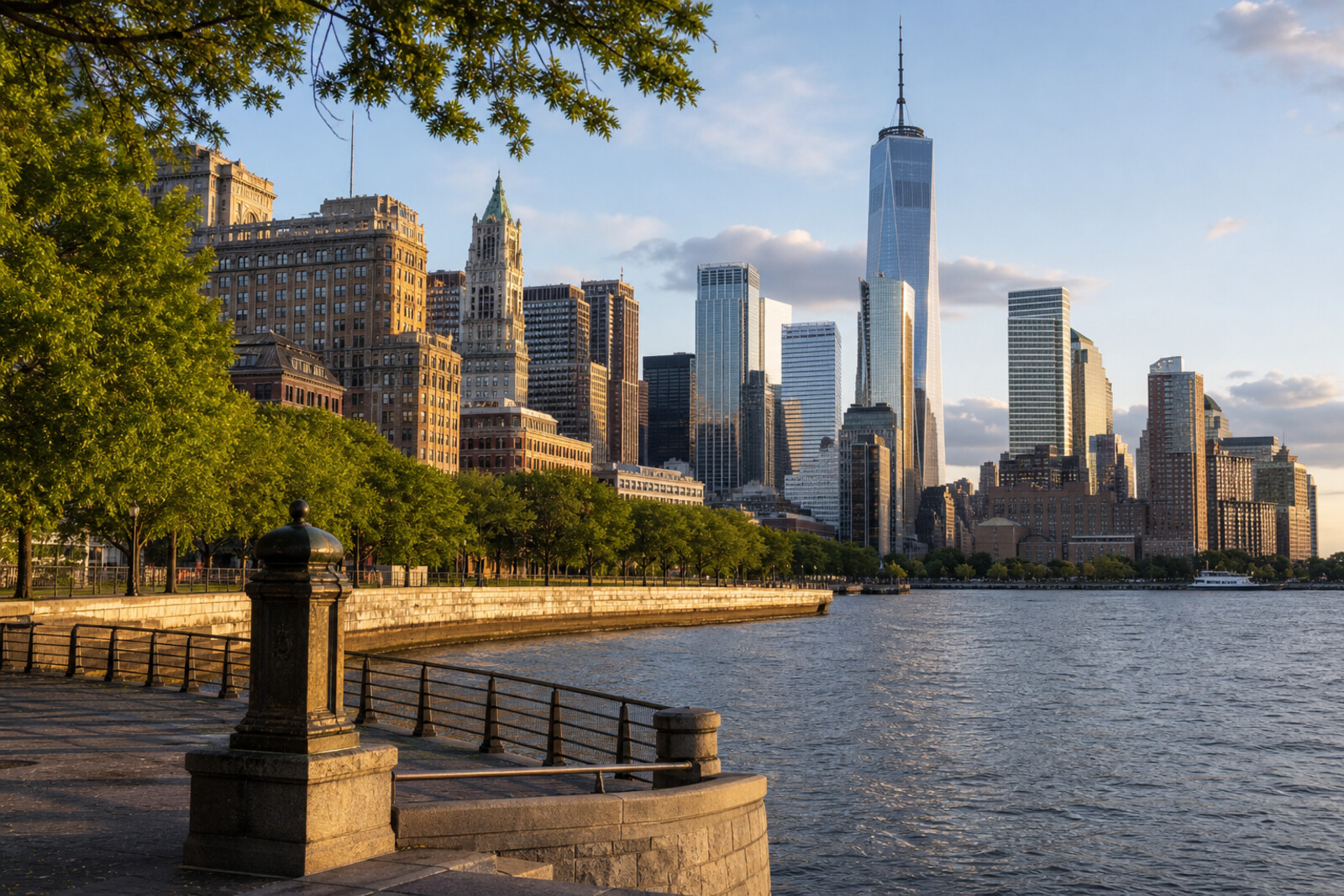
Guide On Map on your phone
Open the walk like a regular app
It takes about 10 seconds to install. No app store needed.
The whole path
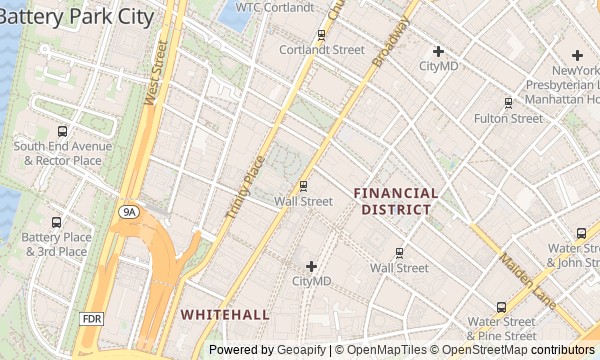
Route map
About the walk
You will begin by the harbor, where Manhattan still opens out toward the water. Then the road will tighten into old streets and blocks between Bowling Green, the tavern, Wall Street, and Trinity Church. After the church, you will come out to the two memorial pools and finish at New York City Hall.
This will be a walk through places where power keeps becoming almost physical. A cannon can be dragged away. A statue can be pulled down. Authority can be returned. Church land can be lost or defended. But why would someone who has already made it down the stairs go back up again?
The story will rest on actions and objects: a rope, a fence without finials, a broken slab, a scorched wall, a flagpole. Familiar names will not conceal the human cost of decisions. After this walk, you will be able to follow Lower Manhattan as a chain of places where the right to command must be proved each time—before soldiers, parishioners, employees, and city residents.
Why this order
From The Battery, the route will go to Bowling Green: a former waterfront defense leads to the nearest royal symbol, against which the revolution will turn. From the empty site of the monument, the streets lead to the tavern by the old slip—from a public break with the crown to the moment when an army must disperse. Broad Street then rises toward Federal Hall: surrendered military command gives way to the creation of civilian office. One block over, Trinity Church shows how the same break decides the fate of a community and its land. The route then runs from the old church to the memorial on the site of the Twin Towers: a conversation about power becomes one about personal responsibility during catastrophe. The final approach to City Hall Park returns to the beginning of the revolutionary story—not at a royal statue, but at a contested sign of liberty before the barracks.
Those who want to understand early New York City through specific actions Those who care about the connection between place, object, and document Those ready for a sharp change of tone at the memorial
Those expecting a walk only about skyscrapers and finance Those looking for a light route without war and catastrophe Those who do not enjoy detailed historical storytelling
Before you go
Most of the story is experienced from the street, so you can complete the route without entering any interiors. Treat entry to Castle Clinton, 9/11 Memorial Museum, Fraunces Tavern, Federal Hall, and Trinity Church as separate decisions: check their rules and availability in advance if you want to go inside. Bring headphones, comfortable shoes, and protection from wind or rain—the weather feels sharper by the water, and there is little shelter between the first stops. At Trinity Church, do not disturb services or cemetery visitors; by the memorial pools, speak quietly, do not hold a place by the names for long, and do not touch the tokens of remembrance left behind.
When to go
It is best to begin in the morning, when it is easier to stop by the harbor and Bowling Green and look closely at the details. A weekday is more convenient if you want to combine the walk with an attempt to enter Federal Hall, but check access before you set out anyway. Allow extra time for the whole route at Trinity Church and the memorial: these stops do not take well to being rushed.
Backup plan
If any interior is closed, do not reroute: Castle Clinton, Fraunces Tavern, and Federal Hall work fully as exterior stops. In bad weather, shorten your time by the harbor and listen to the first stories in a place sheltered from the wind, without blocking passageways. If it feels emotionally difficult to continue after the 9/11 Memorial, ending the walk there is entirely appropriate. If you are tired before reaching it, skip going inside buildings, but keep the order of the streets: the passage from Federal Hall through Trinity Church to the memorial pools forms the conceptual backbone of the route's second half.
Route conditions
Surface. Paved — 2.9 km; unpaved — 68 m
Stairs. Flights: 2, 6 m in total
Access. Wheelchair — no; stroller — limited (stairs)
Facilities. Toilets — 5; drinking water — 10
Elevation. Ascent — 21 m; descent — 11 m
OpenStreetMap extract of June 18, 2026: database data, not a check on the ground. Data © OpenStreetMap contributors, ODbL licence
Walk plan
Open in maps ↗- 1
The Battery
This is where the story begins of a city that was still defended by guns from the harbor. - 2
Bowling Green
The surviving fence lets you see what remains after the destruction of the royal symbol. - 3
Fraunces Tavern
The tavern connects the end of the war with the army's debts and the voluntary surrender of command. - 4
Federal Hall and Wall Street
This stop will show how a new government office was devised along with its ceremony and its name. - 5
Trinity Church
Here, the political break with Great Britain will become a dispute over an oath, a parish, and the right to land. - 6
World Trade Center and 9/11 Memorial
The memorial will shift the conversation from governmental authority to a personal decision to take responsibility for others. - 7
City Hall Park
The final stop returns to the years when freedom had to be defended not by a declaration, but by a new flagpole.
Route features
Everything you need stays in the browser
Progress, saves and your trip plan are stored on this device.
Add Guide On Map to your home screen so the walk opens outside the browser.
How we handle sources, maps and corrections: our editorial standards