 Guide On Map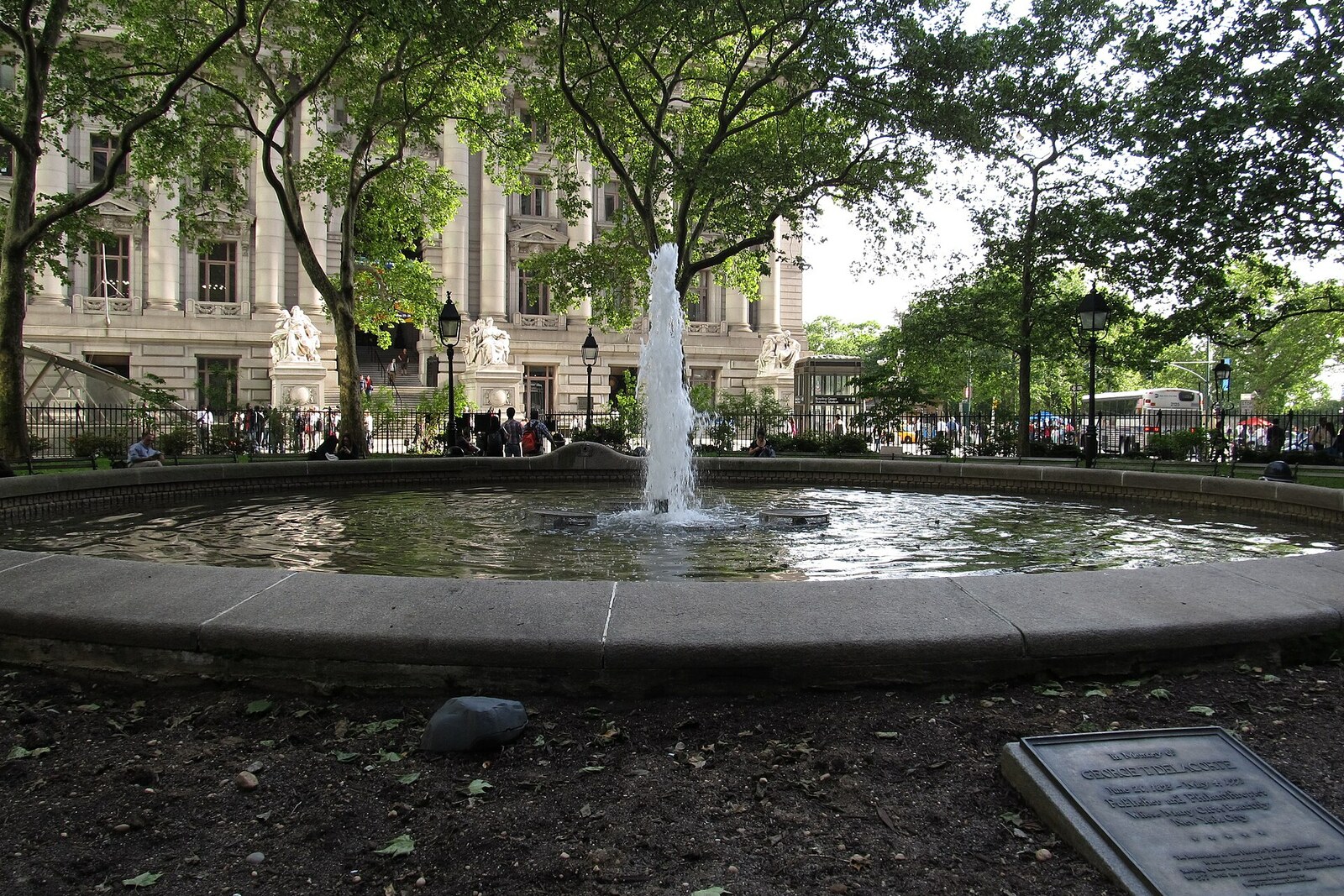
Look around first
What to notice
- The oval lawn
- The iron fence
- Posts without their former finials
- The fountain
The story of the place
At the southern end of Broadway, a green oval of city garden survives near the site of Fort George, the fortified residence of the British governor. Broadway ended at its walls, so people rested here and gathered for city ceremonies. The iron fence still circles the grass, but its posts are left without their metal tops. The fountain in the middle occupies the site of the old pedestal.
The small oval of Bowling Green is New York City's oldest public park. Its name means a lawn for playing bowls. In seventeen thirty-three, the city council leased this plot to three Broadway residents for eleven years. The rent was one peppercorn a year: the symbolic payment made the agreement valid, while the tenants leveled the lawn, laid out paths, and put up a fence at their own expense. Balls were rolled across the grass toward a small target, much as in bocce.
The site was chosen at the end of Broadway, directly in front of Fort George. Here the main street ran into the fortified residence of the British governor, so the green oval worked both for recreation and for public ceremonies. In seventeen seventy, a gilded lead statue of George III was installed where the fountain now stands.
Four years before that, the Parliament of Great Britain had repealed the Stamp Act hated by the colonists. The New York General Assembly commissioned the monument to thank the king and affirm loyalty to him. George was depicted on horseback, in the armor of a Roman emperor. The statue faced Fort George: British soldiers emerging from it saw the king, while townspeople coming down Broadway approached the horse from behind.
A year later, the present iron fence was put up around the monument. It was meant to protect the statue and keep the green oval from becoming a dump. Metal finials stood on the posts—contemporaries described them sometimes as crowns, sometimes as balls.
On July ninth, seventeen seventy-six, about a mile from here, on the site of today's City Hall Park, the Declaration of Independence was read aloud to soldiers. General George Washington, commander of the Continental Army of the rebelling colonies, ordered the document read aloud so that the fighters would understand: the outcome of the war would now decide the fate of a separate country. British ships were already gathering near New York City, and an attack was expected soon.
Within a few hours, a crowd of soldiers, sailors, and townspeople came down to Bowling Green. It probably included members of the Sons of Liberty, an underground movement against British taxes and royal rule over the colonies. They brought ropes, axes, hammers, and ladders. The statue was pulled from its pedestal, beheaded, and chopped into pieces.
This was not Washington's order. The following day, he acknowledged that the participants had acted out of zeal for the common cause, but condemned what happened as disorder in the army. Afterward, soldiers were told to leave such decisions to lawful bodies. The crowd was not punished, and the lead it obtained was needed by those same regiments: metal was so scarce that it was already being taken from window frames.
The pieces of the statue were taken to Litchfield, Connecticut. Local residents, including women and children, cast forty-two thousand eighty-eight musket balls from them. Chemical analysis of balls found on the field of the Battle of Monmouth later showed a strong match with the composition of the surviving fragments of the monument.
The empty pedestal stood here until eighteen eighteen. Its approximate place is now occupied by the fountain. Around it survives the fence from seventeen seventy-one, with repairs and sections returned after subway construction. The former finials are gone from the posts: they were knocked off during the Revolution and also turned into ammunition. The statue for which this fence was erected was carried away from here in boxes of lead; the fence remained.
Useful on site
An open historic square with no ticket required; best viewed during the day, when the fence, fountain, and old layout of the space are visible. Access may depend on the city's operation of the park.
Checked: June 15, 2026. Check the official source before visiting.It is often crowded near the bull, so it is easier to view the fence and square from some distance. Do not hold up the line of people waiting to take photos.