 Guide On Map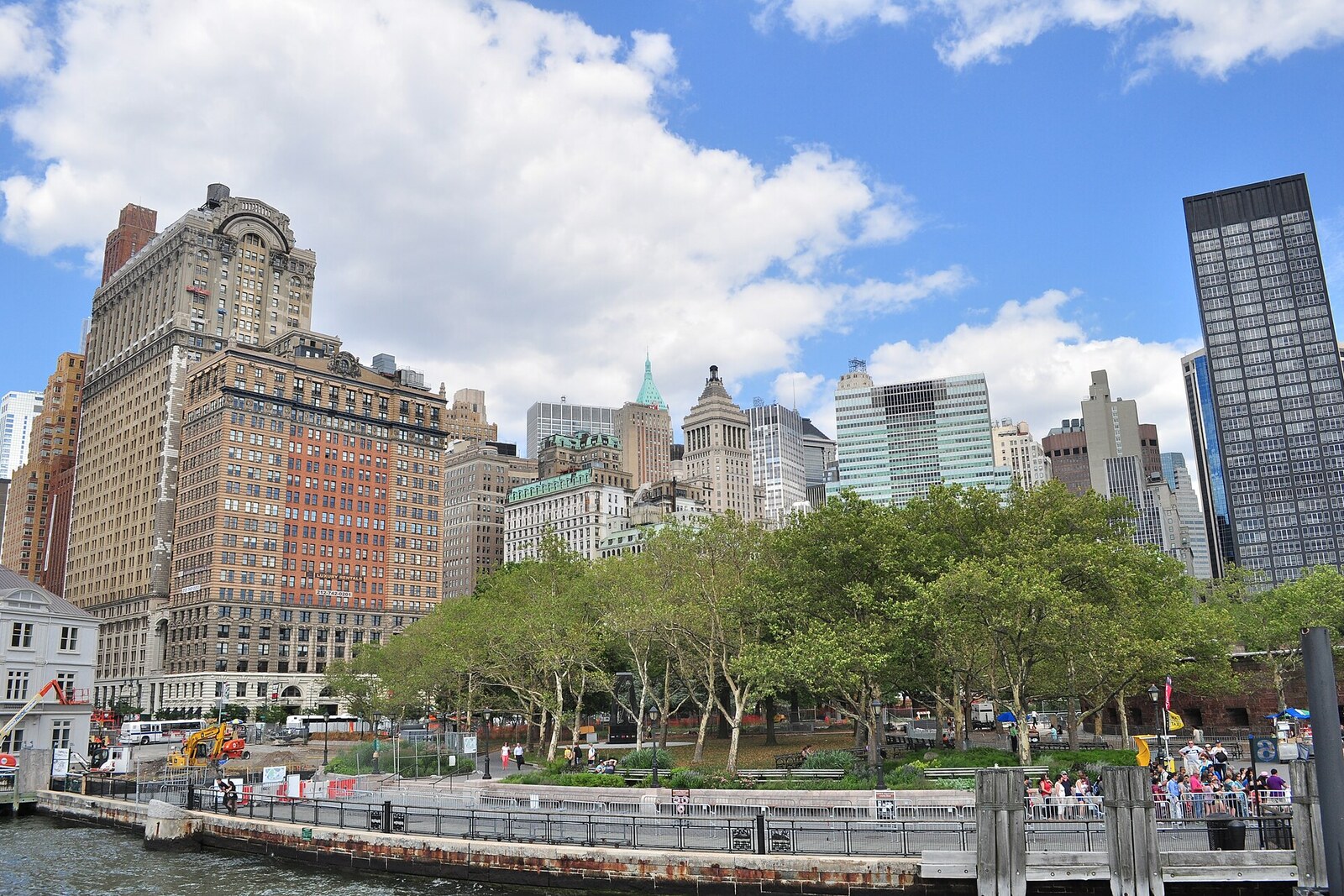
Look around first
What to notice
- The round wall of Castle Clinton
- The modern shoreline
- The open waters of the harbor
The story of the place
At the round stone wall of Castle Clinton, the edge of Manhattan faces the open waters of the harbor. The park has retained the name of the coastal position by Fort George, from which the sea approach to the city was once covered. Castle Clinton itself was built later on a separate rock and armed with twenty-eight guns that never had to fire on an enemy. Landfill pushed the shoreline farther out into the harbor, and tickets for ferries to the Statue of Liberty and Ellis Island are now sold inside the former fort.
On the night of August twenty-fourth, seventeen seventy-five, John Lamb came here for the King's guns. Lamb made his living in the wine trade, took part in the Sons of Liberty movement, and had recently received the rank of captain in the New York Artillery. The American Revolutionary War had already begun in Massachusetts, but New York was still a British colony, divided between supporters of breaking away and loyalty to the king. The New York Provincial Congress—a gathering of rebel colonists—ordered Lamb to remove the guns here and send them to fortifications on the Hudson River before the British took them themselves.
At the time, the shoreline ran north of the present waterfront. Beside Fort George, at the end of Broadway, stood an artillery battery—a row of guns covering the sea approach to the city. This is where The Battery gets its name. In the harbor lay the sixty-four-gun British ship Asia, aboard which the last royal soldiers still in the city had taken refuge.
By eleven o'clock that evening, Lamb had brought artillerymen, militiamen, and townspeople. Among them was twenty-year-old King's College student Alexander Hamilton, who commanded a small detachment of volunteers. He studied on money raised for him by benefactors and was seeking a combat command of his own. The men tied ropes to the guns and began dragging them from their positions.
Asia's captain, George Vandeput, had been warned in advance about the raid. He sent an armed longboat toward the shore. The sides later gave different accounts of who fired first: Vandeput blamed the people on shore, while the American participants blamed the sailors in the longboat. One consequence is undisputed: an American volley killed one British sailor, after which Asia opened fire with round shot and grapeshot on the battery and the lower city.
The volunteer Hercules Mulligan later recalled how Hamilton handed him a musket and took hold of a rope himself. Mulligan retreated and left the weapon on the battery. Hamilton went back for it, although the ship continued firing. Three people on shore were wounded, and several houses were damaged, but the detachment removed all twenty-one guns stationed here. They dragged them up through the city and placed them under guard near what is now City Hall Park.
A few days later, Lamb led his artillery company on an expedition to Canada. He was badly wounded and taken prisoner during the assault on Quebec. The following spring, Hamilton received an artillery company of his own. He spent the last of his scholarship money on an officer's uniform and turned down safer positions with generals in order to command guns in battle.
Those fortifications and twenty-one guns have long been gone. Fort George was dismantled after the war, and later landfill pushed the shoreline farther out into the harbor. The round stone Castle Clinton before the present waterfront appeared only in the early nineteenth century: it was built on a separate rock and armed with twenty-eight guns that never fired on an enemy. The fort was later named for former New York City mayor and future New York State governor DeWitt Clinton. Tickets for ferries to the Statue of Liberty and Ellis Island are now sold inside.
The old battery disappeared along with Fort George. Its name remained with the park from which Lamb and Hamilton removed all the guns under fire.
Useful on site
An open park by the harbor; the scenic paths are usually accessible daily, but the SeaGlass Carousel, restrooms, and certain services follow their own schedules. Before an early or late visit, it is best to check the park's FAQ and the current schedules of its facilities.
Checked: June 15, 2026. Check the official source before visiting.The story does not require entering the fort. Step away from the ferry lines and choose a place where the wind and the flow of passersby will not interfere.