 Guide On Map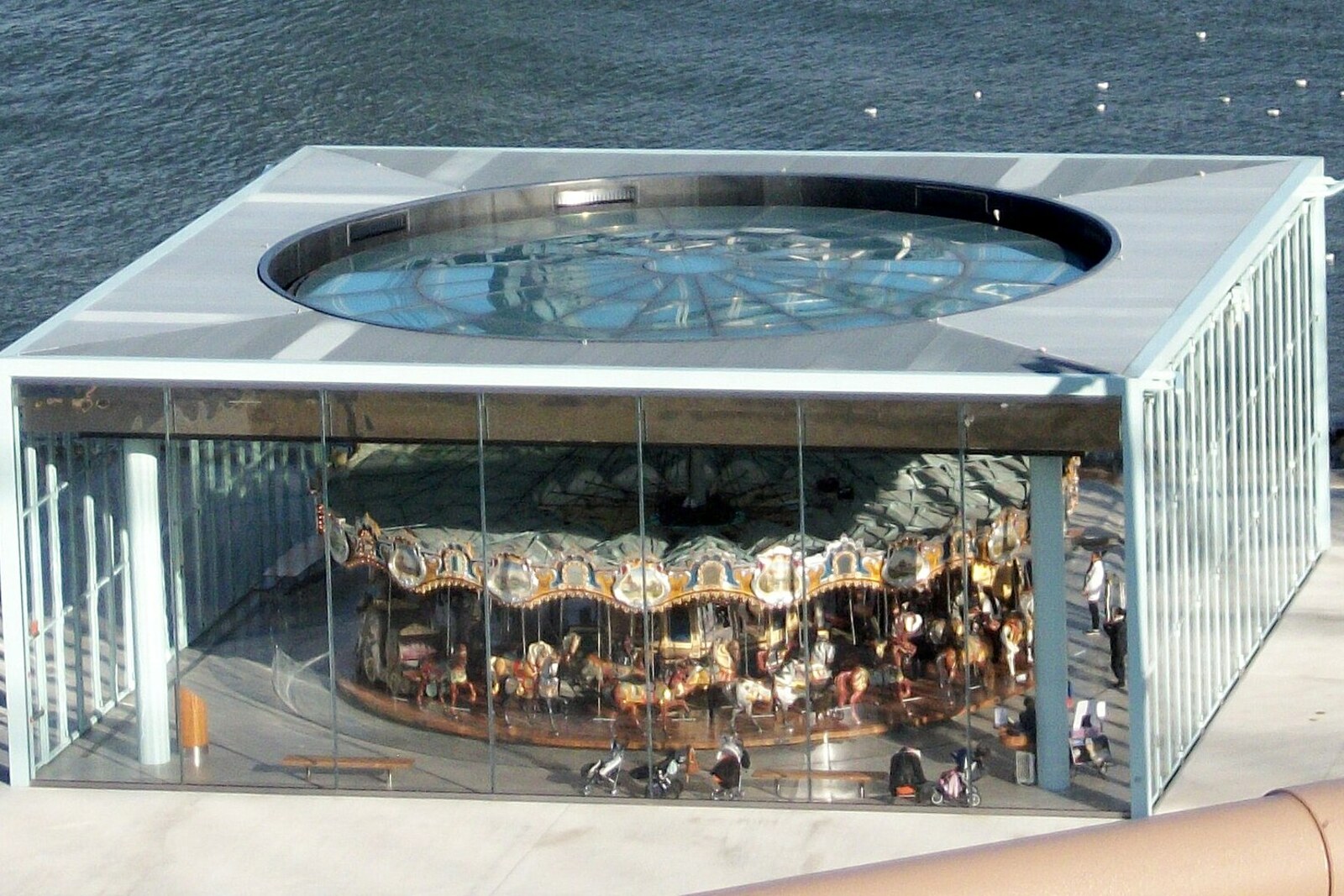
Look around first
What to notice
- Transparent pavilion
- Forty-eight wooden horses
- Two chariots
- Painted panels and mirrors
The story of the place
Through the transparent walls of the pavilion on the Brooklyn waterfront, you can see the wooden horses, chariots, painted decoration, and mirrors of an old carousel. It was made in nineteen twenty-two, and it arrived in DUMBO dismantled, then was reassembled over a long period using the surviving layers of its earlier finish. The carousel now carries passengers in Brooklyn Bridge Park, preserving the figures' hand-painted decoration.
In nineteen eighty-three, developer David Walentas was preparing a project for this section of the Brooklyn waterfront. There was not yet a residential neighborhood or the present-day park here, and the project architect proposed placing an antique carousel by the water: it was meant to draw people to a place they had no reason to visit yet. David's wife, the artist Jane Walentas, was assigned to find a suitable one. By then, she had left her permanent job as art director for the Clinique brand, but she continued to carry out special contract assignments for the cosmetics company. She had never worked as a carousel restorer.
In October nineteen eighty-four, Jane found the right machine at an auction held by the closed Idora Park in Youngstown, Ohio. It had been built by the Philadelphia Toboggan Company in nineteen twenty-two: forty-eight wooden horses, two chariots, painted panels, and mirrors. The sellers initially accepted separate bids for each horse and each part of the mechanism. They then added up the resulting sums and offered the participants the chance to buy the carousel as a whole.
David named the first price—three hundred eighty-five thousand dollars. He considered the bid almost a formality: in his view, more serious bidders were competing for the purchase. No one responded. The horses, already assigned to collectors on paper, remained together, and Jane and David unexpectedly acquired the dismantled carousel, although a place for it in Brooklyn existed only on a plan.
Two trucks brought the purchase to DUMBO. The parts were covered in dirt and grease; the horses were hung in makeshift stalls beneath one of the warehouse buildings. The specialists brought in proposed removing the old paint with chemicals and repainting the figures with an automotive sprayer. That method was faster, but it dissolved the surviving lower layer from nineteen twenty-two. Jane chose a craft knife: to scrape off the later paint by hand until the original color appeared, then photograph what she found, match the shade, and make a drawing for the future painting.
One carpenter did not believe in this method. When Jane left, he used the chemical compound anyway. She fired him and continued working alone. Sometimes the smaller horses were taken to Manhattan: Jane spread a tarp in the room of her son, who had left to study, and cleaned two or three figures at a time. In this way, she removed sixty-two years of repainting, although the waterfront project had stalled and no one could promise that the carousel would ever turn again.
A few years later, Jane also interrupted the work. The parts returned to the warehouse. Later, she decided that the carousel had reached the point beyond which it would have to be either completed or lost, and she assembled a small team of artists and craftspeople. The preserved photographs, color samples, and drawings made it possible to restore the painting, gilding, beveled mirrors on the bridles, and decorative panels. When the work was complete, the carousel was exhibited in DUMBO, and visitors signed a petition demanding that it be installed in the future park.
Jane and David gave the carousel, together with a transparent year-round pavilion, to Brooklyn Bridge Park. In September two thousand eleven, it began carrying passengers again. Jane's name appeared in the title because of her work: beneath the glass, the same forty-eight horses and two chariots now turn—the ones that at the auction were already about to be dispersed among different owners. Their present colors reproduce the samples Jane found beneath layers of old paint.
Useful on site
Open year-round, daily 11:00–19:00 (closed on Tuesdays); a ride costs about 2 USD, and children under 3 ride free. Hours depend on the season and weather; check the official website.
Checked: June 17, 2026. Check the official source before visiting.The carousel is clearly visible from outside; a ride depends on whether it is currently operating and is arranged separately.