 Guide On Map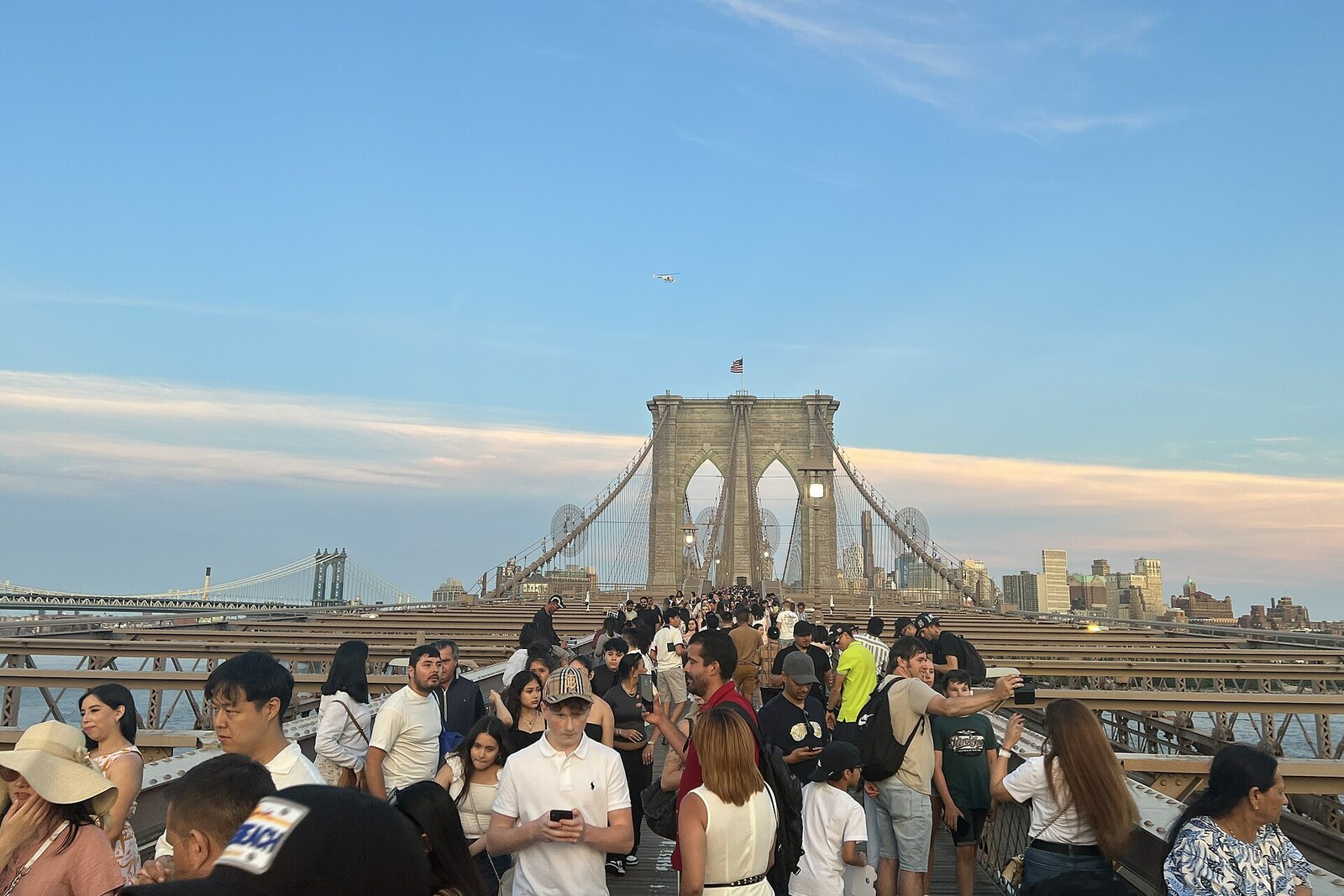
Look around first
What to notice
- Upper deck of the promenade
- Roadway one level below
- Stone towers ahead
The story of the place
The upper wooden deck of the Brooklyn Bridge runs above the flow of cars; stone towers frame it ahead. It is raised on a separate level above the road, and the former confusion at the Manhattan entrance disappeared along with the turnstiles and wooden steps. Cyclists were moved to a lower lane, and the upper promenade was once again left to pedestrians.
John Roebling, the engineer who conceived the crossing between the then-independent cities of New York City and Brooklyn, set aside the bridge's central lane for pedestrians and raised it above the carriages and railroad tracks. In his plan, city residents could cross the river separately from traffic and pause for the open view. The pedestrian promenade was part of the original design.
The bridge opened on May twenty-fourth, eighteen eighty-three. Crossing on foot cost one cent, but the price did not curb curiosity: more than one hundred fifty thousand people walked along the upper path in the first full day. Six days later came a holiday commemorating those killed in the Civil War, and a crowd again filled the promenade.
At the Manhattan entrance, between the turnstiles and the path, there were thirteen wooden steps without handrails. One woman descending them lost her balance. Another screamed. In the crush, the scream was taken as news that the bridge was collapsing. The people behind could not see the steps and kept pressing forward, while another stream was coming up toward them. Those who fell could no longer be lifted up: the next people fell on them.
Workers who were still finishing the bridge reached the spot over the trusses and began dismantling the iron railing to get people off the path. Children were passed over people's heads. Seven women, four men, and one boy died; at least thirty-five people suffered serious injuries. The bridge itself did not collapse and was not damaged, but many city residents linked the deaths to the unreliability of the new crossing.
Phineas Taylor Barnum took advantage of this fear. He owned a circus and made money by turning city curiosity into ticket sales. Even before the opening, he had proposed leading elephants across the bridge, but was refused. On May seventeenth, eighteen eighty-four, he was allowed to try again. Twenty-one elephants, seven camels, and ten dromedaries crossed the roadway from Manhattan to Brooklyn. The procession was brought up by six-ton Jumbo, Barnum's leading circus star. All the animals reached the other bank, spectators received clear proof of the bridge's strength, and Barnum received newspaper pages to advertise his circus.
The present upper deck preserves the position and purpose of Roebling's promenade. The thirteen wooden steps and the old turnstiles at the Manhattan entrance are gone. Cyclists were moved to a separate lane below in two thousand twenty-one, so the upper path once again belongs to pedestrians. The crush occurred at the former entrance to this same promenade, while Barnum's elephants walked a level lower—where cars now travel.
Useful on site
Open around the clock; free passage; entrance via the ramp at Park Row/Center Street or the stairs at Cadman Plaza East.
Checked: June 17, 2026. Check the official source before visiting.Stay in your part of the path, do not enter the bicycle flow, and do not linger in narrow sections to take a photograph.