 Guide On Map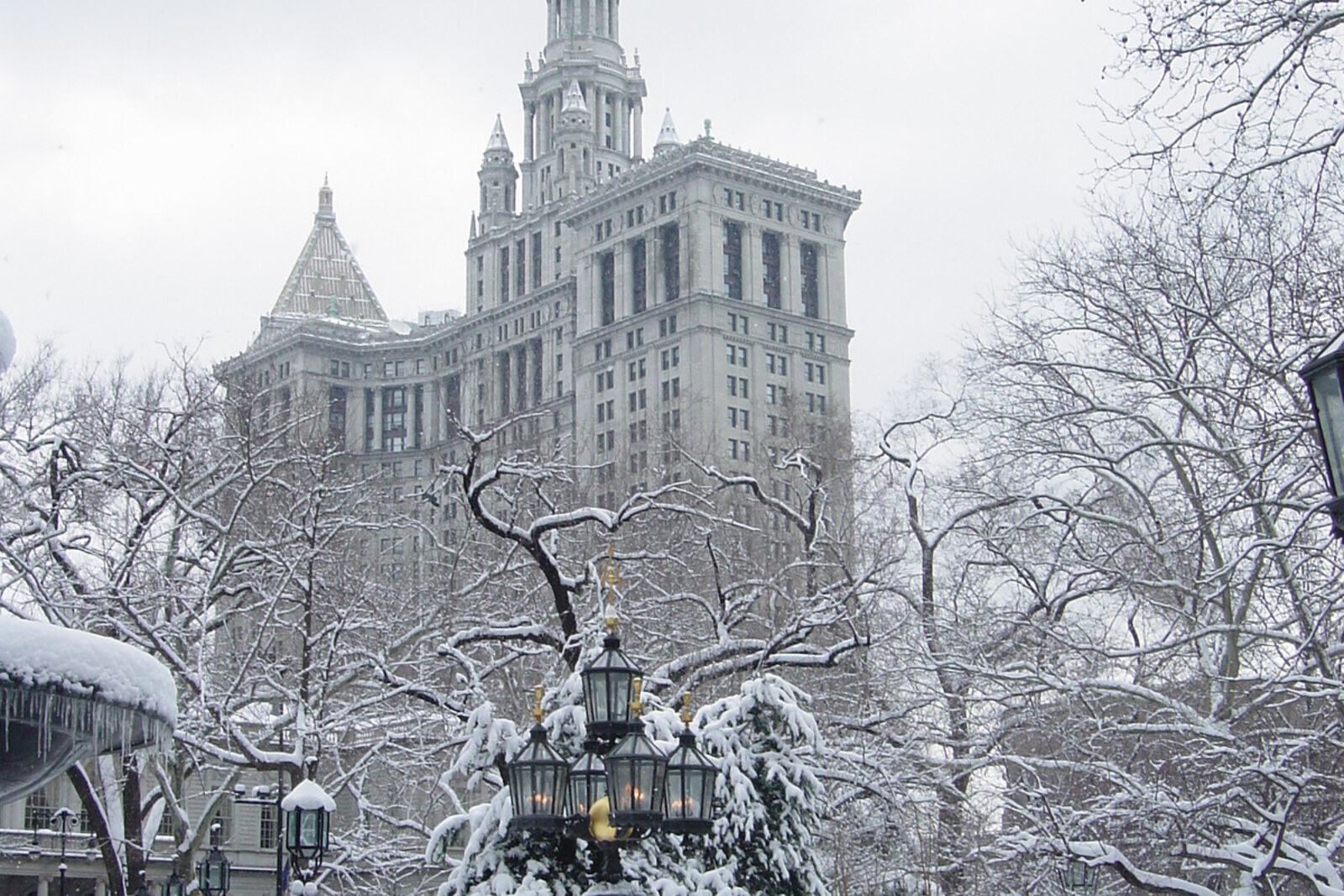
Look around first
What to notice
- The white façade of City Hall
- The open triangle of the park
- Brooklyn Bridge beyond the park's eastern boundary
The story of the place
The white City Hall and the park's open triangle have preserved a stretch of open space here that is rare for Lower Manhattan. When the city decided to build a new administrative building, institutions occupied the northern part of the plot, while the southern part was left undeveloped. The mayor and city council still work in City Hall, and Brooklyn Bridge is already visible beyond the park's eastern boundary.
At six o'clock in the evening on July ninth, seventeen seventy-six, George Washington ordered the Continental Army's brigades to form up here. At that time, the Common lay on the site of the park—a piece of city land at the northern edge of New York City. Cattle grazed here, military reviews were held, and crowds gathered: within the cramped city, there was almost no open space capable of holding several regiments.
Washington was preparing to defend New York City. British ships were already stationed off Staten Island, and a landing was expected ahead. From Philadelphia, he was delivered a printed sheet bearing a decision of the Continental Congress: the thirteen colonies declared themselves independent states. The commander-in-chief wanted the soldiers to understand what they were about to fight for, and ordered the document read aloud before every brigade.
There was no single reader for the entire field. Officers appeared before their units simultaneously, holding identical printed sheets. One of Washington's aides recorded that after the reading, the soldiers cheered their approval three times. Before this, they had served in the army of the rebel colonies, which still allowed for an agreement with the Crown. Now the declared break ruled out a return to the previous order, and Washington directly reminded them: the outcome depended on their weapons and steadfastness.
After the formation, some soldiers and New York supporters of independence moved from here down Broadway, toward Bowling Green. There they threw ropes over the equestrian statue of George III and pulled it down. The lead figure was chopped up and sent to Connecticut, where the metal was melted down into approximately forty-two thousand musket balls for the same army.
There was no immediate victory. Several weeks later, the British defeated American units in Brooklyn. Washington led the survivors across the East River, left Lower Manhattan, and continued the war; British troops occupied New York City for seven years. The army returned here only in seventeen eighty-three.
The present City Hall appeared later. In eighteen hundred, the city council selected the old Common for a new administrative building: the plot already belonged to the city and remained spacious enough. The white City Hall opened in eighteen twelve, city institutions occupied the northern part of the Common, and the southern part was kept open. That is where the name City Hall Park comes from. The mayor and city council still work in the building; before it lies that very triangle of land where officers first read the Declaration of Independence to New York soldiers.
Useful on site
Open daily 06:00–00:00; free admission, accessible entrances on Broadway and Park Place, restrooms in City Hall and the New Amsterdam Library.
Checked: June 17, 2026. Check the official source before visiting.Listen where you do not obstruct passersby; viewing the site does not require entering City Hall.