 Guide On Map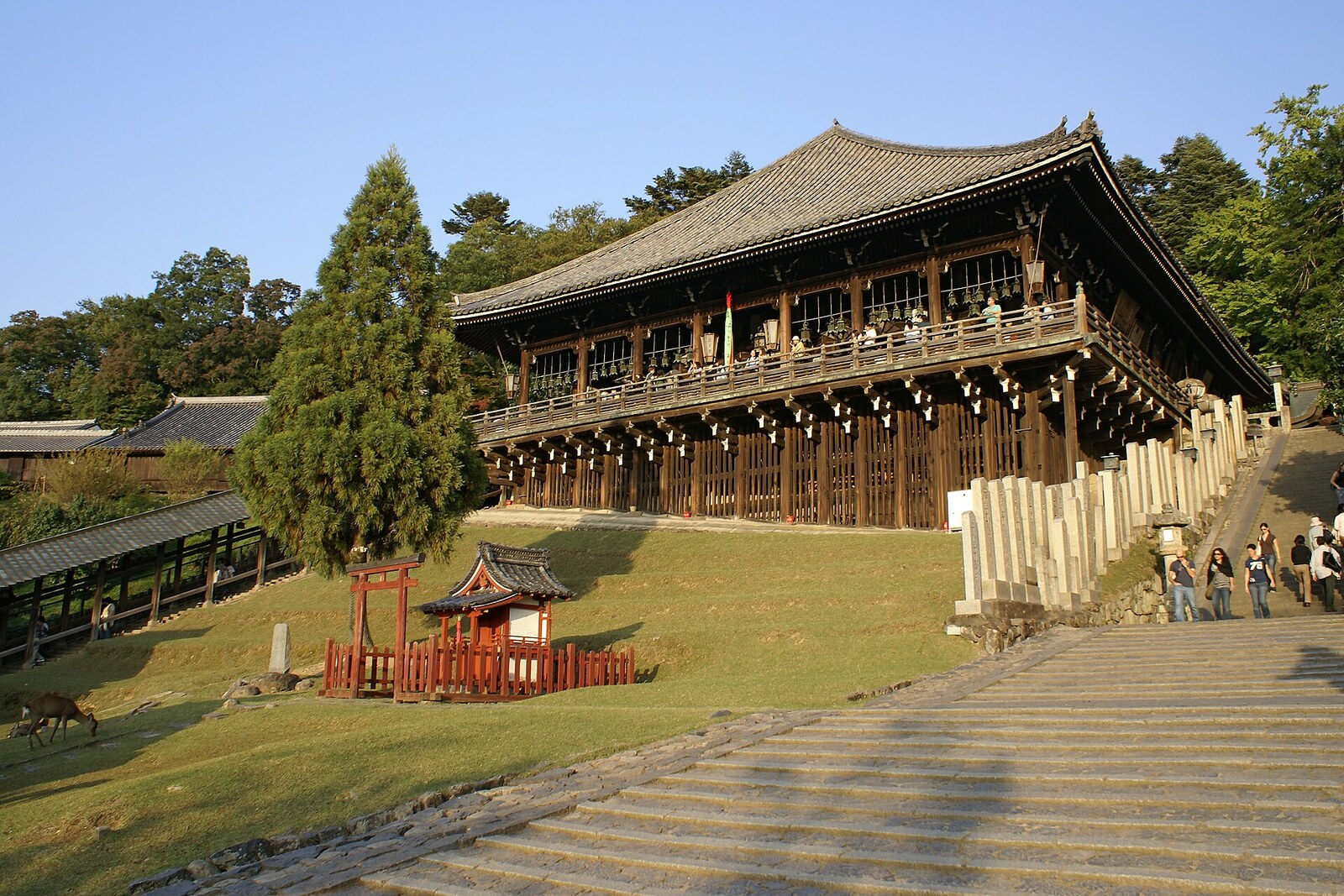
Look around first
What to notice
- Western gallery
- Wooden supports above the slope
- High roof of the hall
The story of the place
Nigatsu-dō Hall stands on a steep slope at Tōdai-ji Temple, a wooden hall with a western gallery on high supports. At its center is a small sanctuary beneath a separate roof; around it are a circular passage, a prayer room, and rooms for the participants in the service. Every March, Shuni-e takes place here: eleven monks perform repentance, while large pine torches by the gallery light their nighttime ascent.
According to temple tradition, in seven hundred fifty-one the monk Jitchū entered the Buddhist heavenly realm of Tosotsu Heaven through a mountain cave. Jitchū was the chief disciple of the founder of Tōdai-ji Temple and was looking for a rite that could be brought into the human world. There he saw heavenly beings repenting before the Eleven-Headed Kannon, making one thousand circuits around her image.
Jitchū asked to be taught, but received a very practical objection: one day in that realm equaled four hundred human years. People would not have time to repeat the prescribed order. The monk then proposed reciting the prayers faster and completing the required number of circuits at a run. According to tradition, the rite was revealed to him, and the very next year he performed it at Tōdai-ji Temple.
This story was recorded many centuries later and is not eyewitness testimony. Documents confirm a more restrained basis for it: the tradition was indeed associated with Jitchū, by the end of the eighth century the monks of Tōdai-ji Temple were already repenting before the Eleven-Headed Kannon, and there was a separate hall for the ceremony.
Jitchū's undertaking was not an imperial commission. He gathered a group of monks who themselves established a place for the rite and administered it themselves. The general monastic treasury provided ritual offerings, but did not pay for the participants' food, labor, and other expenses. After Jitchū's death, the monastic brotherhood he had created inherited this responsibility.
The monks repented on behalf of all people and asked that the country be freed from what, in the eighth century, were considered its afflictions: epidemics, crop failures, natural disasters, and rebellions. The ceremony was held in the second month of the lunar calendar. This is where its name comes from—Shuni-e, the service of the second month—as well as the name of the hall itself: Nigatsu-dō Hall, the Hall of the Second Month.
Shuni-e now lasts from the first through the fourteenth of March. Eleven monks are chosen for it. From the twentieth of February, they live separately, prepare the ritual implements and robes, rehearse the texts, and gradually take on increasingly strict restrictions. During the main service, the day is divided into six prayer periods. After the midday meal, participants sometimes go without food or water until three or four in the morning.
Large torches on the western gallery light the monks' ascent to the hall. Repentance, the recitation of the names of the dead, running around the sanctuary, and prayers take place inside. Two statues of the Eleven-Headed Kannon are permanently hidden from outsiders: they are not unveiled even during the ceremony.
On the last day of the service in the second lunar month of sixteen sixty-seven, Dattan was performed inside. During this rite, a monk runs around the hidden image of Kannon with a burning pine torch. Embers fell onto the hall's wooden parts, fire engulfed the inner sanctuary, and the old Nigatsu-dō Hall burned down completely.
The monks did not miss the next Shuni-e. While there was no building, they moved the ceremony to the neighboring Hokke-dō Hall. The monk Eishō led the reconstruction, and the Tokugawa shogunate provided the money. Tokugawa Ietsuna became the official patron of the construction. Two years later, the participants returned to the new hall.
The builders used the techniques of their time, but repeated the arrangement of rooms required for the rite. At the center of the present Nigatsu-dō Hall is a small inner sanctuary measuring three by three bays. It stands like a separate hall beneath its own roof, surrounded by an outer circuit, rooms for the participants, and a prayer hall. The western section projects over the slope on a high wooden framework.
This building was completed in sixteen sixty-nine. On the nights of the twelfth, thirteenth, and fourteenth of March, Dattan is still performed inside it: a monk again runs around the hidden Kannon with a burning pine torch.
Useful on site
The approach and outer terrace are usually freely accessible; during the Shuni-e rite in early March, crowds, closures, and special rules apply.
Checked: June 24, 2026. Check the official source before visiting.The climb requires some reserves of strength, and during ceremonies the space may be crowded and partly restricted. The sacred well and the drawing of water are not intended for ordinary viewing.