 Guide On Map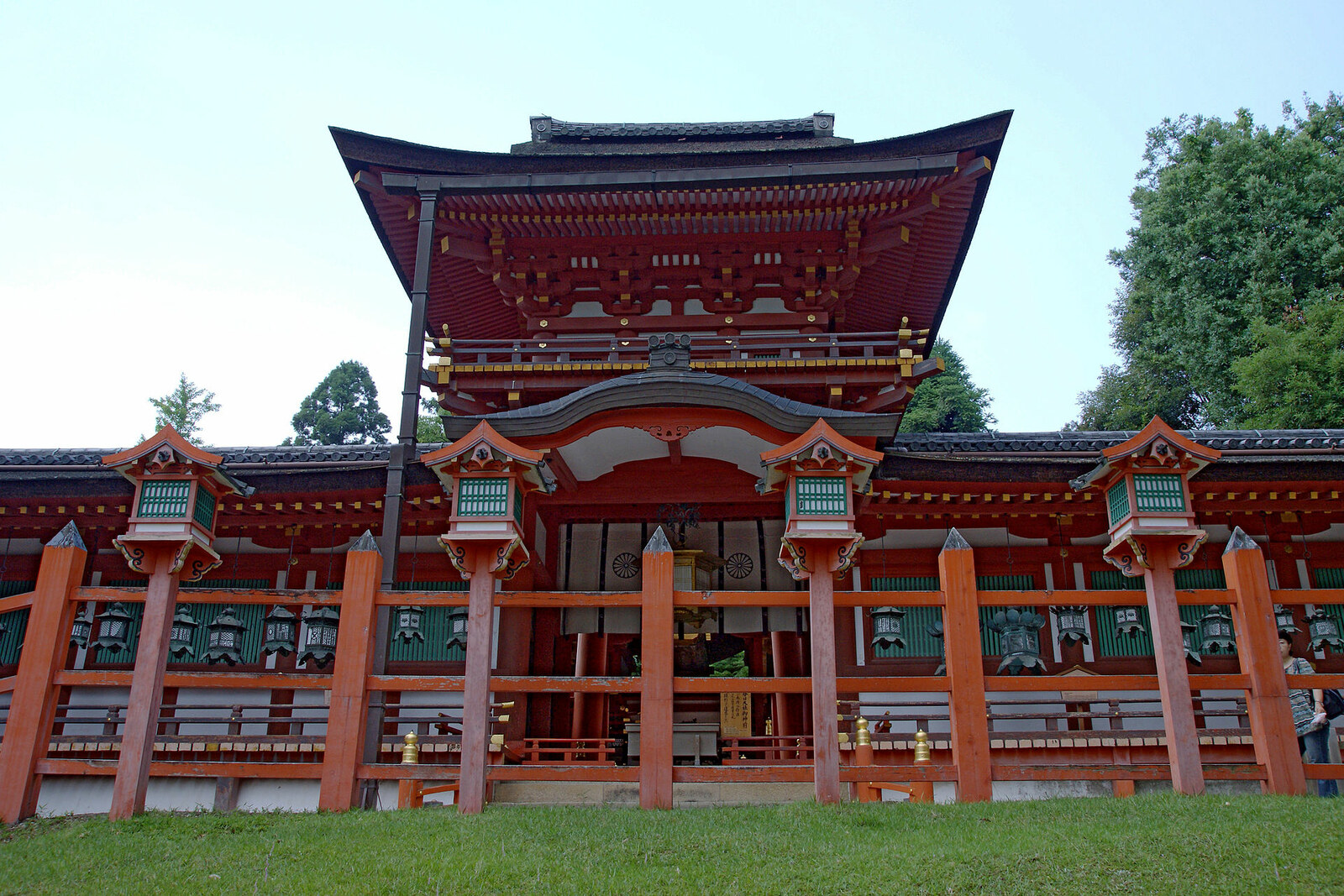
Look around first
What to notice
- Scarlet Middle Gate
- Four main shrines
- A row of separate roofs
The story of the place
Kasugataisha Shrine stands at the foot of Mount Mikasa; thousands of other shrines spread from it across the country. Researchers believe that worship of deities on these slopes began before the official founding date. Beyond the bright-red gates, separate roofs are visible: when it is time for repairs, priests transfer the deities to a temporary building, restore the roofing and paintwork, then return them. The present buildings were erected in eighteen sixty-three.
Beyond the scarlet Middle Gate stand four small main shrines. Priests conduct morning and evening services before them, but they do not address a single deity: each building has its own resident. This row arose from the decision of a man who, shortly before its construction, chose the winning side in a war at court.
Fujiwara no Nagate headed the northern branch of the Fujiwara clan and served on the highest council under the sovereign. His position rested on rank and closeness to the throne. In seven hundred fifty-seven, he lost a dispute over the heir: the throne went to the candidate backed by his cousin, Fujiwara no Nakamaro. Nakamaro became the leading figure at court, while Nagate retained a high post but was pushed away from decision-making.
Seven years later, the dispute turned into an armed rebellion. The former Empress Kōken tried to regain control of the court, Nakamaro raised troops, and Nagate supported Kōken. The cost of that choice was evident in the fate of the defeated: Nakamaro fled the capital, was caught, and killed together with his family. Kōken took the throne again as Empress Shōtoku. Nagate received a reward for taking part in suppressing the rebellion and soon became Minister of the Left—the senior official of the standing Council of State.
In seven hundred sixty-eight, Shōtoku ordered him to establish a shrine here. Nagate was carrying out the order of a woman whom he had helped regain the throne four years earlier.
The site was chosen beside Mount Mikasa. According to the Kasuga legend, the deity Takemikazuchi arrived here from Kashima Shrine riding a white deer, to protect the new capital of Nara. This is a legend; researchers believe that the worship of deities on these slopes began before the date accepted by the shrine itself.
Nagate built the buildings at the foot of the mountain and brought together four deities here from three clan centers. Takemikazuchi came from Kashima Shrine, Futsunushi from Katori Shrine, and Ame-no-Koyane and Himegami from Hiraoka Shrine. The Fujiwara regarded Ame-no-Koyane as their ancestor. That is why the four shrines stand side by side but are not merged into one: Nagate assigned each deity a separate place.
For the Fujiwara clan, the result lasted longer than its victory at court. Near the capital, the Fujiwara gained a shrine to their ancestor, established by order of an empress. When daughters of the clan became the wives of sovereigns and the mothers of heirs, Kasuga family rites entered court ceremonial. Worship of the four deities here spread across the country; thousands of other shrines originated from Kasugataisha Shrine.
No timber from the eighth century remains here. The present four main buildings were erected in eighteen sixty-three. During periodic renewal, priests transfer the deities to a temporary building, repair the roofs and paintwork, then return each deity to its designated shrine. Beyond the Middle Gate, the order established under Shōtoku and Nagate remains: Takemikazuchi, Futsunushi, Ame-no-Koyane, and Himegami—four separate buildings in a single row.
Useful on site
General worship is usually 6:30–17:30 from March to October and 7:00–17:00 from November to February. Special entry is usually 9:00–16:00, adult ticket 700 yen, but it is closed on ritual days and during certain periods.
Checked: June 24, 2026. Check the official source before visiting.Part of the shrine can be seen from the approaches; check access to the inner areas separately. Do not feed deer right beside narrow passageways and lanterns.