 Guide On Map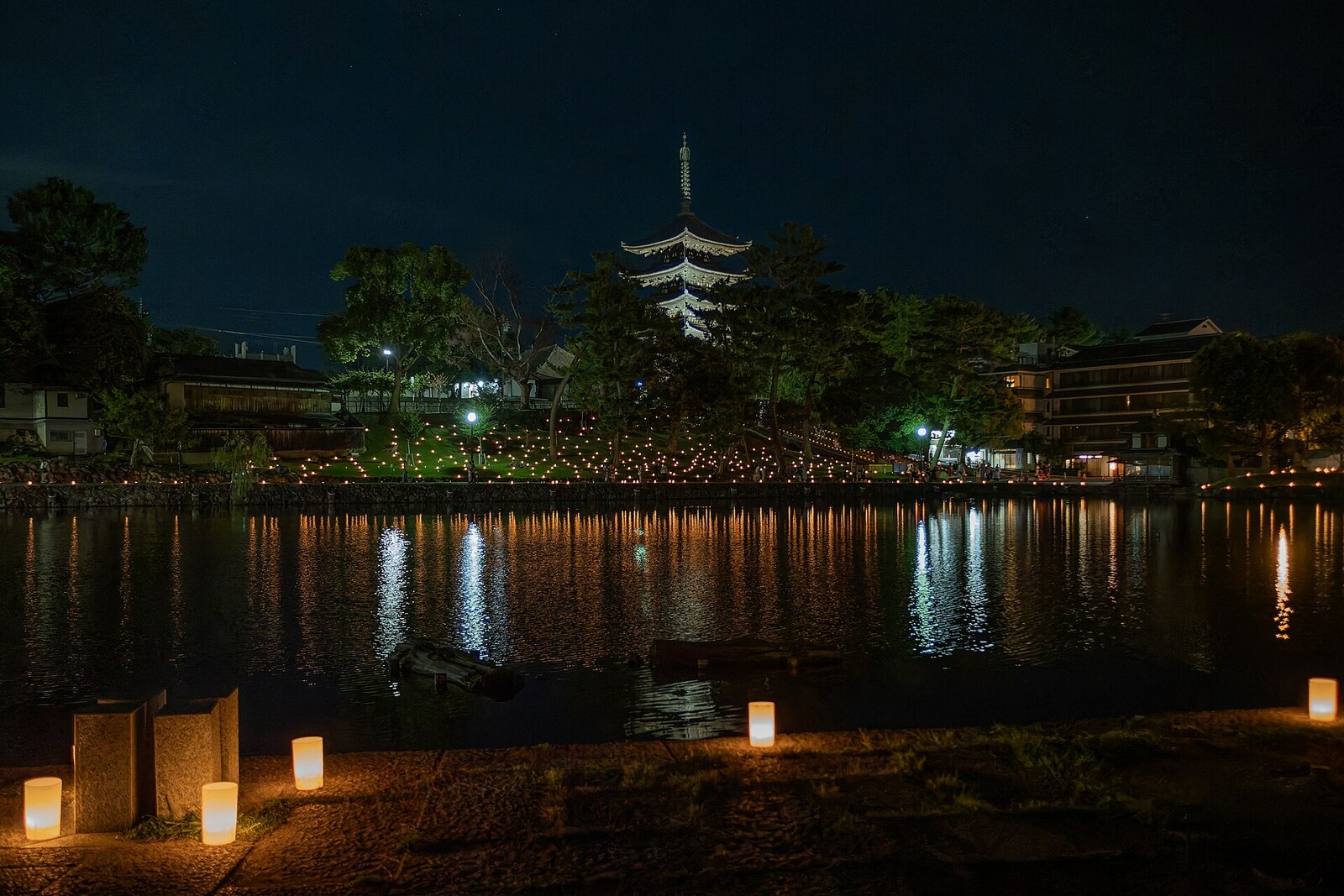
Look around first
What to notice
- The still surface of the pond
- The shrine's rear wall
- The torii by the shore
The story of the place
Sarusawa is an artificial pond. It was made at Kōfuku-ji Temple in seven hundred forty-nine for a Buddhist rite: fish and birds that had been caught were released here. Later, people connected this water with a woman who could no longer be set free.
Uneme was not her name but a courtly position. This was what the daughters and sisters of provincial officials sent to serve the emperor were called. They served him food, attended him in his chambers, and sometimes became his concubines. For a family, such a daughter was a link to the court; for the young woman herself, her position depended on the decisions of one man.
A legend recorded in the middle of the tenth century tells of an unnamed uneme who served the “Nara emperor.” Which ruler exactly was meant is unknown. Courtiers pursued the young woman, but she rejected them because she loved the emperor. One day he summoned her to his chambers. For her, the meeting became a promise of a different fate; for him, it was an episode he did not wish to repeat.
The young woman continued serving at court and almost every day saw the man who no longer summoned her. At night, she secretly left the palace and drowned herself in Sarusawa Pond. The emperor did not learn of her death at once. He then came here, ordered the courtiers to compose memorial poems and, according to legend, himself wished that the water would dry up before algae twined around her hair. The young woman was buried by the pond.
Later, Uneme Shrine was built for her spirit and is now subordinate to Kasugataisha Shrine. The story did not preserve the woman's personal name, so only her position remained on the plaque. The shrine stands with its back to both the torii and the water. This, too, is explained by the legend: supposedly, the uneme could not see the place of her death and turned the shrine away from the pond in a single night.
On the night of the autumn full moon, priests of Kasugataisha Shrine hold a memorial rite here. Participants in the procession bring a fan decorated with autumn flowers, carry it aboard one of two ceremonial boats, circle the pond in the boats, and throw the fan into the water. On an ordinary day, the shrine's rear wall faces the torii; once a year, people bring the story of the unnamed court lady back to the very place of her death.
Useful on site
The pond is freely accessible; the grounds of Uneme Shrine are usually closed outside events and festivals.
Checked: June 24, 2026. Check the official source before visiting.It is convenient to listen to the story from the shore, without approaching the water itself. The ceremonial boats and flower-decorated fan appear only during the annual rite.