 Guide On Map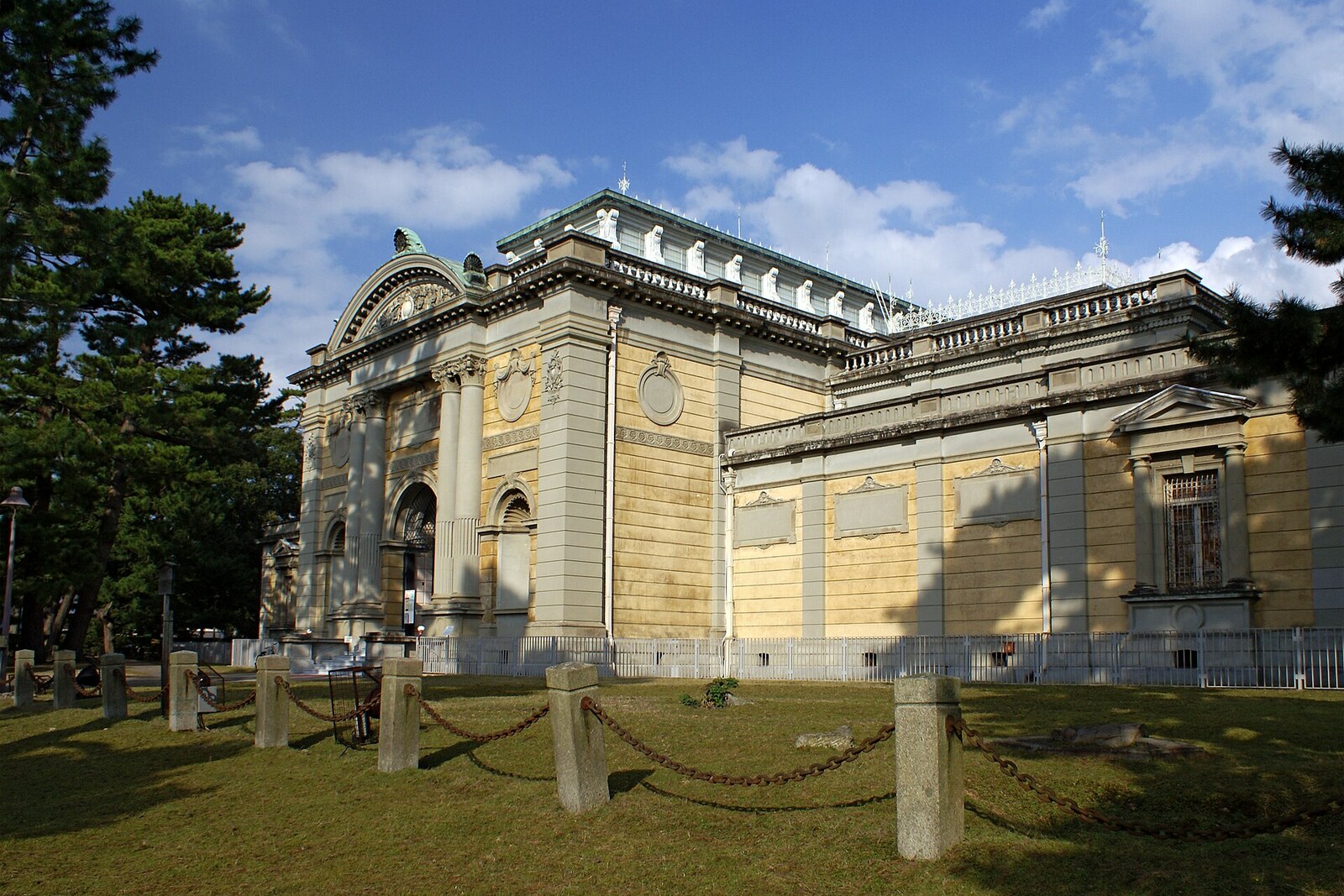
Look around first
What to notice
- The old building of the Buddhist Sculpture Hall
- Museum buildings
- Entrances to the exhibition halls
The story of the place
Among the newer museum buildings, the first building of Nara National Museum has survived; Buddhist sculpture is now displayed in it. The government established the museum in eighteen eighty-nine, when, after the separation of Buddhist and Shinto institutions, many temple treasures had lost their former protection. They began taking them in here for safekeeping and preparing them for display in the exhibition halls.
In nineteen forty-three, officials of the Imperial Household Agency removed some of the treasures of Shōsōin from the ancient wooden storehouse at Tōdai-ji Temple and sheltered them in museum storage. War was drawing near to Japan, and the museum was already taking in evacuated collections from Tokyo.
Shōsōin held the personal belongings of Emperor Shōmu, donated after his death by his widow, Empress Kōmyō, to the Great Buddha of Tōdai-ji Temple, as well as temple utensils, textiles, and documents from the eighth century. Every autumn, the imperial seal on the storehouse was removed to inspect the objects. Only people of privileged status could see them then.
The museum itself was established beside the temples specifically for such objects. After the separation of Buddhist and Shinto institutions, which was already mentioned at Kōfuku-ji Temple, many temple treasures were left without their former protection. In eighteen eighty-nine, the government established Nara Imperial Museum to take them into safekeeping and show them to the public. Six years later, the museum opened. Its first building survives: it is now the Buddhist Sculpture Hall.
The war ended, and there were plans to return the sheltered treasures to Shōsōin. In the spring of nineteen forty-six, local public figures demanded that they be opened to everyone before their return. In May, the prefecture's tourism association sent a petition to the Minister of the Imperial Household. Its authors wanted people who had lived through defeat, devastation, and food shortages to see objects preserved since the time of ancient Nara. In early September, the ministry agreed.
In October, thirty-three objects were displayed here. More than one hundred forty thousand people came in twenty-two days, although trains were running poorly and obtaining food remained a daily concern. After such an influx, the exhibition was repeated and became annual.
Now, every autumn, the seal is again removed from Shōsōin for inspection, and selected treasures are transported to Nara National Museum for several weeks. They are then returned to the storehouse. The museum collection retains an admission ticket from the first exhibition, and in the galleries the practice secured by the residents of Nara continues: imperial treasures leave closed storage and become accessible to the public.
Useful on site
Usually 9:30–17:00, last entry 30 minutes before closing; closed on Mondays and from 28 December to 1 January. The permanent collection is usually 700 yen for adults.
Checked: June 24, 2026. Check the official source before visiting.Viewing the collection requires separate museum admission; it is worth checking the current exhibition in advance. If you cannot go inside, the architecture of the old building remains a complete point of the story.