 Guide On Map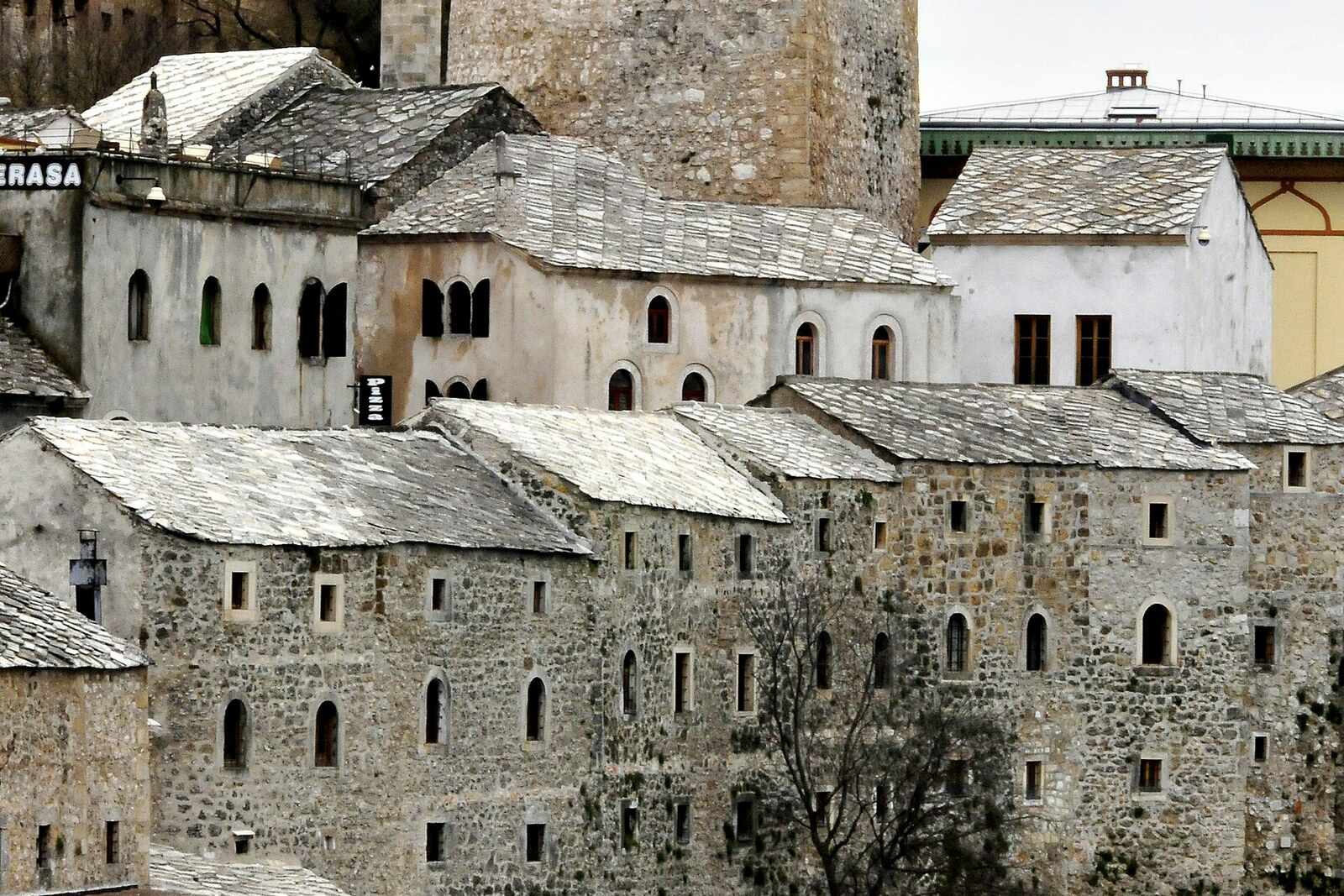
Look around first
What to notice
- The tower’s massive walls
- The upper viewing platform
- Masonry below the entrance level
- Supports of earlier crossings
The story of the place
In August eighteen sixty-one, a fire broke out near the Old Bridge. Residents dismantled several houses to cut off the flames and decided they had succeeded. Then the wind rose, the fire flared up again, and it moved toward the tower on the left bank.
Gunpowder and ammunition were stored inside. The walls were up to three meters thick, but the danger lay beneath the wooden roof: if the magazine caught fire, the stone shell would contain the explosion only for the first moments. People abandoned their homes and left the city. In the general confusion, prisoners from the jail at the opposite end of the bridge escaped. The fire was nevertheless extinguished before the flames reached the gunpowder.
Omer Pasha Latas, the Ottoman commander-in-chief preparing a military campaign in Mostar, then ordered the remaining houses near the magazine demolished. Their owners lost their homes for the sake of the empty space around the tower. At the same time, a new powder fortress began to be built beyond the city’s built-up area. Seven years later, the military moved the ammunition from Tara Tower there.
In the autumn of that same year, the British artillery officer George Arbuthnot passed through here with a lit cigarette. A guard stopped him at the gate and made him stamp out the tobacco: after the recent fire, even one spark was considered enough cause for alarm. Visitors to the Museum of the Old Bridge now climb the same floors, and a viewing platform has been arranged at the top.
The name “Tara” is not connected with a famous commander or defender. The compilers of the museum’s history state plainly that the origin of this name could not be established.
The museum appeared here after another intervention in the tower’s structure. During the restoration of the bridge complex, the archaeologists Ante Milošević, Nela Kovačević, and Vesna Milošević removed earthen embankments to understand what structures supported the tower and the bridge. Below the entrance level, they uncovered masonry from earlier fortifications, the supports of two wooden crossings, and the foundations of a stone bridge. They moved the portable finds to the upper floors, while leaving the walls and supports where they were found. The museum’s lower hall is the excavation itself beneath the former powder magazine.
Useful on site
Published museum hours: 08:00–16:00 daily from April 1 to November 1; outside this period, access must be confirmed.
Checked: June 24, 2026. Check the official source before visiting.Visiting the museum rooms requires separate access; if they are closed, view the complex from outside and do not try to enter through service passages.