 Guide On Map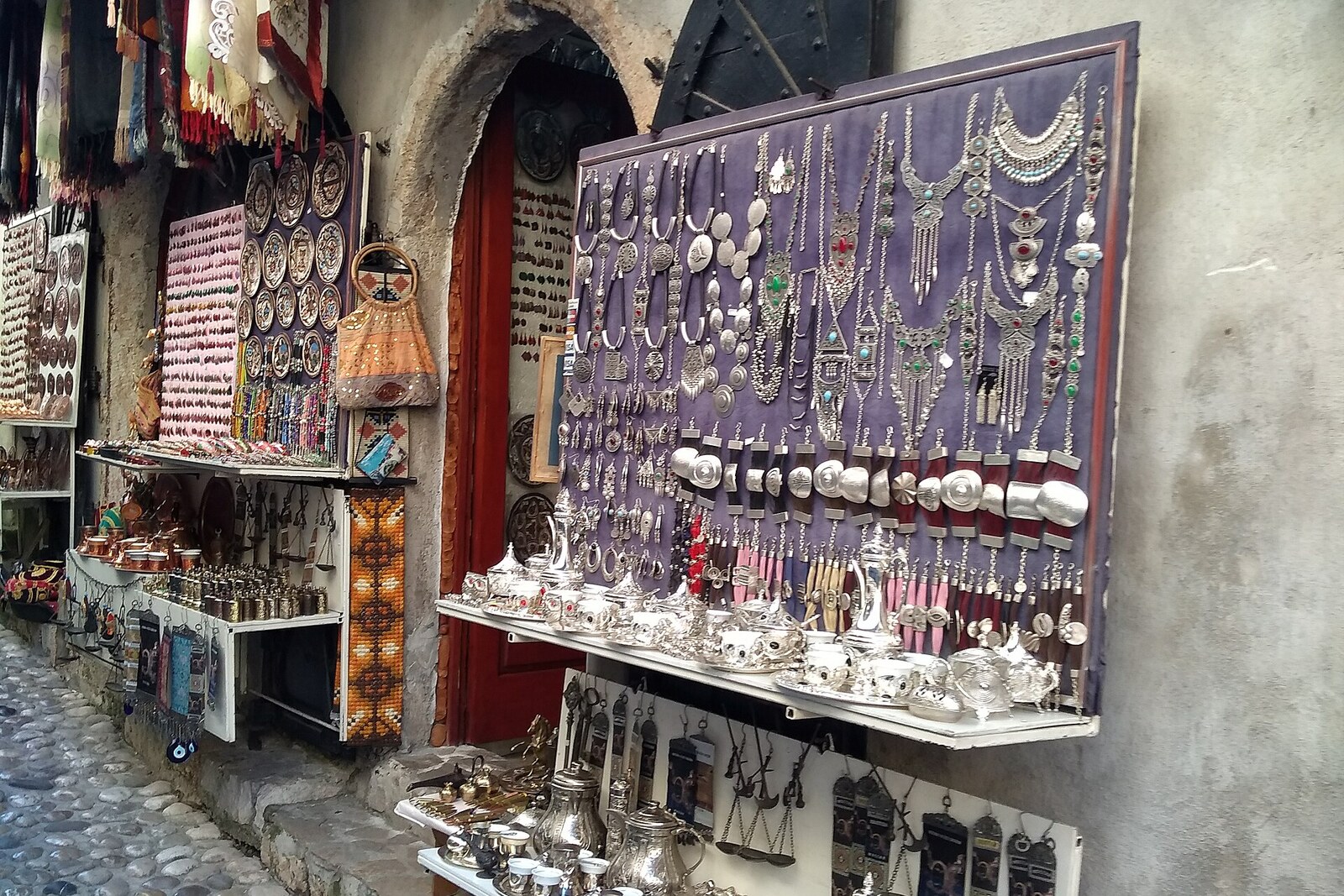
Look around first
What to notice
- Rows of shops
- Copper reliefs
- Chased images of the Old Bridge
The story of the place
The name Kujundžiluk comes from the kujundžijas, goldsmiths and silversmiths. Their workshops stood together along the trading passage between Mala Tepe and the Old Bridge: people came here for rings, chains, amulets, silver tobacco boxes, and heavy belt fasteners. The rows of shops remain, but antique jewelry in the display windows now gives way to copper chasing and goods for those heading to the bridge. Its high arch is often repeated on copper plates.
In two thousand one, a schoolboy named Mirza Redžović came to the old town for the holidays. He worked in a shop to earn pocket money, while nearby Azer Badžak, a craftsman from an old Mostar family of kujundžijas, was at work. Badžak turned copper sheets into relief images. Mirza lingered near his workshop and watched how the metal changed after every blow.
After the restored Old Bridge reopened in two thousand four, more customers began passing through this row of shops. Work also appeared for craftspeople whose products had only recently had almost no one to sell to. Badžak noticed Mirza's interest and offered to teach him.
The apprentice ruined so many copper plates that he could not later name their number. A mistake in chasing cannot be erased: if a blow lands in the wrong place, the sheet has to be started over. Badžak continued teaching him, and Mirza achieved his first successful relief. By two thousand sixteen, he had already been making his living solely from this craft for more than ten years. A small plate measuring twenty by twenty centimeters required four or five hours of work, so in winter the craftsman prepared pieces for the summer influx of customers.
This is where the street's name becomes clear. In Ottoman Mostar, kujundžijas were goldsmiths and silversmiths. They made rings, chains, amulets, crosses, silver tobacco boxes, and paftas—heavy fasteners for women's belts. Craftspeople in the same trade kept their workshops close together, so this row between Mala Tepe and the bridge became associated with the kujundžijas and came to be called Kujundžiluk.
There are fewer antique jewelry pieces in today's display windows than copper chasing and other goods for visitors. Yet Azer Badžak's workshop still has an address on Kujundžiluk, right by the bridge. The most popular works by his apprentice Mirza became copper images of the Old Bridge: in winter he prepared them in advance, and in summer he sold them to people who came here across the arch depicted on them.
Useful on site
The street is open to everyone; the hours of individual workshops and shops vary.
Checked: June 24, 2026. Check the official source before visiting.The street is narrow and busy; while looking at a craftsperson's work, do not block the shop, and first ask permission to photograph a person in close-up.