 Guide On Map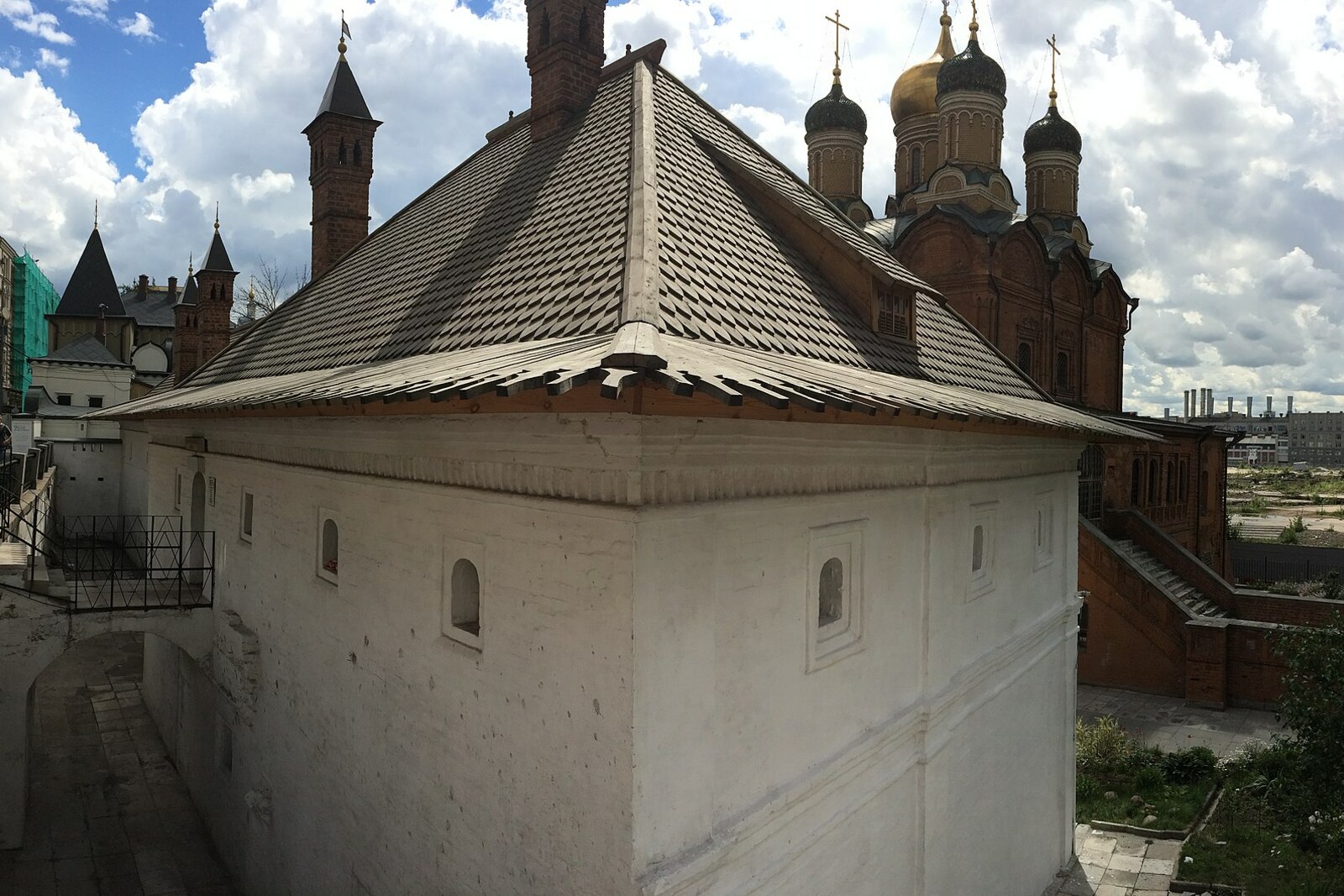
Look around first
What to notice
- White-stone chambers
- Vaulted lower level
- Loading hatch
The story of the place
When a more spacious English compound appeared near Ilyinsky Gates, the chambers on Varvarka Street came to be called the Old English Court. The upper rooms were living quarters and were also used for accounts; beneath them lay a deep vaulted lower level for goods. A cargo opening survives in the thickness of the vault, allowing goods to be taken directly into storage.
In fifteen fifty-six, Ivan IV transferred these white-stone chambers to the Muscovy Company, an association of London merchants that had obtained the exclusive right to English trade with the Tsardom of Russia. Varvarka Street led from the Moscow Kremlin through the trading district to the roads east, and a river landing lay below. The English lived in the chambers, stored goods, kept accounts, and received envoys. Cargo was hauled through a hatch into the vaulted lower level.
Twelve years later, the English embassy house found itself locked from outside. Ambassador Thomas Randolph, the head of the royal post, had come to restore the Muscovy Company's former privileges and end the independent trade of its factors. Ivan IV expected more from Queen Elizabeth I: an alliance against his opponents and a mutual promise of refuge if either monarch had to leave the country. The Queen allowed Randolph to cautiously promise the tsar a welcome in England, but forbade him to bind her to an alliance. The ambassador was to evade that conversation and obtain a trade charter.
Randolph arrived in Moscow in mid-October, fifteen sixty-eight. The English were forbidden to meet him. The ambassador and his entourage were housed here, and an officer posted guards at the door. Until February they were not allowed to leave, and visitors were not admitted inside. Randolph's letters were intercepted and given to his opponents for translation; one of them was presented as evidence of treason against the tsar. The accusation fell apart, but the opened letters were returned to the ambassador only after the proceedings.
Forty people stayed in the chambers. They depended on provisions from the tsar: every day the embassy received sixty-two loaves, a quarter of a bullock, four rams, poultry, eggs, wine, beer, and money for candles. There was plenty of food, yet Randolph could not control his own movements. His diplomatic dignity ended at the door guarded by the tsar's officer.
They had to wait four months for the first audience. The horses due for the ambassador were not sent. Randolph borrowed a riding horse for himself, while his entourage walked from here to the Moscow Kremlin. There they were kept waiting another two hours, and after the reception they were not invited to the tsar's table.
Randolph nevertheless delivered Elizabeth's cautious promise and continued to demand trade concessions. By summer, Ivan IV had confirmed and expanded the Muscovy Company's rights: its merchants were allowed to trade duty-free throughout the tsardom, take goods across the Caspian Sea farther east, and establish rope-making yards and iron production. The tsar handed Thomas Glover, a former company factor who traded the company's goods for his own account, over to Randolph for trial in England. The ambassador left for home together with the Russian envoy Andrei Savin. Savin carried a draft alliance, but Elizabeth did not approve it; the trade charter remained in force.
The loading hatch survives beneath the vaults; through it, merchants put away the goods they received under that charter. The court was called Old later, when in sixteen thirty-six the Muscovy Company acquired a second, more spacious compound near Ilyinsky Gates—the New English Court. The chambers on Varvarka Street granted by Ivan IV have been the Old English Court ever since.
Useful on site
Usually Tuesday–Sunday from 10:00 to 21:00; Monday is closed. Adult ticket — 500 rubles, reduced ticket — 250 rubles; check the operator's time slots before visiting.
Checked: date not specified. Check the official source before visiting.You can listen to the history of the diplomatic mission from the street. The museum rooms require a separate visit, which is worth planning as an independent stop.