 Guide On Map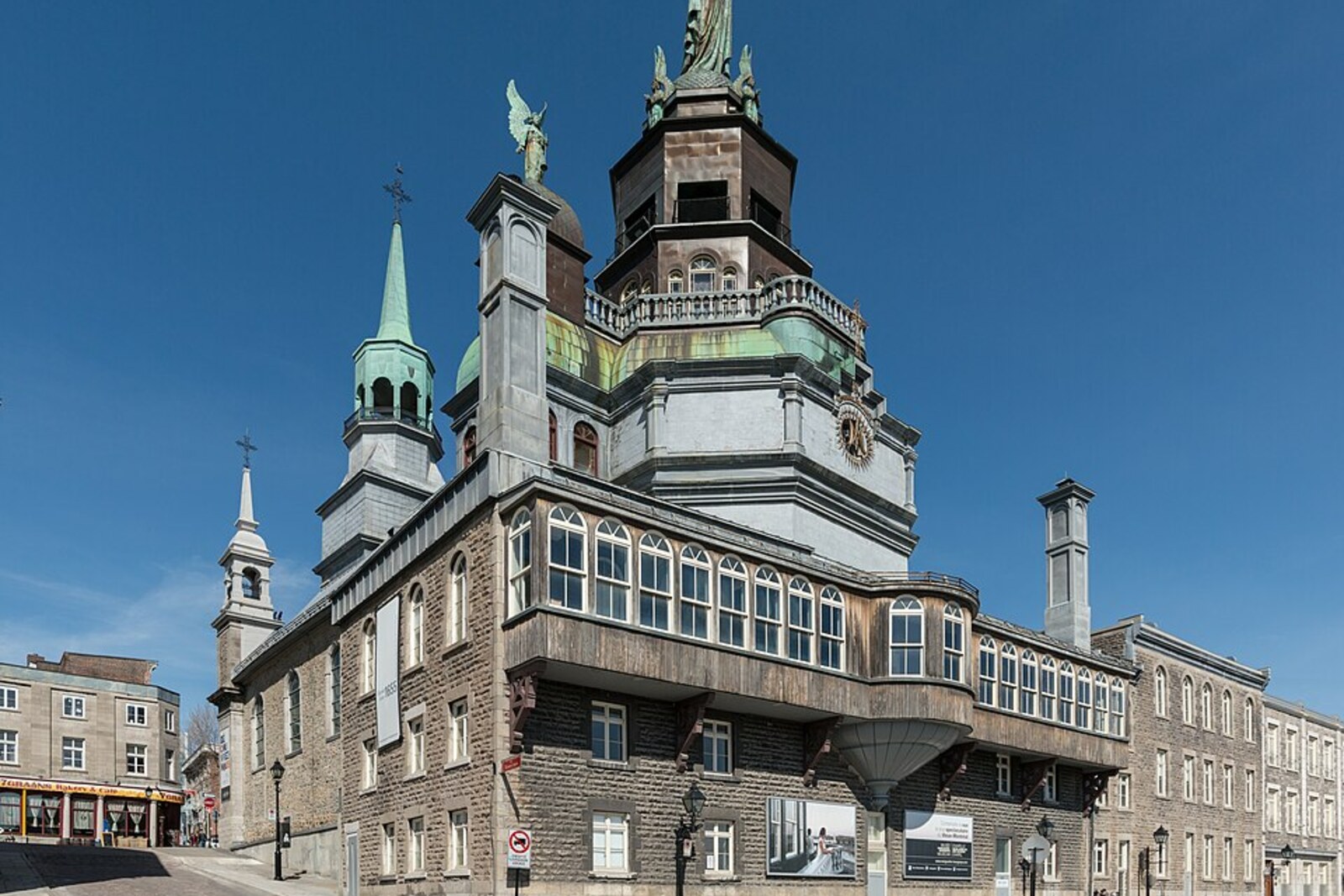
Look around first
What to notice
- The silver model of the Idaho
- Two lamps with green glass
- Other ship models
- The wooden statuette
The story of the place
Beneath the vault of this chapel hangs a silver three-masted ship with an anchor, a propeller, and two green lights. The present building was erected after the first chapel was destroyed in a fire, while the old wooden statuette of the Virgin Mary was preserved in the museum section. Later, people from the port and sailors began coming here again, and models of ships gradually appeared beneath the ceiling of the nave. What was left here was not impersonal offerings, but the gratitude of those who believed they had returned alive from the sea.
In sixteen fifty-five, Marguerite Bourgeoys began gathering stones here. She arrived in Ville-Marie as a teacher and intended to open the first school, but there were still almost no children of school age in the young settlement. So Bourgeoys took on something else: she decided to establish a pilgrimage chapel beside the city. The cross on Mount Royal was far away, the route became difficult in winter, and people feared attacks beyond the city palisade.
They chose a rise above the river, immediately beyond the palisade, for the building site. Bourgeoys had no money. She asked people she had helped to work here for several days each. Paul de Chomedey de Maisonneuve ordered timber prepared and took part in transporting the logs himself; the stonemasons agreed to work without pay.
Two years later, Gabriel de Queylus, the head of the newly arrived parish priests, stopped the construction. Most likely, he considered a separate chapel premature: Ville-Marie did not yet have a completed parish church. The dispute among the church leaders dragged on, and the foundations remained unfinished for almost two decades.
Bourgeoys covered them with a small wooden shelter for prayer. From France, she brought a wooden statuette of Notre-Dame-de-Bon-Secours. In this name, Bon-Secours means help in distress. In sixteen seventy-three, the statuette was placed in a temporary chapel, and construction resumed after new permission was granted. By sixteen seventy-eight, Bourgeoys had the sanctuary for which she had gathered stones and begged for workdays.
The first chapel burned down in seventeen fifty-four. The next day, the statuette and its reliquary were found among the charred remains. The present building was erected later, while the wooden figure remains in the museum section of the complex. Marguerite Bourgeoys lived to see the completed chapel; her remains now rest here as well.
Almost two centuries later, a plea for help brought another group of people here. Montreal Bishop Ignace Bourget revived pilgrimages to the chapel, and dockworkers and sailors began coming here. The same bishop urged young Canadians to join the Papal Zouaves, volunteer infantry who defended the possessions of Pope Pius IX during the unification of Italy.
In eighteen seventy, Rome capitulated, and the foreign Zouaves were disarmed and released. During their detention after the surrender, according to the account of one of the Canadians, they were given half a loaf of black bread and nine sous a day. They were then taken to England and put aboard the Idaho, which was sailing from Liverpool to New York.
In the Atlantic Ocean, the Idaho was caught in a violent storm. The Canadians decided that the ship would perish. Sergeant Major Gédéon Désilets proposed that his comrades make a vow: if they reached shore, they would come to Notre-Dame-de-Bon-Secours and leave a model of their ship here. The storm subsided, the Idaho reached New York, and the Zouaves returned to Montreal. They attributed their rescue to the intercession of the Virgin Mary.
Two years later, about one hundred former Zouaves gathered at the chapel again. They suspended beneath the vault a commissioned model of the Idaho—the first ship brought here as a gift in fulfillment of a vow. Inside the model, they placed a capsule with the names of sixty-nine Zouaves and eight youth detachments. Those who signed promised always to keep the lights on the ship burning.
The silver three-masted Idaho still hangs in the center of the nave. It has a funnel, a propeller, an anchor, and two lamps with green glass. The other ship models appeared beneath the vaults only after it.
Useful on site
Walk around the chapel from the port side, or its maritime face is easy to miss. The ship models and archaeological layers are visible only when there is access inside.